


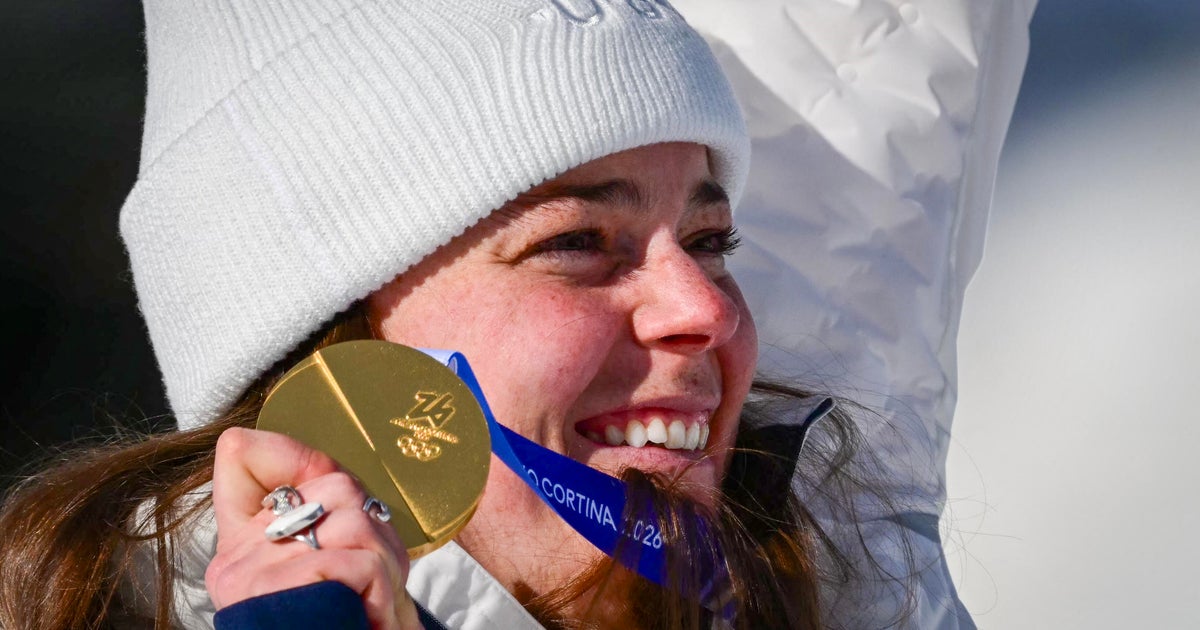

Breezy Johnson’s Golden Moment: When Olympic Dreams Meet Reality
A Medal Too Heavy for Its Own Good
American alpine skier Breezy Johnson found herself in an unusual predicament after winning gold in the women’s downhill at the 2026 Winter Olympics in Milan-Cortina, Italy. The triumph of Saturday’s race was slightly tarnished when her freshly won Olympic medal literally fell apart. According to Johnson, who spoke candidly with CBS News, the medals were simply too heavy for their ribbons to support properly. “I think that because they were so heavy, the ribbons couldn’t really hold them,” she explained, describing the situation as “a little disappointing.” After all, when you’ve just achieved the pinnacle of athletic success, the last thing you want to worry about is whether your celebration might break your prize. It’s an ironic twist that Olympic champions have to temper their joy and be careful about how enthusiastically they celebrate—something that goes against every natural instinct after such a monumental achievement. Johnson received a replacement medal, but in a happy turn of events, organizers managed to repair her original. She plans to keep the fixed original and return the replacement, treating her hard-won prize with the special care it apparently requires.
The Superstitious Knitter with a Golden Touch
Beyond her prowess on the slopes, Johnson revealed a charming personal quirk that offers a window into the mindset of elite athletes and their rituals. She’s an accomplished knitter who creates a brand-new hat or headband for every single race she competes in—a superstition she takes seriously. Each handcrafted piece is worn exactly once, during its designated race, before being permanently retired from competition duty. “I am an avid knitter,” Johnson told CBS correspondent Seth Doane, explaining that these unique accessories have become an essential part of her pre-race routine. The collection of once-worn knitted items is growing steadily, piling up in her bags as a colorful testament to her racing career. But Johnson has bigger plans for these pieces than just letting them gather dust. She’s been contemplating auctioning them off to benefit charitable causes, seeing an opportunity to turn her superstitious creations into something meaningful for others. “I don’t have anything else to do with them,” she noted practically, demonstrating the same level-headed thinking that likely serves her well when hurtling down mountainsides at breakneck speeds. To protect her repaired gold medal, she’s planning to knit a special pouch—combining her passion for the craft with the practical need to keep her precious prize safe from any further mishaps.
Staying Focused Amid Political Noise
The 2026 Winter Games haven’t been without controversy, with various political debates swirling around the event and Team USA’s participation. When asked about her views on representing the United States in this charged atmosphere, Johnson chose to take what might be called the high road—or perhaps more appropriately, the downhill course. She acknowledged there’s been “a lot of rhetoric” but made it clear that her focus remains squarely on her athletic performance. “I personally prefer to focus on my skiing,” she stated firmly, explaining her philosophy with refreshing pragmatism. Johnson pointed out something that many people overlook in our celebrity-obsessed culture: she doesn’t personally know anyone who has changed their political views because of what a celebrity or public figure said. Rather than using her platform for political statements, she prefers to let her actions speak through her charitable giving, donating her earnings to organizations doing work she believes in. This approach reflects a mature understanding of both her role as an athlete and the limits of celebrity influence, while still maintaining her personal values through financial support of causes she cares about.
Teammate Support Through Triumph and Disappointment
While Johnson captured the first gold medal for Team USA at these Games, her Olympic experience hasn’t been entirely golden. She and superstar teammate Mikaela Shiffrin failed to medal in the team slalom event on Tuesday, a disappointment that played out on the world stage. Cameras caught Johnson speaking with Shiffrin after the race in what appeared to be a supportive, encouraging conversation between teammates. When asked about that private moment, Johnson revealed she told Shiffrin, “I know you tried your best and it’s gonna be OK.” Her response demonstrates the emotional intelligence and team spirit that define great athletes beyond their individual achievements. Johnson was quick to emphasize that she holds nothing against anyone for the team’s performance, showing a deep understanding of her sport’s unpredictable nature. “I know this sport. There’s so many variables,” she explained, noting that conditions weren’t necessarily in their favor that day. Despite both skiers giving their absolute best effort, sometimes the outcome just isn’t what you hope for—and that’s part of competing at the highest level. Her ability to move between the roles of champion and supportive teammate, handling both triumph and setback with grace, speaks to her character as much as her skiing ability.
The Dangerous Dance with Speed and Gravity
Alpine skiing at the Olympic level is not for the faint of heart, and Johnson is well aware of the extreme dangers inherent in her chosen sport. This reality was driven home during the same downhill race where Johnson won her gold medal, when legendary American skier Lindsay Vonn suffered a serious injury in a fall. Vonn, competing at age 41 and already a world champion multiple times over, was attempting what many saw as an inspiring comeback. Despite what must have been mixed emotions—celebrating her own victory while her teammate faced injury—Johnson said Vonn reached out with congratulations via text. “She said, ‘congratulations,'” Johnson recounted, acknowledging that she knows what Vonn is going through is difficult and that her teammate “is dealing with a lot.” They haven’t spoken by phone, but Johnson expressed her best wishes for Vonn’s recovery. The incident underscored just how thin the line is between glory and disaster in downhill skiing, where athletes reach speeds that would terrify most people while navigating icy slopes on what Johnson memorably described as “giant knives.” Yet this danger, paradoxically, is part of what makes the sport so compelling to both participants and spectators alike.
The Unlikely Fairytale and the Reality of Risk
When Vonn competed despite rupturing her ACL just a week earlier, many questioned the wisdom of such a decision. But Johnson, speaking from the perspective of someone who understands the elite athlete’s mindset, offered insight into what drives competitors to push such boundaries. “Part of what breaks your heart is that you’re used to defying the odds. You’re used to writing fairytale endings,” she explained with poignant understanding. Athletes at this level have spent their entire lives overcoming obstacles, achieving the seemingly impossible, and creating those magical sports moments that inspire millions. The harsh truth, as Johnson noted, is that fairytale endings become movies precisely because they’re so rare—and real life doesn’t always follow the script we hope for. “Unfortunately, you can’t always — it’s not always like the movies,” she said, acknowledging the gap between aspiration and reality. Yet despite the danger, the disappointments, and the physical toll, something keeps drawing athletes back to the starting gate. Johnson admits it’s “difficult to understand what moves people to do it,” but when everything comes together and you’re performing at your peak, “it’s a pretty incredible feeling.” She also recognizes that this thrill isn’t limited to the competitors themselves—spectators can share in the rush of watching human beings push the absolute limits of speed and courage. Her description of alpine skiing as “Formula One on ice with giant knives” perfectly captures both the danger and the irresistible appeal of a sport where hundredths of a second separate triumph from tragedy, and where a broken medal ribbon is perhaps the least of an athlete’s worries.