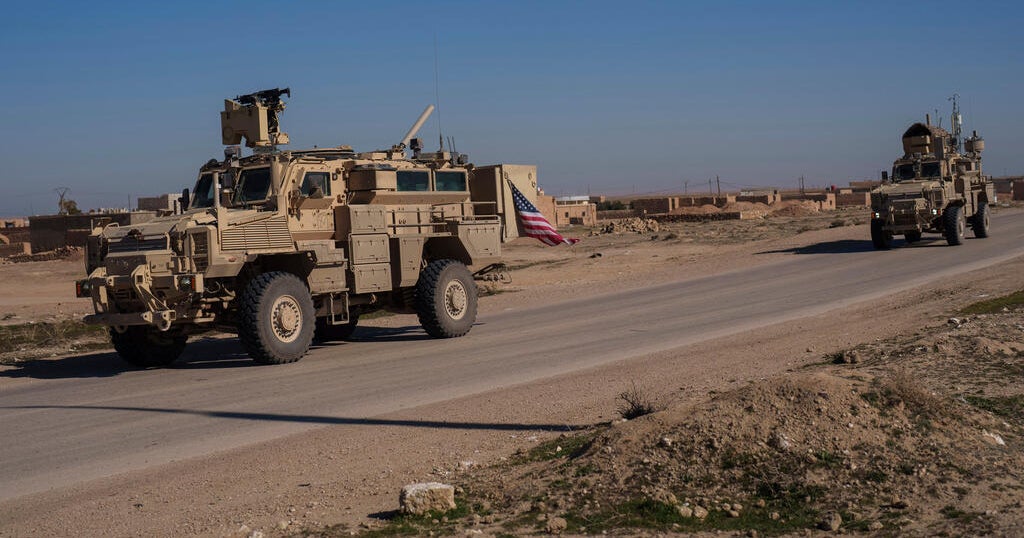

America’s Decade-Long Mission in Syria Comes to an End
The Planned Withdrawal
After nearly ten years of military presence in Syria, the United States is preparing to bring its troops home. According to U.S. officials who spoke with CBS News, approximately 1,000 American service members currently stationed in Syria will be withdrawn over the next two months. This decision marks the end of a significant chapter in America’s ongoing battle against the terrorist organization known as ISIS, or the Islamic State. The withdrawal process has already begun in earnest, with U.S. forces having departed from key strategic locations earlier this year, including the al Tanf garrison situated in southern Syria and the al Shaddadi base located in the northeastern region of the country. The Wall Street Journal was the first major news outlet to break the story about the planned departure of the remaining American forces from Syrian territory.
The History of American Involvement in Syria
The American military footprint in Syria dates back to 2015, when U.S. forces first arrived to support an international coalition dedicated to defeating ISIS. At the heart of this coalition were the Syrian Democratic Forces, a Kurdish-led military organization that became America’s primary partner on the ground. For years, these Kurdish-led forces controlled substantial portions of northeastern Syria, maintaining their presence even as the country descended into a brutal civil war that threatened the regime of Syrian dictator Bashar al-Assad. The partnership between U.S. forces and the Syrian Democratic Forces proved crucial in the fight against ISIS, with American troops providing training, equipment, air support, and strategic guidance. This collaboration helped push back ISIS from territories it once controlled, dismantling what was once a self-proclaimed caliphate that had terrorized the region and inspired attacks around the world. The American presence in Syria represented a complex balancing act, as U.S. forces operated in a country without the permission of its government, in the midst of multiple overlapping conflicts involving various regional and international powers.
A Dramatically Changed Security Landscape
The security situation in Syria has undergone dramatic transformation since the late months of 2024, when the Assad government unexpectedly collapsed after decades of authoritarian rule. This seismic political shift has fundamentally altered the calculus for American military presence in the country. The Trump administration has made efforts to establish working relationships with Syria’s new government, led by President Ahmed al-Sharaa, a former rebel leader who has publicly renounced his previous connections with al Qaeda. This new Syrian leadership initially found itself in conflict with the Syrian Democratic Forces, the very group that had partnered with American forces for years. However, recognizing the need for stability and unity, al-Sharaa’s government eventually struck a deal with the Kurdish-led organization just last month. This agreement aims to integrate the Syrian Democratic Forces into Syria’s regular armed forces, potentially resolving one of the country’s longstanding internal divisions and reducing the need for external military presence to maintain stability.
The ISIS Prisoner Crisis and Security Concerns
One of the most significant responsibilities shouldered by the U.S.-allied Syrian Democratic Forces throughout these years has been providing security for prisons and refugee camps housing thousands of ISIS fighters and their family members. These detention facilities represented a major security challenge, as the imprisoned ISIS members remained dedicated to their extremist ideology and posed an ongoing threat should they escape or be released. Addressing this concern, the United States recently undertook a major operation to transfer approximately 5,700 ISIS fighters from detention facilities in Syria to Iraqi custody, according to U.S. Central Command. This transfer represents a crucial step in ensuring these dangerous individuals remain securely detained even as American forces prepare to leave the region. The dangers faced by U.S. personnel in Syria remained real until the very end of their deployment. Just this past December, tragedy struck when two members of the Iowa National Guard along with their translator were killed in an ambush carried out by a lone ISIS gunman. The attack, confirmed by Pentagon officials, demonstrated that despite ISIS losing its territorial caliphate, the terrorist organization retained the ability to carry out deadly attacks. In response to this attack, the Trump administration authorized Operation Hawkeye Strike, launching a series of retaliatory strikes against ISIS targets across Syria.
The Complex Threat Environment
Beyond ISIS, American forces in Syria have faced threats from multiple directions, making their mission increasingly complicated and dangerous. U.S. bases in Syria have periodically come under attack from Iranian-backed militia groups in recent years, adding another layer of risk for American service members stationed there. These attacks reflected the broader regional tensions between the United States and Iran, with Syria serving as one of several battlegrounds where these competing powers confronted each other indirectly through proxies. Additionally, the U.S.-allied Kurdish forces in northeastern Syria have faced persistent pressure and occasional military action from neighboring Turkey, which views certain Kurdish organizations as terrorist groups linked to separatist movements within Turkish borders. This created a difficult position for American forces, who found themselves allied with groups that one NATO partner considered enemies. The complex web of alliances, rivalries, and conflicting interests in Syria made the American mission there one of the most diplomatically and militarily challenging deployments of recent decades.
Trump’s Long-Held Position on Syria Withdrawal
The decision to withdraw from Syria represents the fulfillment of a long-held position by President Trump, who even during his first term in office expressed his desire to bring American troops home from Syria. In fact, Trump previously announced that all 2,000 U.S. troops would be withdrawn from the country, a decision that proved so controversial it led to the resignation of his Defense Secretary at the time, Jim Mattis, who cited policy disagreements as his reason for stepping down. That resignation sent shockwaves through the national security establishment and highlighted the deep divisions within the U.S. government over Syria policy. Faced with intense criticism from military advisors, foreign policy experts, and even members of his own party, President Trump ultimately reversed course and agreed to maintain a small military presence in Syria rather than executing a complete withdrawal. Now, in his second term, with the Assad government no longer in power and the security situation dramatically changed, Trump has returned to his original instinct to bring American forces home. The withdrawal represents a bet that Syria’s new government, combined with the integration of Kurdish forces into the national military and the transfer of ISIS prisoners to Iraqi custody, will be sufficient to prevent the resurgence of ISIS without requiring ongoing American military presence. Whether this calculation proves correct will likely be debated for years to come, as will questions about America’s broader role in Middle Eastern conflicts and the appropriate balance between protecting national security interests and avoiding endless military commitments overseas.