


Ukraine’s Election Uncertainty: Navigating War, Democracy, and International Pressure
No Immediate Election Announcement Despite Reports
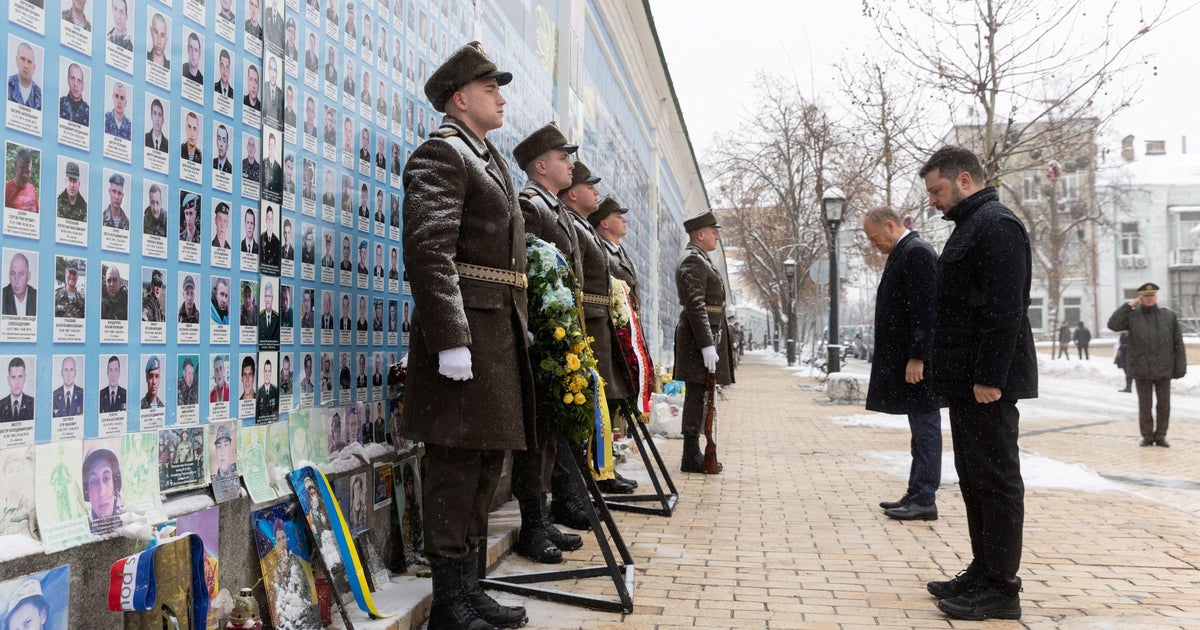
Recent speculation about Ukraine holding snap presidential elections has been firmly pushed back by officials close to President Volodymyr Zelenskyy. Despite a Financial Times report suggesting that Zelenskyy would announce elections as early as May during his upcoming February 24th address—marking four years since Russia’s full-scale invasion—a senior adviser to the Ukrainian president categorically denied these claims. Speaking to CBS News on condition of anonymity, the adviser clarified that “there is no change in the negotiations track that would lead the president to make this announcement.” This statement comes amid mounting international attention on Ukraine’s democratic processes, particularly from the Trump administration, which has been vocal about its expectations for Ukraine to hold national elections. The confusion surrounding potential elections highlights the complex intersection of democratic norms, constitutional requirements, and the brutal realities of an ongoing war that continues to devastate Ukraine.
Trump’s Criticism and Ukraine’s Constitutional Reality
The question of Ukrainian elections has become a politically charged issue, particularly in the context of Ukraine’s relationship with the United States under President Trump’s administration. Last week, Zelenskyy acknowledged to journalists in Kyiv that the Trump administration has been actively pushing both Ukraine and Russia to reach a settlement by June, stating that “the Americans are proposing the parties end the war by the beginning of this summer and will probably put pressure on the parties precisely according to this schedule.” This pressure campaign has included some harsh rhetoric from President Trump, who one year ago called Zelenskyy a “dictator without elections” and more recently, in December, accused him of “using the war” to avoid holding elections. However, Ukrainian officials and political experts consistently point to a fundamental constitutional fact that often gets lost in this debate: under Ukraine’s constitution, national elections simply cannot be held during martial law, which has been continuously in effect since Russia launched its full-scale invasion in February 2022. This isn’t a loophole or political maneuvering—it’s a constitutional requirement designed to protect the integrity of the democratic process during times of national emergency.
The Harsh Realities Making Elections Impossible
Beyond the constitutional prohibitions, the practical realities on the ground in Ukraine make holding free and fair elections virtually impossible while the war continues. Russia’s relentless assault on Ukrainian cities and civilian infrastructure shows absolutely no signs of abating. The statistics are staggering and paint a picture of a country under constant bombardment: in January alone, Russia hit Ukraine with a record-breaking 5,717 bombs and missiles, according to analysis by the Ukrainian monitoring group Oko Gora + News and Analytics. Explosive drone attacks have been equally relentless and indiscriminate. Just this week, a Russian drone struck a civilian home overnight in the Kharkiv region, killing a father and his three toddler children while seriously wounding his pregnant wife—a tragic reminder of the daily terror Ukrainian civilians face. Under martial law, large public gatherings have been prohibited and curfews remain in place specifically to protect civilian lives. The idea of establishing polling stations, organizing campaign rallies, or conducting any semblance of normal electoral activity in this environment is not just logistically challenging—it would be dangerous and potentially deadly for Ukrainian citizens trying to exercise their democratic rights.
Legal and Logistical Obstacles Beyond Security Concerns
Even if the security situation somehow improved overnight, Ukraine would still face enormous legal and logistical barriers to conducting legitimate elections. Oleksiy Danilov, Secretary of the Ukrainian National Security and Defense Council, has made it clear that holding either parliamentary or presidential elections under martial law is simply illegal under Ukrainian law. But the challenges extend well beyond this constitutional barrier. The war has fundamentally disrupted Ukraine’s population distribution in ways that make representative elections nearly impossible to conduct fairly. As of November 2024, approximately 5.2 million Ukrainian refugees were living abroad, according to the Center for Economic Strategy. The United Nations’ International Organization for Migration estimates an additional 3 million Ukrainians are internally displaced within the country itself, unable to return to their home communities and local polling stations. Ukraine currently lacks the infrastructure for remote or absentee voting on the scale that would be required to enfranchise these millions of displaced citizens. This means that any election held during the current conditions would effectively disenfranchise roughly eight million Ukrainians—a significant portion of the electorate whose voices would be silenced not by choice but by the consequences of Russian aggression.
Elections Tied to Peace: The Referendum Question
Ukrainian officials increasingly argue that elections cannot and should not be separated from the broader peace process. Many politicians and advisers believe that any national election should either include or be accompanied by a referendum allowing the Ukrainian people to vote on the actual terms of whatever peace deal eventually emerges from negotiations with Russia. This is particularly important given that any realistic peace agreement might include difficult concessions, potentially including territorial compromises—though President Zelenskyy has thus far ruled out ceding Ukrainian territory. The presidential adviser who spoke to CBS News made this connection explicit: “Elections are just one part of a peace plan. We will vote on all points of the peace plan together, and we cannot cherry pick elections separately.” According to the president’s office, any such referendum would only be considered legitimate if more than half of the country’s eligible voters are able to participate—a threshold that would be impossible to meet under current conditions with millions of Ukrainians displaced or abroad. This approach reflects a fundamental principle: the Ukrainian people who have endured years of war, sacrifice, and suffering deserve the right to approve or reject the terms under which their country makes peace, not just to select their leaders.
The Path Forward: Ceasefire First, Democracy Second
The emerging consensus among Ukrainian officials is clear: elections cannot precede a ceasefire but must follow it. This sequencing isn’t about avoiding accountability or clinging to power—it’s about ensuring that Ukraine’s democratic processes are meaningful, legitimate, and inclusive of all Ukrainian voices. President Zelenskyy himself acknowledged this reality when he responded to President Trump’s criticism in December, stating that elections could be held if the United States and Europe were prepared to “ensure security” in Ukraine during the voting process. This represents a reasonable middle ground: Ukraine is not rejecting elections in principle but insisting that the conditions must be appropriate for genuine democratic participation. For international partners, particularly the United States, the message should be clear: pushing for elections during active warfare, when millions of citizens are displaced and daily bombardment threatens civilian gatherings, doesn’t advance democracy—it undermines it. The international community’s focus should remain on supporting Ukraine in achieving a just peace that respects its territorial integrity and sovereignty. Once a sustainable ceasefire is in place, once refugees can safely return, once martial law can be lifted and constitutional norms restored, then Ukraine can hold the free and fair elections that both its citizens and its international partners want to see. Until then, the priority must be ending the war, not scheduling votes that would be neither safe nor representative of the Ukrainian people’s will.