

VP Vance’s Budapest Visit: Supporting Orbán and Negotiating with Iran
A High-Stakes European Trip with Global Implications
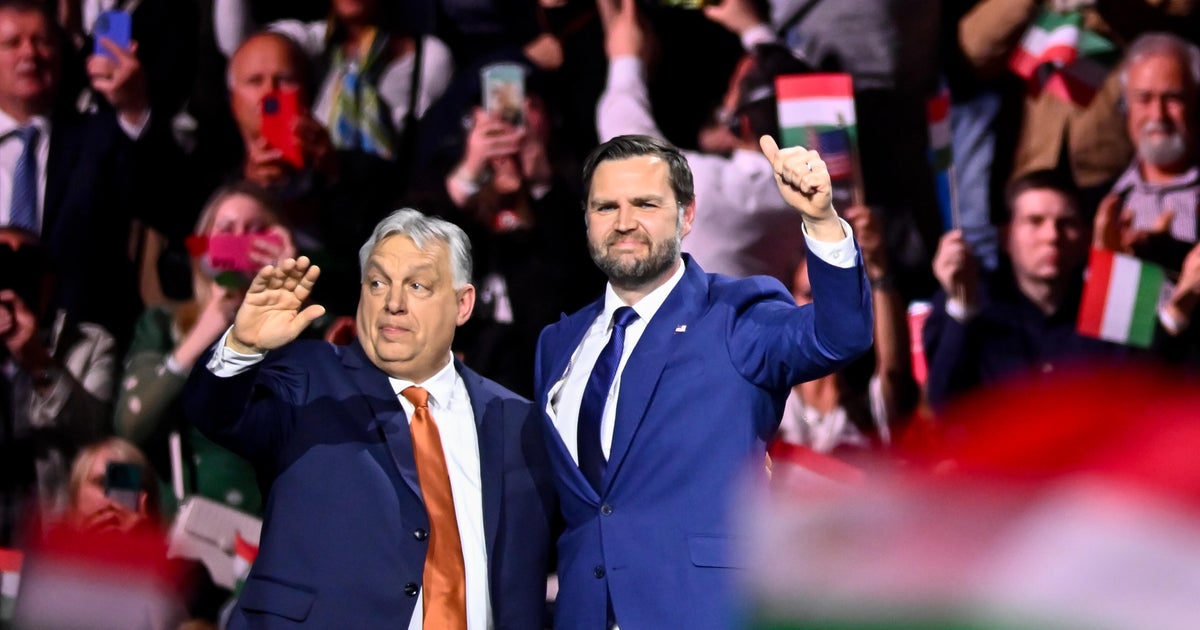
Vice President JD Vance made headlines this week with a controversial trip to Budapest, Hungary, where he openly campaigned for Prime Minister Viktor Orbán’s reelection just days before the country’s parliamentary elections. The visit came at a critical moment, as President Trump’s deadline for Iran to reach a deal on reopening the Strait of Hormuz was rapidly approaching. Speaking to thousands of enthusiastic Hungarians, Vance didn’t mince words about America’s preferred outcome in the election, directly telling the crowd that “we have got to get Viktor Orbán reelected as prime minister of Hungary.” The vice president even called President Trump during his speech, and after a couple of attempts, connected with the president who told the crowd via speakerphone, “I love Hungary and I love that Viktor.” This direct intervention in another nation’s electoral process marks a significant departure from traditional diplomatic norms, where Western democracies typically avoid openly endorsing candidates in allied nations’ elections.
Walking a Diplomatic Tightrope with Iran
During his Budapest visit, Vance addressed the escalating tensions with Iran, taking a notably more measured tone than President Trump’s increasingly ominous messaging back in Washington. The vice president expressed cautious optimism about receiving a response from Iran before the president’s 8 p.m. ET deadline, acknowledging that “they’re not the fastest negotiators” and that delays between responses are common. Vance outlined what he called two potential pathways forward, explaining that the United States has largely accomplished its military objectives, though some work remains regarding Iran’s weapons manufacturing capabilities. According to the vice president, the first path involves Iran making a deal, while the second path would see Iran’s economic situation become “very, very bad” if they refuse to negotiate. Vance suggested that Iran’s recent attacks on U.S. partners in the Middle East stem from the fact that America has achieved its military goals, and Iran is now “trying to extract as much economic pain on the world as possible.” Meanwhile, U.S. forces conducted overnight strikes on military targets at Kharg Island, underscoring the seriousness of the situation.
Trump’s Apocalyptic Warning to Iran
While Vance attempted to strike a diplomatic balance in Budapest, President Trump delivered a far more threatening message from Washington that raised eyebrows across the international community. In a dramatic post on Truth Social, the president wrote that “a whole civilization will die tonight, never to be brought back again,” adding that he doesn’t want it to happen, “but it probably will.” Trump suggested that with what he called “Complete and Total Regime Change” in Iran, where “different, smarter, and less radicalized minds prevail, maybe something revolutionarily wonderful can happen.” He characterized the moment as “one of the most important moments in the long and complex history of the World,” claiming that “47 years of extortion, corruption, and death, will finally end.” The president concluded his post by saying “God Bless the Great People of Iran!” despite having just suggested their civilization would likely end that night. This stark contrast between Vance’s measured optimism and Trump’s apocalyptic rhetoric illustrated the administration’s good cop, bad cop approach to international negotiations, though the president’s extreme language raised concerns about the potential consequences of diplomatic failure.
Defending Western Civilization with an “Illiberal Democrat”
Vance’s justification for his visit to Hungary centered on what he called the shared mission of defending Western civilization, despite the fact that many Western political experts consider Orbán an “illiberal democrat” or “electoral autocrat.” The vice president drew no distinction between Hungary’s vision under Orbán and America’s vision under Trump, instead presenting Hungary as a model for resisting what he characterized as rampant immigration and excessive liberalism. “I’m here because of the moral cooperation between our two countries,” Vance explained, arguing that both nations represent “the defense of western civilization” and “the defense of the idea that children should be able to go to school and get educated and not indoctrinated.” He praised what he described as shared values around family affordability, energy access, and the importance of Christian civilization and values that “animate everything from freedom of speech to rule of law to respect for minority rights and protection of the vulnerable.” This framing presented a stark contrast with assessments from organizations like Freedom House, which designates Hungary as only “partly free” due to concerns about electoral fairness and the suppression of independent institutions. The vice president’s wholehearted endorsement of Orbán’s government suggests the Trump administration sees Hungary as an ideological ally rather than a democracy in decline.
A Rallying Cry Against Brussels Bureaucracy
In what became the crescendo of his Budapest speech, Vance delivered a passionate call to action that framed the upcoming Hungarian election as a battle between national sovereignty and international bureaucracy, between Christian values and secular liberalism. He invoked St. Stephen, one of Christianity’s first martyrs who was stoned to death for preaching about Jesus Christ, asking the crowd whether they would “bend the knee to tyranny” or “proudly stand with St. Stephen and choose a real leader this weekend?” The vice president positioned Orbán as standing against “the bureaucrats in Brussels,” championing sovereignty, democracy, Western civilization, freedom, truth, and “the God of our fathers.” His closing appeal was direct and unambiguous: “Then my friends, go to the polls in the weekend, stand with Viktor Orbán because he stands for you and he stands for all these things.” This rhetoric tapped into long-standing tensions between Hungary and the European Union, which has criticized Orbán’s government for democratic backsliding and violations of EU norms around judicial independence and press freedom. By framing the election as a civilizational struggle rather than a choice between political parties, Vance elevated the stakes and positioned American interests as fundamentally aligned with Orbán’s continued leadership.
The Broader Implications of Unconventional Diplomacy
Vice President Vance’s Budapest trip represents a continuation of the Trump administration’s willingness to break with diplomatic convention in pursuit of ideological alignment and transactional relationships. The open endorsement of Orbán’s reelection campaign signals to other world leaders that the administration values loyalty and shared worldview over concerns about democratic norms or institutional independence. At the same time, Vance’s dual focus on supporting Orbán while managing the Iran crisis demonstrates how the administration is juggling multiple foreign policy priorities simultaneously, sometimes with contradictory messaging. The vice president’s cautiously optimistic tone on Iran negotiations stood in sharp contrast to President Trump’s threats of civilizational destruction, leaving observers uncertain about America’s true intentions and whether diplomatic channels remain genuinely open. As the deadline approached, Vance’s teasing revelation that he had received a message from special envoy Steve Witkoff about negotiations—without revealing its contents—added to the uncertainty surrounding whether Iran would respond in time to avert whatever consequences the president had threatened. Regardless of the immediate outcomes in Hungary’s elections or the Iran negotiations, this week’s events underscored how dramatically the Trump administration’s approach to foreign policy differs from traditional American diplomacy, prioritizing personal relationships, ideological affinity, and unpredictable pressure tactics over multilateral cooperation and respect for democratic processes in allied nations.