
Virginia’s High-Stakes Redistricting Battle: A Fight for Democracy or Political Power?
A Referendum That Could Reshape Congressional Power
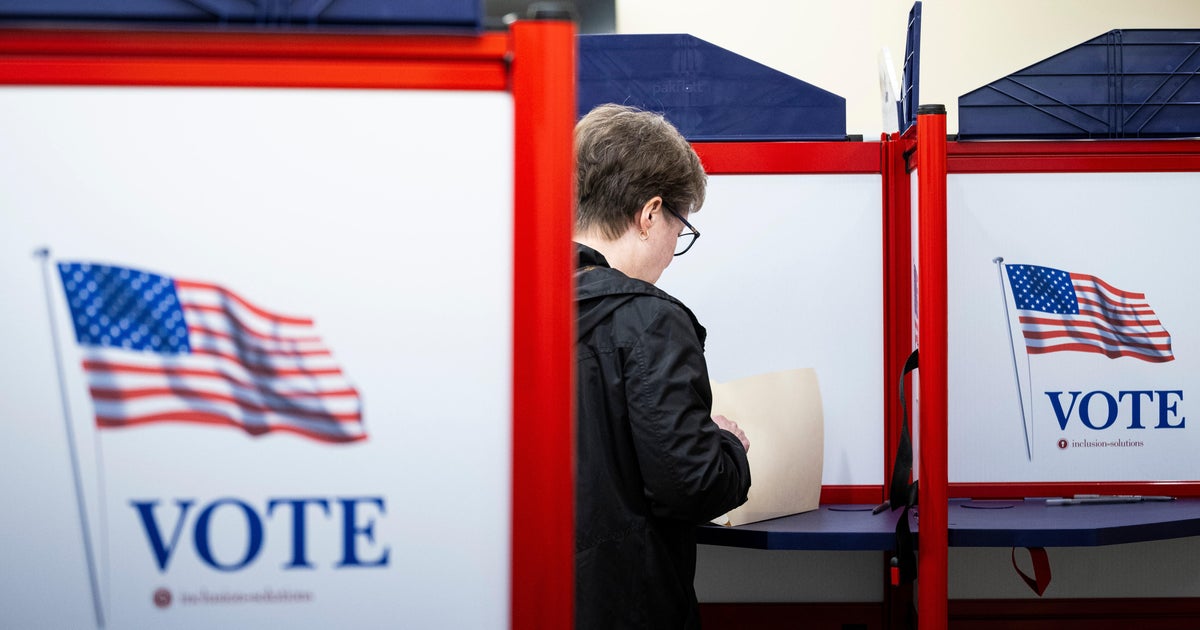
Virginia voters headed to the polls this Tuesday to cast their ballots on one of the most consequential political decisions in recent state history—a referendum that could dramatically redraw the state’s congressional districts in favor of Democrats. The proposed maps would give Democrats a commanding 10-1 advantage in the state’s 11 House seats, a stark shift from the current 6-5 split. With polls open until 7 p.m. Eastern Time and early voting having begun on March 6, the turnout has been remarkably high for a special election. By Monday evening, over 1.35 million Virginians had already cast their ballots early, nearly matching the 1.48 million total votes in last fall’s statewide races. This extraordinary engagement reflects just how much is at stake—not just for Virginia, but for the entire nation’s balance of power in Congress. The referendum asks voters to amend the state constitution to allow a rare mid-decade redistricting using maps drawn by the Democratic-controlled Assembly, breaking from the traditional once-a-decade redistricting process that follows the Census. According to the proposal, these new maps would remain in effect only until 2030, after which the standard redistricting process would resume. The new configuration would split up northern Virginia—home to the Democratic-leaning D.C. suburbs—into several districts that extend into the more conservative southern and western regions of the state, while also emphasizing Democratic strongholds like Richmond and Virginia Beach.
Trump Rallies Opposition as Democrats Frame It as National Defense
The referendum has become a lightning rod for national political attention, with President Trump personally urging Republicans to vote “NO” to what he characterizes as a blatant power grab. Taking to social media with characteristic intensity, Trump posted “VOTE ‘NO’ TO SAVE YOUR COUNTRY!” and appeared on the John Fredericks radio show Monday to denounce the measure as “ridiculous.” Trump pointed out that even some Democrats acknowledge the unfairness of the proposed maps, questioning the temporary nature of the redistricting with skepticism: “They say, ‘oh, they’ll do it once, and maybe they’ll go back to what it was.'” On the Democratic side, the push for redistricting has been framed as a necessary countermeasure to Republican gerrymandering in other states. This strategy mirrors California’s successful ballot measure last year, shepherded by Governor Gavin Newsom, which shifted five GOP-held seats toward Democrats. Virginia Governor Abigail Spanberger and national Democratic leaders have cast the referendum as evening the playing field after Trump directed Texas GOP lawmakers to redraw their congressional maps to give Republicans up to five additional seats. Missouri and North Carolina followed suit, each redrawing maps to eliminate one Democratic lawmaker. The messaging from Democrats has been clear: this isn’t just about Virginia—it’s about defending democracy nationwide against Republican gerrymandering efforts.
The Irony of Overturning Recent Reform
What makes Virginia’s situation particularly complicated and somewhat ironic is that this referendum would essentially overturn a constitutional amendment enacted just five years ago—an amendment that was actually pushed by Democrats at the time. That 2020 reform created a bipartisan commission to draw congressional maps, a move celebrated by good-government advocates as a victory for fairness over partisan manipulation. Brian Cannon of Fair Vote Virginia represents the conflicted position many voters find themselves in. A Democrat for 25 years, Cannon is now publicly opposing the redistricting referendum, pointing to his previous work creating that bipartisan commission. “It’s ridiculous, given that Abigail Spanberger won the state by 15 points—they can just win fair and square two more seats under the fair maps that we have,” Cannon argues. He believes Democrats would have had the momentum to win additional seats fairly in November without resorting to gerrymandering. While Cannon agrees with Republicans in opposing the referendum, he’s quick to note that the GOP “is not willing to say Trump was wrong to start this fight in Texas,” highlighting the hypocrisy on both sides of the aisle. He reports working with Virginians from across the political spectrum who oppose this measure on principle, regardless of their party affiliation.
A State Divided: Purple Virginia’s Risky Gamble
Despite Democrats’ statewide successes in 2025—with Spanberger winning by 15 points and Democratic Attorney General Jay Jones defeating incumbent Jason Miyares even after violent text messages emerged—the referendum’s outcome remains uncertain. A Washington Post/George Mason University poll in March showed the “yes” vote leading by only 5 points, a surprisingly narrow margin given Democratic dominance in recent elections. Mark Rozell of George Mason’s Schar School of Policy and Government characterized the redistricting push as a “risky gamble” for Virginia Democrats because “it sets a precedent. And Virginia is more of a purple state” than solidly blue California. Cannon has observed a troubling shift in voter enthusiasm since November. Republicans are “fired up, in a way they certainly were not in November of last year, and that’s evident in the early voting, even in deep-red spots,” he notes. Meanwhile, some Democrats have told him: “I hate Trump and I hate gerrymandering, and I really am torn and I’m just not going to vote.” This enthusiasm gap could prove decisive. The state’s Republicans, though having suffered from connections to Trump and the federal government—especially as the region deals with fallout from the Trump administration’s federal job cuts, soaring gas prices, and high inflation—appear to have found renewed energy in opposing what they see as Democratic overreach.
The Money Pouring In and National Implications
The financial stakes reflect the national importance of this local referendum. Nearly $100 million has already flooded into the race, with an astounding 95% coming from dark money groups—organizations that don’t have to disclose their donors. Virginians for Fair Elections, supporting the redistricting referendum, has contributed $64 million, while the opposition group Virginians for Fair Maps has poured in nearly $20 million, according to the Virginia Public Access Project. Democrats have sought to nationalize the referendum, featuring former President Barack Obama in advertisements supporting the “yes” vote. His Attorney General, Eric Holder, now chairman of the National Democratic Redistricting Committee, told “Face the Nation” that this is “not a fight only about Virginia.” Holder, who previously advocated against partisan gerrymandering, now argues for a pragmatic approach: “We need to deal with the crisis that we have right now, come up with a way in which we deal with that crisis, and then get back to the redistricting commissions in California and in Virginia.” Holder emphasized a key distinction: “The people have the ability to make this decision in Virginia, as they did in California, as opposed to being imposed upon them in Texas and in Missouri and in North Carolina, which proved to be wildly unpopular, but Republican politicians ignored the will of the people.”
The Bigger Picture: A Nation Wrestling with Fair Representation
There are signs that the redistricting scramble that began last summer in Texas might be cooling. In December, despite Trump’s intervention, a map that would have given Indiana Republicans a 9-0 advantage failed in the GOP-controlled state Senate. Earlier this month, Maryland’s legislative session ended without a vote on a map backed by Democratic Governor Wes Moore to edge out the state’s lone Republican member of Congress. Kyle Kondik, managing editor of Sabato’s Crystal Ball at the University of Virginia Center for Politics, notes that “basically, as of right now, the overall House map hasn’t really changed all that much in favor of one side or the other” despite many states redrawing maps. However, if Virginia Democrats succeed while Republicans fail to push through new maps elsewhere, “Democrats can actually come out ahead on redistricting,” according to Kondik. The Virginia referendum ultimately represents the tension at the heart of American democracy: the conflict between partisan advantage and fair representation. “It’s funny, the themes about saving democracy and quote-unquote fairness, like both sides could make that point and make it in a valid way,” Kondik observes. “And so in some ways, it’s kind of a muddle. I mean, is it a quote-unquote fair map in Virginia? Of course it’s not. But in the broader context of this redistricting war that’s going on, then maybe the fairness argument makes more sense.” As Virginians decide whether to approve maps that undeniably favor Democrats, they’re also wrestling with larger questions: When does fighting fire with fire become just more fire? Can partisan gerrymandering ever be justified as a response to partisan gerrymandering? And who truly gets to define what “fair” means in an increasingly polarized political landscape?