
Virginia Voters Reshape Congressional Map in Major Democratic Victory
A Pivotal Referendum with National Implications
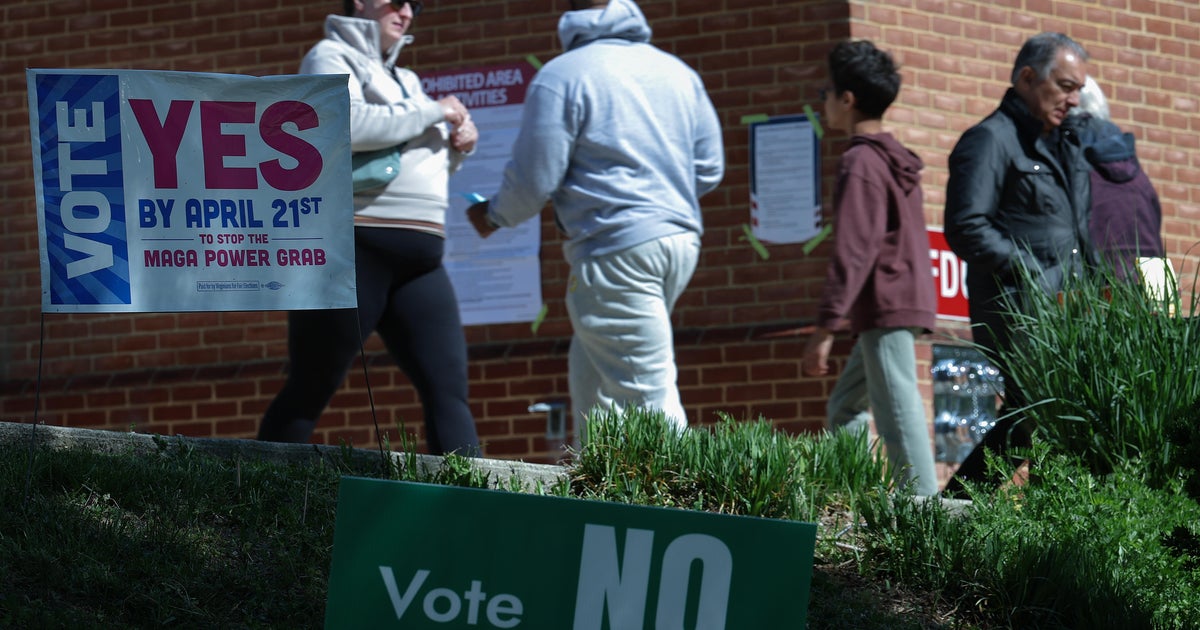
In a closely watched vote that sent ripples through America’s political landscape, Virginia voters approved a controversial new congressional map on Tuesday that fundamentally reshapes the state’s political representation. The referendum, which passed by a narrow margin in the low single digits, creates a dramatically different electoral landscape—one that favors Democrats in ten of the state’s eleven House districts, leaving Republicans with just a single safe seat. This stunning shift could potentially deliver as many as four additional House seats to Democrats, representing a significant setback for Republicans who have been engaged in their own nationwide redistricting efforts ahead of the midterm elections. The vote comes at a particularly crucial time in American politics, as both parties battle over congressional boundaries that will define political representation for the next decade. With nearly $100 million poured into the campaign—95% of it coming from dark money groups on both sides—this referendum became one of the most expensive and contentious ballot measures in recent Virginia history.
The Complex Road to Redistricting in Virginia
Virginia’s path to this moment has been anything but straightforward, reflecting the complicated and often contentious nature of redistricting across America. Just a few years ago, in 2020, Virginia voters took what seemed like a step toward fairness by approving a constitutional amendment that created a bipartisan commission specifically designed to draw the state’s congressional maps. The idea behind this commission was to take the redistricting process out of the hands of partisan politicians and create boundaries that would be fair to both parties and to voters. However, Tuesday’s referendum essentially overturned that system—at least temporarily—by setting aside the maps drawn by the bipartisan commission and replacing them with maps created by the Democratic-controlled General Assembly. Under the new arrangement, these legislature-drawn maps will remain in effect until after the 2030 census, at which point the previous bipartisan commission system will be reinstated. This unusual arrangement reflects the intense political pressures surrounding redistricting and the willingness of both parties to bend or reshape systems when they believe the stakes justify such actions.
Democrats Frame Victory as Response to Republican Gerrymandering
For Democratic leaders, Tuesday’s victory represented not just a win in Virginia but a powerful counterweight to Republican redistricting efforts across the country. National Democrats had deliberately framed the Virginia referendum as a necessary response to what they characterized as aggressive Republican gerrymandering in GOP-controlled states. They pointed particularly to Texas, where Republicans redrew congressional boundaries to convert five Democratic-leaning districts into Republican-leaning ones, potentially shifting the balance of power in that large and influential state. Democratic leaders argued that their Virginia strategy was defensive rather than offensive—a way to level the playing field after Republicans had tilted it in their favor elsewhere. House Minority Leader Hakeem Jeffries of New York captured this sentiment in his victory statement, declaring: “While many expected Democrats to roll over and play dead, we did the opposite.” The Democratic National Committee echoed this combative tone, stating that “Virginians refused to let Trump play games with Americans’ right to fair representation.” This framing proved effective in mobilizing Democratic voters and donors, who saw the referendum as part of a larger national struggle over political representation and voting rights.
The Broader National Redistricting Battle
Virginia’s vote didn’t happen in isolation but rather as one move in a complex national chess game of redistricting that has consumed both parties since the 2020 census. Last year, California—under Democratic Governor Gavin Newsom’s leadership—successfully passed a similar measure that shifted five GOP-held districts toward Democrats, essentially attempting to cancel out the Republican gains in Texas. Meanwhile, Republican-controlled Missouri and North Carolina pursued their own redistricting efforts, each managing to edge out Democrats from one seat. However, not all redistricting attempts succeeded; similar measures in Indiana and Maryland failed to make it through their respective state legislatures, showing that the redistricting battle involves both victories and defeats for each party. The involvement of high-profile national figures underscored just how important these redistricting fights have become. Democrats deployed some of their biggest names to Virginia, including former President Barack Obama and his former Attorney General Eric Holder, who chairs the National Democratic Redistricting Committee. Interestingly, Holder’s organization had previously focused on creating bipartisan commissions for redistricting—exactly the kind of commission that Virginia voters had approved in 2020. However, Holder openly advocated for the Democratic gerrymander in Virginia, telling CBS’s “Face the Nation” that “we need to deal with the crisis that we have right now, come up with a way in which we deal with that crisis, and then get back to the redistricting commissions.” This pragmatic—critics would say hypocritical—approach highlighted how even reform-minded organizations have been willing to bend their principles when immediate political stakes seem high enough.
Republican Pushback and the Politics of Fairness
Republicans didn’t take this Democratic redistricting effort lying down, mounting a vigorous opposition campaign that framed the new maps as an “egregious power grab” and an unfair partisan gerrymander. Representative Richard Hudson of North Carolina, who chairs the House GOP’s campaign arm, pointed to the referendum’s narrow victory margin as evidence that Virginians were deeply divided on the issue. He argued that the close result “reinforces that Virginia is a purple state that shouldn’t be represented by a severe partisan gerrymander.” Republicans found support among many voters in rural parts of Virginia, who expressed concerns that the new map disenfranchises them by diluting their voting power. The new districts strategically spread out Democratic strongholds in northern Virginia, Richmond, and Virginia Beach across multiple congressional districts, making it more difficult for Republicans to win seats even in areas where they have significant support. Former President Trump also weighed in on the Virginia referendum, urging voters to reject the new map—a position that some observers found ironic given his previous support for Republican gerrymanders in Texas, Indiana, Missouri, and North Carolina. However, Trump’s intervention may have had limited impact, as he faces low approval ratings and Virginia has been particularly hard-hit by federal job cuts and rising energy prices under his administration. Republican officials have also pursued legal challenges to the Virginia referendum in state court, though the Virginia Supreme Court allowed the vote to proceed while considering these challenges. In his statement following Tuesday’s results, Representative Hudson urged the courts to “uphold Virginia law,” suggesting that the legal battle over Virginia’s congressional map may continue despite voters’ decision.
Looking Ahead: The Future of American Redistricting
As the dust settles on Virginia’s referendum, questions remain about what this means for redistricting battles in other states and for American democracy more broadly. With Election Day now less than seven months away and primaries and filing deadlines already passed in most states, it’s unlikely that many other states will take up redistricting again before 2026. Florida represents a notable exception, with its legislature set to convene in a special session on redistricting next week. Meanwhile, the Supreme Court’s pending decision in Louisiana v. Callais could reshape the redistricting landscape across the country. That case could potentially weaken Section 2 of the Voting Rights Act, which has historically been used to ensure that minority voters have meaningful opportunities to elect their preferred candidates. If the Court rules against the plaintiffs, it could trigger new congressional maps in several states, potentially undoing some of the work done in this redistricting cycle. The Supreme Court has already left in place the controversial new maps in both Texas and California, suggesting that the judiciary may be reluctant to intervene in redistricting disputes absent clear constitutional violations. The Virginia referendum ultimately reveals the profound tensions at the heart of American democracy today. Both parties claim to support fair representation and oppose gerrymandering, yet both have proven willing to engage in aggressive redistricting when they control the levers of power. The nearly $100 million spent on Virginia’s referendum—most of it from dark money groups whose donors remain hidden from public view—demonstrates how high the stakes have become in these redistricting battles. As America looks toward future elections, the question remains: Is there any path back to a system where congressional boundaries are drawn fairly and transparently, or has redistricting become simply another partisan weapon in an increasingly polarized political landscape? Virginia’s vote suggests that, at least for now, both parties have chosen the path of political hardball over principled reform.