
Minnesota Officials Accused of Covering Up Massive Fraud Schemes
New Report Raises Serious Questions About State Leadership
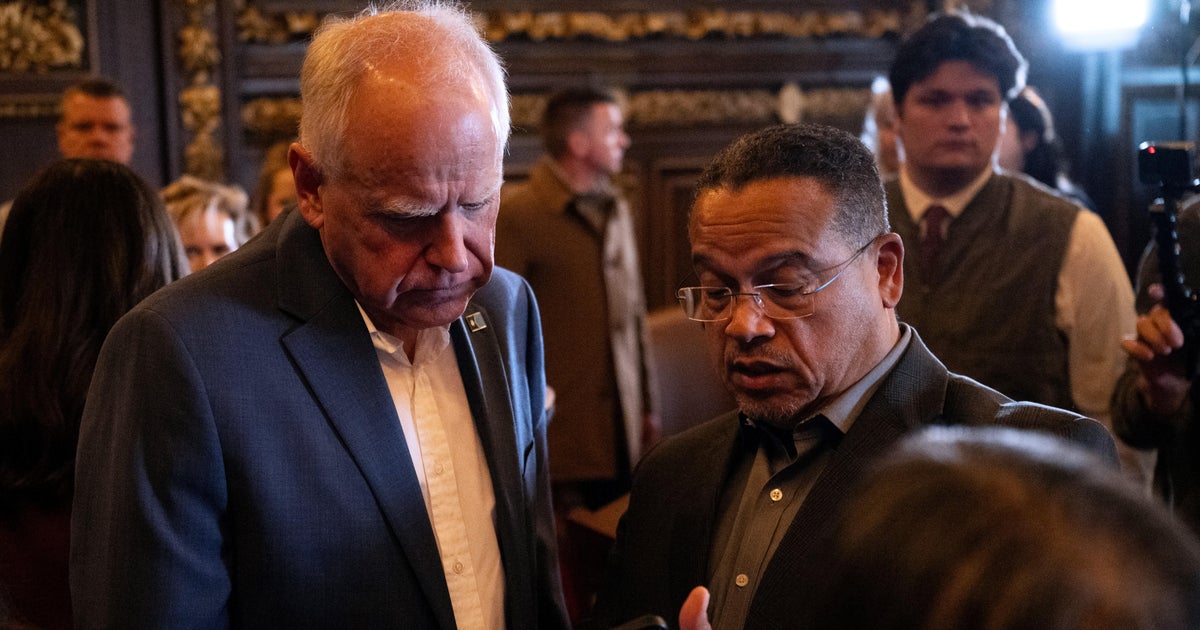
A bombshell report released Wednesday morning by the House Oversight Committee has sent shockwaves through Minnesota’s political establishment, alleging that Governor Tim Walz and Attorney General Keith Ellison engaged in a systematic cover-up of massive fraud within the state’s social services programs. The timing of the report’s release was particularly significant, coming just hours before both officials were scheduled to testify before the committee. The allegations suggest that billions of taxpayer dollars may have been lost to fraudulent schemes while state leadership allegedly ignored warnings, silenced whistleblowers, and prioritized political considerations over fiscal responsibility. This developing story has raised fundamental questions about accountability, government oversight, and the protection of public funds in one of America’s most progressive states.
The Investigation and Its Findings
Republicans on the House Oversight Committee initiated their investigation into Governor Walz’s handling of multiple multimillion-dollar fraud schemes in Minnesota last December. While the investigation remains ongoing, Committee Chairman James Comer, a Republican from Kentucky, has stated that the testimony and documents gathered thus far paint a troubling picture of leadership failure at the highest levels of Minnesota government. According to Comer, the evidence shows that both Walz and Ellison “lied about their knowledge of the fraud, and retaliated against employees who dared to raise concerns.” His statement pulls no punches, asserting that “instead of protecting vulnerable Americans, they handed over billions in taxpayer dollars to fraudsters and threw their own state employees under the bus.” The report specifically claims that both the governor’s and attorney general’s offices were aware of “credible fraud concerns” within the state’s social services programs as early as 2019, yet “meaningful corrective action was delayed or avoided.” This timeline is particularly damning, as it suggests years of inaction despite clear warning signs.
Whistleblowers Silenced and Intimidated
Perhaps the most disturbing allegations in the committee’s report concern the treatment of whistleblowers who attempted to sound the alarm about the fraud they were witnessing. According to the findings, employees who reported their concerns about fraudulent activities experienced retaliation for speaking up. The report alleges that Governor Walz’s administration went so far as to hire private investigators or law firms specifically to “silence staff” who were raising red flags about the misuse of taxpayer funds. Even more troubling are reports from whistleblowers who stated they were explicitly advised not to say anything about the fraud they had discovered because they would be labeled as “racist” or “Islamophobic.” This claim suggests that legitimate concerns about financial fraud were being deliberately suppressed by weaponizing accusations of bigotry, creating a chilling effect that prevented honest employees from doing their duty to protect public funds. The use of identity politics to shield fraudulent activity from scrutiny, if proven true, represents a profound betrayal of both taxpayers and the vulnerable communities these programs were designed to serve.
Political Considerations Over Fiscal Responsibility
The committee’s report makes a striking claim about the motivation behind the alleged inaction: “The Committee has found that Minnesota lacked adequate oversight efforts to verify that taxpayer dollars were being used appropriately and could have stopped the flow of money to fraudsters at any time but chose not to for fear of political retribution from the politically active Somali community.” This allegation suggests that state officials made a calculated decision to allow fraud to continue rather than risk political backlash from an important constituency. If accurate, this finding reveals a troubling prioritization of political considerations over the fundamental responsibility of government to safeguard public resources. The implication is that Minnesota’s leadership was more concerned with maintaining political support than with ensuring that taxpayer money was being used for its intended purpose—helping those truly in need. This alleged failure of oversight didn’t just waste money; it potentially deprived legitimate beneficiaries of crucial services while enriching criminals who exploited the system.
The Feeding Our Future Scandal
The report pays particular attention to the infamous Feeding Our Future scheme, which defrauded taxpayers of approximately $250 million. According to the committee’s findings, the Minnesota Department of Education continued making payments voluntarily to this organization despite “identifying serious program deficiencies.” This allegation directly contradicts claims previously made by Governor Walz, who has suggested that state officials were compelled by the courts to continue payments to Feeding Our Future and other providers. The committee explicitly states that “the court never directed state officials to continue payments to Feeding Our Future or any other ‘fraudulent providers,’ as the governor has previously claimed.” This discrepancy is significant because it suggests the governor may have misrepresented the circumstances surrounding one of the largest fraud cases in Minnesota history. Supporting the committee’s concerns, the Office of the Legislative Auditor released an extensive 120-page report in 2024 that concluded the Minnesota Department of Education’s oversight of Feeding Our Future was “inadequate” and “created opportunities for fraud.” The scope of the problem may be even larger than initially thought—former U.S. Assistant U.S. Attorney Joe Thompson has suggested that the total amount of fraud in Minnesota’s Medicaid programs alone could reach $9 billion or more, a staggering sum that represents a massive betrayal of public trust.
Governor’s Defense and the Political Context
Governor Walz has vigorously defended his administration’s handling of these fraud cases, maintaining that his team has “spent years cracking down on fraudsters.” He has attempted to reframe the controversy by accusing President Trump of “politicizing the issue to defund programs that help Minnesotans.” This defense positions the investigation as a partisan attack rather than a legitimate inquiry into government accountability. Walz’s response highlights the deeply polarized nature of American politics, where even allegations of massive fraud can become fodder for partisan warfare. His supporters might view the investigation as a politically motivated attack designed to undermine a progressive governor and the social programs he champions. His critics, however, see his response as deflection from legitimate questions about oversight failures and the alleged cover-up of fraud that may have cost taxpayers billions. The truth likely requires looking beyond partisan narratives to examine the specific evidence and testimony that the committee has gathered. As both Walz and Ellison testified before the committee following the report’s release, Americans watching the proceedings had an opportunity to hear directly from the officials accused of these serious failures. The coming weeks and months will reveal whether the committee’s allegations can be substantiated with concrete evidence or whether they represent overreach by political opponents. What remains clear, regardless of one’s political perspective, is that the protection of taxpayer dollars and the integrity of programs designed to help vulnerable Americans must remain a priority that transcends partisan considerations.