


Tragedy at Indonesia’s Largest Landfill: A Wake-Up Call on Waste Management
Devastating Collapse Claims Lives After Heavy Rains
A catastrophic disaster struck Indonesia’s largest waste facility on Sunday night when torrential rains triggered a massive garbage avalanche at the Bantargebang Integrated Waste Treatment Facility in Bekasi, just outside Jakarta. The collapse claimed at least five lives and left several others missing, buried under tons of unstable refuse. The tragedy unfolded as workers were going about their daily routines—truck drivers making their regular deliveries and food vendors serving meals to landfill workers—when mountains of accumulated waste suddenly gave way. The incident has once again highlighted the dangerous conditions at one of Southeast Asia’s most critical yet overwhelmed waste management sites, raising urgent questions about worker safety and the sustainability of Indonesia’s approach to handling garbage from its rapidly growing urban centers.
Massive Rescue Operation Faces Dangerous Conditions
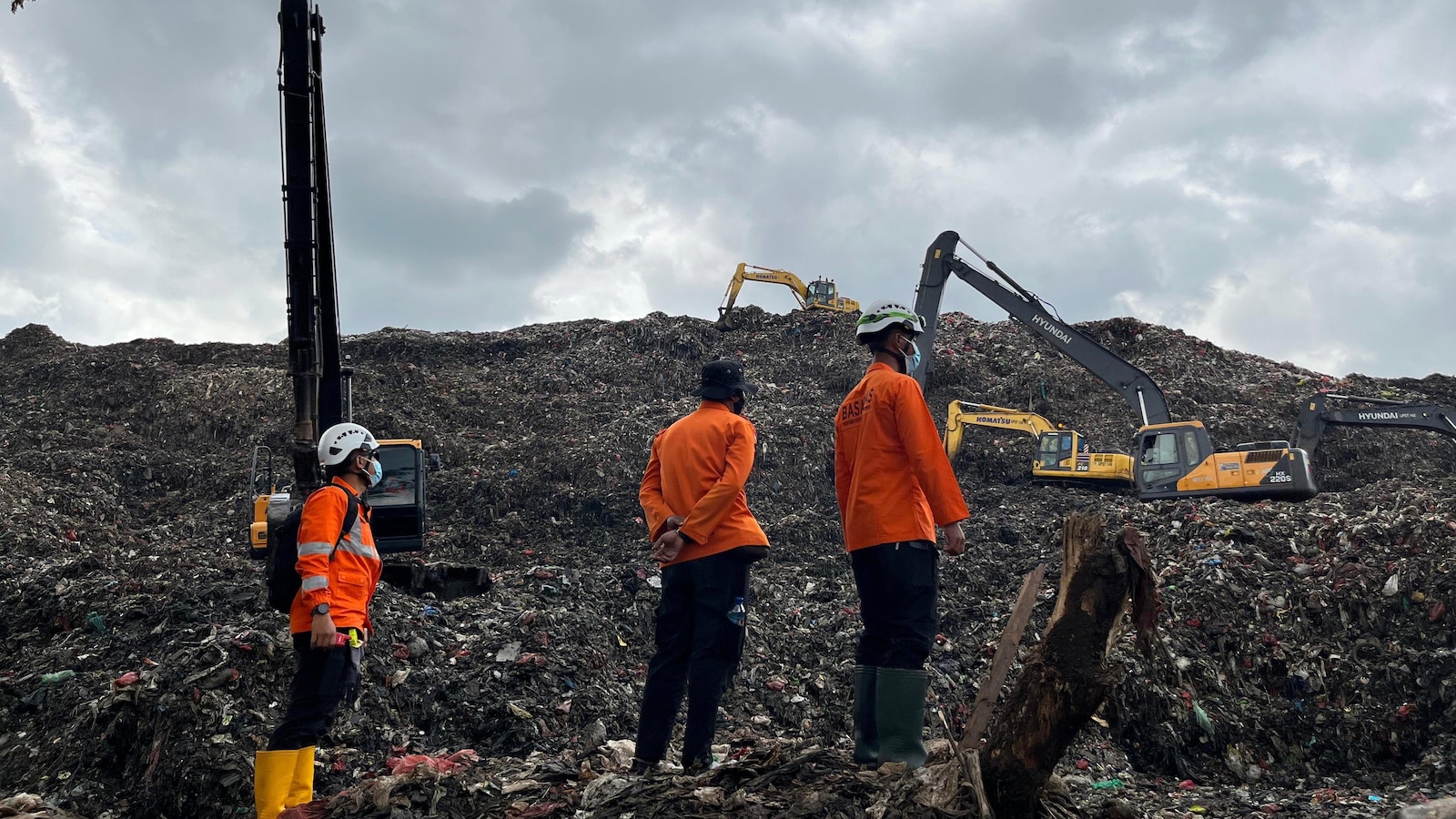
More than 300 rescue workers, including personnel from the National Search and Rescue Agency, police officers, soldiers, and dedicated volunteers, were immediately deployed to the disaster site late Sunday. Armed with heavy excavation machinery and sniffer dogs, these brave responders have been working around the clock in extremely hazardous conditions to locate survivors and recover victims from the debris. Desiana Kartika Bahari, who heads Jakarta’s Search and Rescue Office, explained that the operation is proceeding with extreme caution due to the unstable nature of the collapsed waste heaps, which could shift at any moment and endanger the rescue teams themselves. Photos and videos released by rescue agencies paint a grim picture of the scene—massive excavators carefully digging through mountains of garbage, with several trucks and small food stalls completely buried beneath the debris. Among the confirmed victims are two garbage truck drivers who were likely making deliveries when disaster struck, and two food stall vendors who had been working near the landfill to serve the workers who keep this essential facility running day and night. Four fortunate individuals managed to escape the avalanche, but at least three people remain unaccounted for as rescue teams continue their painstaking search through the unstable terrain.
Weather Concerns Complicate Ongoing Search Efforts
The rescue operation faces significant challenges from more than just the unstable waste piles. Abdul Muhari, spokesperson for Indonesia’s National Disaster Management Agency, has warned that weather forecasts for the coming days predict additional rainfall across Jakarta and surrounding areas, creating the very conditions that triggered Sunday’s deadly collapse. This concerning forecast has forced rescue coordinators to implement strict safety protocols for the teams working at the site, balancing the urgent need to find missing victims against the real danger of exposing rescuers to further collapses. The unstable nature of the collapsed material presents a constant threat of additional ground movement, which could bury rescue workers themselves. Bahari confirmed that authorities have not ruled out the possibility of additional victims, as teams are still working to gather comprehensive data about exactly how many vehicles and workers were present in the affected area when the avalanche occurred. This uncertainty adds another layer of tragedy to an already heartbreaking situation, as families anxiously wait for news about their loved ones while rescue teams work against time and weather.
A Recurring Nightmare: History of Landfill Disasters in Southeast Asia
Tragically, Sunday’s deadly collapse is not an isolated incident but part of a disturbing pattern of landfill disasters across Southeast Asia. The region’s rapid urbanization and inadequate waste management infrastructure have created deadly conditions at multiple sites. Just this past January, workers in the Philippines experienced a horrifyingly similar tragedy when a collapse of garbage and debris at a landfill buried people working in low-rise buildings nearby, killing at least four individuals, injuring twelve others, and leaving more than thirty people missing. Even more devastating was a disaster that struck Indonesia itself in 2005, when a seven-meter-high (23-foot) mountain of rubbish collapsed following heavy rainfall near the West Java city of Bandung. That catastrophic landslide buried or damaged sixty homes across two villages, killing thirty-one people and leaving dozens more missing. These recurring tragedies share common elements—heavy rainfall destabilizing massive accumulations of waste, workers and nearby residents caught unaware, and rescue operations complicated by dangerous conditions and the sheer volume of debris. The pattern reveals a systemic problem across the region: as cities grow and consumption increases, waste management systems have failed to keep pace, creating literal mountains of garbage that pose deadly risks to those who work in and around them.
Bantargebang: A Critical Facility Under Enormous Pressure
The Bantargebang facility sits at the center of Indonesia’s waste management crisis, serving as the primary destination for household garbage from Greater Jakarta, a metropolitan area home to more than 30 million people. Every single day, an enormous volume of refuse arrives at this sprawling site, where it accumulates in ever-growing heaps. The facility has faced repeated warnings from environmental and safety experts about operating beyond its designed capacity, creating dangerous conditions for workers and environmental hazards for surrounding communities. The sheer scale of waste flowing into Bantargebang reflects Indonesia’s broader challenges with garbage management—a rapidly growing middle class is consuming more products with packaging, but recycling infrastructure remains limited, and traditional practices of open dumping continue to dominate. Workers at the site labor in difficult and dangerous conditions, exposed to unstable waste piles, toxic fumes, and now, as Sunday’s tragedy demonstrates, the risk of catastrophic collapses. Food vendors who serve these workers also face these dangers, simply trying to make a living by providing meals to those who keep Jakarta’s waste moving. The facility’s overwhelming burden has made it a symbol of Indonesia’s urgent need to modernize its approach to waste management, transforming from a system that simply accumulates garbage to one that reduces, recycles, and converts waste into resources.
Government Plans for Reform: Will Change Come in Time?
In response to mounting concerns about Bantargebang and similar facilities nationwide, the Indonesian government announced an ambitious reform initiative late last year, setting a two-year deadline to fundamentally transform how the country handles its waste. The centerpiece of this plan is an accelerated waste-to-energy project designed to reduce the nation’s chronic over-reliance on open dumping by converting refuse into electrical or thermal energy. Backed by a new presidential regulation intended to streamline licensing procedures and encourage private investment in waste management infrastructure, the initiative represents a significant policy shift. If successful, it could transform mountains of garbage from environmental hazards into sources of renewable energy, addressing two critical challenges simultaneously—waste management and energy needs. However, questions remain about whether these reforms can be implemented quickly enough to prevent future tragedies like Sunday’s collapse, and whether they will adequately protect the workers who keep these essential facilities operating. The human cost of Indonesia’s waste crisis is now undeniably clear, measured in the lives lost at Bantargebang and the families left grieving. As rescue operations continue and the nation mourns, the tragedy serves as a powerful reminder that waste management is not merely an environmental or logistical issue—it is fundamentally a matter of human safety and dignity. The workers who handle our waste, the vendors who serve them, and the communities living near disposal sites all deserve systems that protect their lives, not endanger them. Whether Indonesia’s ambitious reform plans can deliver that protection remains to be seen, but the urgency of the need has never been more apparent than in the aftermath of this devastating collapse.