
Minnesota Leaders Face Congressional Scrutiny Over Alleged Fraud Mismanagement
A High-Stakes Hearing on Federal Fund Fraud
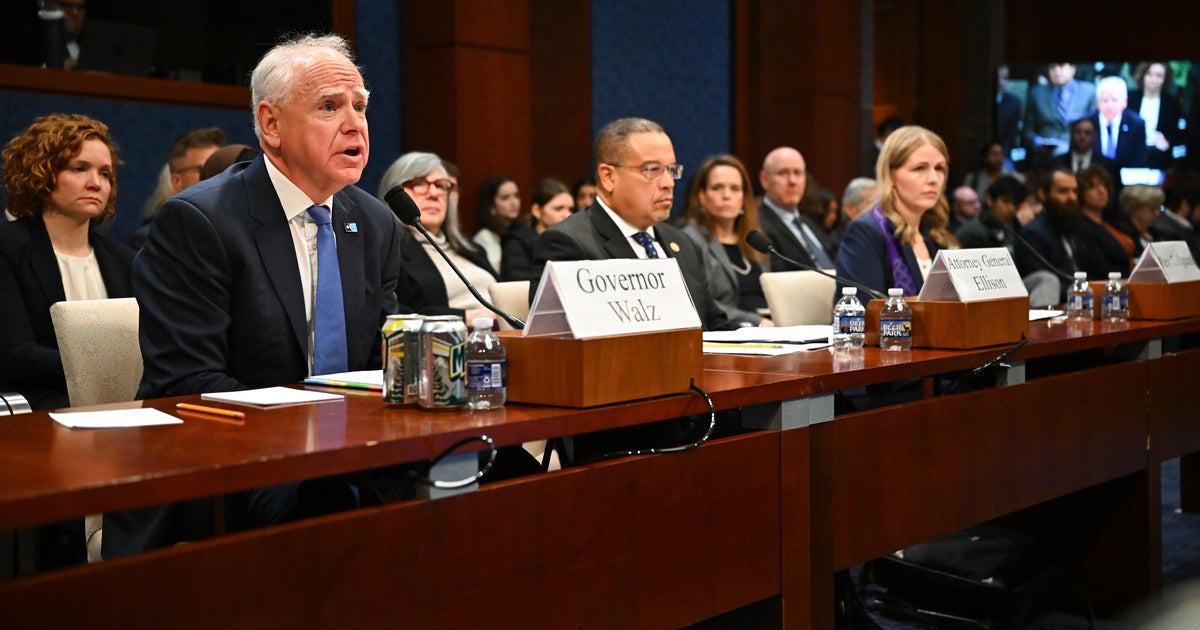
Minnesota Governor Tim Walz and Attorney General Keith Ellison found themselves in the political hot seat Wednesday morning, testifying before the House Oversight Committee about allegations that their state mishandled federal funds and turned a blind eye to massive fraud schemes. The hearing, led by Republican Committee Chairman James Comer of Kentucky, centers on accusations that Minnesota officials knew about widespread fraud in state social services programs but failed to act decisively, and in some cases, actively silenced those who tried to sound the alarm. The committee’s investigation claims to have uncovered evidence showing that both Walz and Ellison were aware of “credible fraud concerns” dating back to 2019, yet “meaningful corrective action was delayed or avoided.” Adding to the gravity of the situation, the hearing also addressed the controversial federal law enforcement operation known as Operation Metro Surge, which Democrats and faith leaders argue has caused more harm than good to Minnesota communities. The proceedings included testimony from Rev. Mariah Tollgaard, who was arrested while protesting the operation and described it as using fraud allegations as a “pretext to scapegoat the most vulnerable” residents of her state.
The Allegations: Billions Lost and Whistleblowers Silenced
The scope of the alleged fraud is staggering. The most prominent case involves the Feeding Our Future scheme, a $250 million fraud that exploited federal child nutrition programs. According to the committee’s findings, the Minnesota Department of Education continued making payments to the organization even after identifying “serious program deficiencies,” and did so voluntarily rather than under any court order—contradicting previous claims made by Governor Walz. But the Feeding Our Future case may be just the tip of the iceberg. Former U.S. Assistant Attorney Joe Thompson dropped a bombshell estimate in December, suggesting the total fraud in Minnesota’s Medicaid programs alone could reach $9 billion or more. Walz dismissed Thompson’s figure as “sensationalism,” arguing it doesn’t help the state address the problem, though he did vow to fix it. Beyond the financial losses, the committee’s report paints a troubling picture of internal suppression, alleging that whistleblowers who tried to report fraud faced retaliation. The report even accuses Walz of hiring private investigators and law firms to “silence staff” who raised concerns—a charge that, if proven true, would represent a serious abuse of power and obstruction of accountability.
Minnesota’s Leaders Push Back and Defend Their Records
Both Walz and Ellison came to the hearing prepared to defend their administrations vigorously. In his opening statement, Governor Walz highlighted Minnesota’s reputation as one of the best states for families and overall quality of life, emphasizing his administration’s commitment to ensuring Minnesotans have “access to top-notch public schools, quality health care, good jobs.” While acknowledging that Minnesota’s programs aren’t “immune from fraud,” Walz firmly denied any cover-up or willful ignorance. “Let me be clear: In Minnesota, if you defraud public programs, if you steal taxpayer money, we’ll find you, we’ll prosecute you, we’ll convict you and we’ll throw you in jail,” he declared. Attorney General Ellison struck a similar tone, asserting that he has “worked every day as attorney general to hold fraudsters accountable” and expressing pride in his office’s record of approximately 300 Medicaid fraud convictions and $80 million recovered for taxpayers. Both officials also used their opening statements to criticize Operation Metro Surge, with Walz calling it “political retribution at an unparalleled scale” and Ellison arguing that “it harmed our economy, it scarred our people and it dealt a devastating blow to fraud enforcement in Minnesota.” Before the hearing, Walz had accused President Trump of “politicizing the issue to defund programs that help Minnesotans,” framing the investigation as partisan rather than genuinely concerned with good governance.
Heated Exchanges and Demands for Accountability
The hearing quickly became contentious, with Republican lawmakers expressing frustration at what they perceived as evasive or insufficient answers. House Majority Whip Tom Emmer, himself a Minnesota representative, spent much of his time aggressively questioning Ellison about an alleged meeting with “Somali fraudsters” in December 2021 and whether “an organized crime ring” is operating in Minnesota. Emmer repeatedly cut off Ellison’s attempts to respond, reclaiming his time before the attorney general could fully answer. Wrapping up his questioning, Emmer framed the core issues bluntly: “We are left with two questions. One, what did Gov. Walz and Keith Ellison know about the fraud, and two, when did they actually know it?” He suggested that if direct and truthful answers weren’t provided at the hearing, both officials should be placed under oath for depositions. Chairman Comer also had tense exchanges with both Minnesota leaders, particularly over why payments weren’t stopped sooner once fraud was suspected. Walz defended the decision by saying, “We’re not going to stop payments that feed children until we have the proof that things happened,” while Ellison explained his “office doesn’t have the authority to do a stop payment.” Comer accused Walz of continuing payments “because you didn’t want to rock the boat”—a charge Walz denied. The exchanges grew so heated that at one point, Walz asked the chairman, “Would you like me to answer or not, chairman?” after being repeatedly interrupted.
The Operation Metro Surge Controversy
A significant portion of the hearing focused on Operation Metro Surge, the Trump administration’s federal law enforcement operation in Minnesota, which officials justified as a response to the state’s fraud crisis. Democratic committee members challenged the operation’s effectiveness and humanitarian impact. Representative Robert Garcia of California asked Walz how the surge had affected fraud investigations, to which the governor responded that investigations were “stymied” due to departures from the U.S. Attorney’s Office and the increased workload from immigration cases. Representative Stephen Lynch of Massachusetts asked what other states facing similar federal interventions should expect. Walz described ICE’s actions as “the most unprofessional, aggressive force that I think you could imagine,” while Ellison noted “we don’t have a good record of cooperation” from federal partners during the operation. The hearing also featured testimony from Rev. Mariah Tollgaard, called as a witness by Democrats, who argued that “fraud is being used as a pretext to scapegoat the most vulnerable among us and justification for the violent and cruel actions of Operation Metro Surge.” Tollgaard, who was arrested alongside other faith leaders while protesting, explained that she felt it was her religious duty as a Christian to stand up for her neighbors during what she characterized as a federal occupation of her state.
The Political Stakes and Path Forward
The hearing represents more than just an investigation into fraud management—it’s become a flashpoint in the larger political battle between state Democratic leadership and the Republican-controlled House, with the Trump administration’s involvement adding another layer of complexity. Minnesota GOP House Majority Leader Harry Niska emphasized before the hearing that he wanted to see accountability from Walz and Ellison, saying, “If the governor respects Congress, I hope he is going to be forthcoming.” The political tension was evident in the responses from both offices before the hearing even began, with Walz’s spokesperson saying, “The Governor takes Congress seriously, and his hope is that Congress will take Congress seriously”—a statement that seemed to question whether the hearing was truly about oversight or political theater. Ellison’s office stated he would “encourage members of the committee to set partisan politics aside and work across party lines to fight fraud and protect Medicaid.” As the hearing concluded, the fundamental questions remained: Did Minnesota’s leadership know about the fraud earlier than they’ve admitted? Did they do enough to stop it once they knew? And were whistleblowers truly retaliated against for trying to protect taxpayer dollars? The answers to these questions will likely determine not only the political futures of Walz and Ellison but also how federal-state cooperation on fraud prevention evolves nationwide. Meanwhile, vulnerable Minnesotans caught in the crossfire between anti-fraud efforts and the protection of essential services continue to await resolution.