
Defense Secretary Addresses Ongoing Middle East Military Operations
High-Stakes Briefing Amid Intensifying Conflict
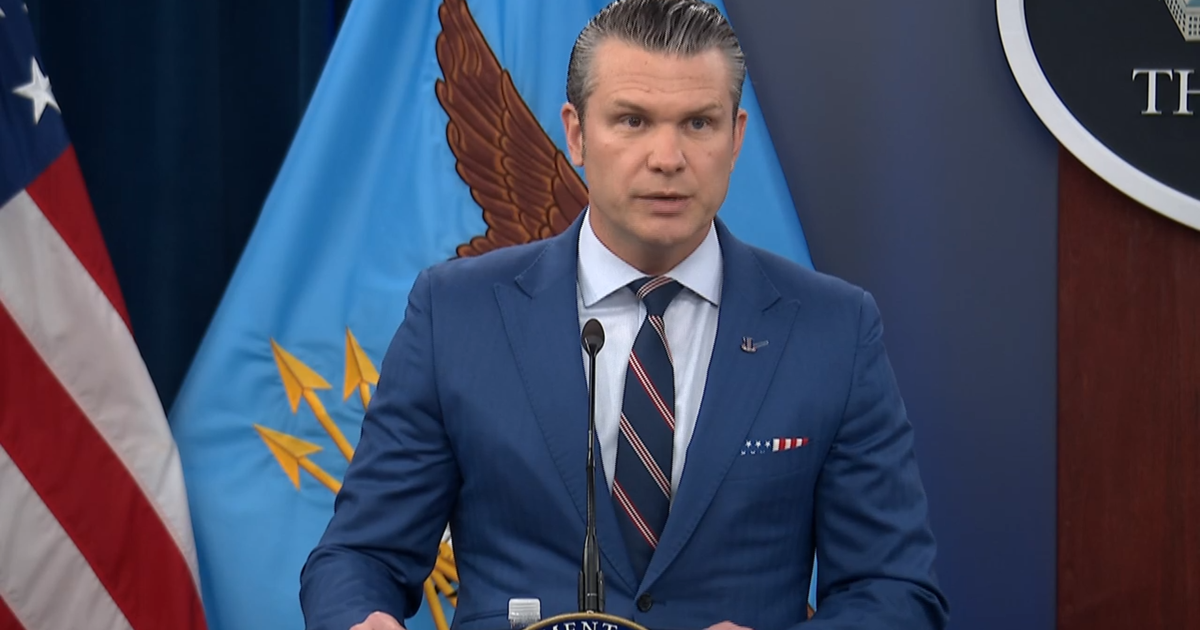
On Tuesday morning, Defense Secretary Pete Hegseth and Chairman of the Joint Chiefs of Staff Dan Caine stepped before the cameras to address the American public about the continuing military operations in the Middle East. The briefing came at a critical moment, as U.S. airstrikes against Iranian targets show no signs of slowing down. Hegseth’s opening remarks were charged with emotion and resolve, painting a picture of a conflict that he and others in his generation understand all too well. He spoke directly about the decades-long shadow that Iran has cast over the region, characterizing the Iranian regime as “barbaric savages” who have been responsible for the deaths of American service members for nearly five decades. His words carried the weight of personal experience, referring to fallen soldiers as “my guys, your guys, our guys” – a humanizing acknowledgment that behind every statistic is a real person with family, friends, and a future cut short. The Defense Secretary’s passionate language reflected the deep frustration many military leaders feel about Iran’s support for terrorist proxies throughout the region and what he described as their “cowardly attacks” on American forces and allies over the years.
A Different Kind of War
Hegseth was careful to distinguish the current military engagement from previous American conflicts in the Middle East that became synonymous with failure and endless commitment. “This is not 2003, this is not endless nation-building,” he insisted, drawing a clear line between the current operations and the costly, drawn-out campaigns in Iraq and Afghanistan that defined the presidencies of George W. Bush and Barack Obama. Those wars became quagmires that consumed troop lives, drained the national treasury, and ultimately failed to achieve their stated objectives in ways that satisfied the American public. The message Hegseth wanted to convey was that this time would be different – that the mission has clear objectives, a defined enemy, and an exit strategy that doesn’t involve decades of occupation and attempts to remake foreign societies. This distinction matters tremendously to a war-weary American public that has watched two generations of young people deploy to the Middle East, many returning with physical and psychological wounds, and some not returning at all. The promise that this conflict won’t follow the same troubled path is intended to maintain public support for military action while acknowledging the legitimate concerns Americans have about open-ended foreign commitments.
Iran’s Response and the Scale of Operations
The briefing revealed staggering numbers that illustrate just how extensive the military campaign has become. In just the first week of operations, U.S. forces struck more than 3,000 Iranian targets – a massive aerial campaign that demonstrates both American military capability and the depth of the target list that military planners had prepared. However, this show of force has come at a cost that cannot be measured merely in munitions expended or targets destroyed. Seven American service members have already lost their lives in this conflict, a sobering reminder that even with America’s technological advantages, warfare still extracts a terrible human price. Chairman Caine acknowledged these fallen heroes, expressing gratitude for their sacrifice and the example their service provides to all Americans. Meanwhile, Iran has shown no signs of backing down despite the overwhelming firepower being directed against its military infrastructure and proxy forces. Iranian Foreign Minister Abbas Araghchi told PBS News that his country is prepared to continue attacking Israel “with our missiles as long as needed and as long as it takes.” This defiant stance suggests that despite Hegseth’s assertion that Iranian leaders are “desperate, scrambling,” and that the U.S. and its allies are “winning,” the conflict may be far from the conclusion that American officials are projecting.
Mixed Messages From Leadership
Perhaps the most confusing aspect of the current situation is the contradictory messaging coming from different levels of the U.S. government. President Trump told CBS News on Monday that he believes the “war is very complete, pretty much,” adding that “there’s nothing left in a military sense.” This statement suggests that the campaign has achieved its military objectives and that Iranian capacity to make war has been effectively neutralized. However, the Defense Department seems to be telling a very different story. In a move that directly contradicts the President’s assessment, the Pentagon posted a video on social media with the caption “We have Only Just Begun to Fight” – a reference to the famous words of John Paul Jones during the American Revolution that signals determination to continue the fight regardless of obstacles. This disconnect between presidential rhetoric and military messaging creates confusion about the actual status of the conflict and what Americans should expect in the coming days and weeks. Is the war winding down or ramping up? Are we at the beginning or the end? These are critical questions that have significant implications for military families, financial markets, and America’s allies who are trying to understand U.S. intentions and commitment levels.
Defining Victory in Modern Conflict
In an interview with 60 Minutes, Hegseth attempted to clarify what President Trump means when he says the U.S. will only accept unconditional surrender from Iran. “We’re fightin’ to win. It means we set the terms,” Hegseth explained, trying to translate the President’s bold declaration into practical military objectives. He acknowledged that this is about more than just military victory in the traditional sense – it’s about bringing an enemy to their knees and dictating the conditions of peace. “This is war. This is conflict. This is bringing your enemy to their knees. Now, whether they will have a ceremony in Tehran Square and surrender, that’s up to them,” he said. This framing reveals a fundamental tension in modern warfare: how do you define victory against an ideologically motivated adversary that doesn’t recognize conventional rules of conflict? The image of Iranian leaders formally surrendering in a public square seems unlikely given the nature of the regime and its revolutionary ideology. Yet the administration appears committed to achieving some form of decisive outcome that goes beyond simply degrading Iranian capabilities. The question remains whether such an absolute victory is achievable or if the rhetoric is running ahead of realistic military and political possibilities.
Economic Implications and Strategic Considerations
Beyond the military dimensions of the conflict, there are enormous economic stakes at play that affect people far beyond the Middle East. President Trump has floated the possibility of “taking over” the Strait of Hormuz if Iran blocks the waterway – a strategic chokepoint through which roughly 20% of the world’s oil supply flows daily. This isn’t an idle threat or a minor policy consideration; it’s a statement with profound implications for the global economy. The mere possibility of disruption to this crucial waterway sent oil markets into turmoil on Monday, with prices swinging wildly throughout the day. At one point, oil reached $119 per barrel, the highest price since 2022 when Russia’s invasion of Ukraine similarly disrupted global energy markets. These price spikes don’t just affect traders and oil companies – they ripple through the entire economy, raising costs for transportation, heating, manufacturing, and virtually every sector that depends on energy. For ordinary Americans, this means higher prices at the gas pump, increased costs for goods and services, and potential economic slowdown if energy prices remain elevated. The strategic importance of the Strait of Hormuz cannot be overstated, and Iran knows this, which is why the waterway has long been a pressure point in regional conflicts. The question of whether the U.S. would actually take military control of the strait, what that would entail, and how long such an operation could be sustained are all questions without clear answers at this point. What is clear is that this conflict, however it unfolds, will be felt in American wallets as well as on distant battlefields.