
The Truth Is Out There: What Scientists Really Expect from Trump’s UFO File Release
A New Chapter in the Search for Answers
For generations, questions about what the government might know regarding extraterrestrial life have captivated the human imagination, spawning countless conspiracy theories, science fiction novels, and Hollywood blockbusters. Now, we may finally get some concrete answers. President Trump recently announced his intention to declassify government files related to UFOs, unidentified aerial phenomena (UAP), and any documentation concerning alien or extraterrestrial life. In a social media post, he directed Defense Secretary Pete Hegseth and other agency leaders to begin identifying and releasing relevant government documents on these “highly complex, but extremely interesting and important matters.” This announcement came on the heels of former President Obama’s somewhat cryptic comment to a podcaster that aliens “are real” – though he later clarified he simply meant that given the vastness of the universe, life elsewhere is statistically probable, and that he never saw actual evidence during his presidency. Trump suggested Obama might have been referencing classified information, though he himself remains uncertain about the existence of aliens. With over 750 new UAP sightings reported between May 2023 and June 2024 alone, including bizarre incidents like a U.S. missile apparently bouncing off a glowing orb in the sky, the public’s appetite for answers has never been greater. While many hope for revelations about alien visitations, experts suggest the real benefit may lie in allowing scientists to analyze the data and provide factual explanations for currently unexplained phenomena.
Tempering Expectations: What a Former UFO Investigator Says
Sean Kirkpatrick, who served as the first director of the Department of Defense’s All-domain Anomaly Resolution Office (AARO) from July 2022 until December 2023, offers a sobering perspective for those hoping for bombshell revelations. As someone who was literally tasked with investigating UFOs and unexplained aerial phenomena, Kirkpatrick warns that many people are likely to be disappointed by what the files reveal. “There are going to be unsatisfied people,” he told CBS News, predicting that conspiracy theorists will continue claiming there’s a cover-up regardless of what’s released. During his tenure leading the government’s UFO investigation office, Kirkpatrick – a physicist by training – encountered a range of explanations for seemingly mysterious sightings, from Air Force “hazing” incidents to deliberate deceptions designed to conceal classified defense programs. His office worked diligently to declassify everything possible, but evidence of extraterrestrial technology simply wasn’t there. “Nothing would have made me happier in that job but to have discovered alien technology and rolled it out,” Kirkpatrick admitted, adding that he doesn’t expect the newly released files to contain anything substantially different from what his office already examined. While he believes life probably exists somewhere in the vast universe, he considers the probability that intelligent extraterrestrial life has actually visited Earth to be “little to none.” He views Trump’s declassification order primarily as a distraction for the administration rather than a genuine revelation-in-waiting.
The Scientific Consensus: Life Elsewhere, But Probably Not Here
Scientists who have studied unidentified phenomena largely agree on two seemingly contradictory points: life almost certainly exists elsewhere in the universe, but we have no credible evidence that it has visited Earth. Federica Bianco, an associate professor at the University of Delaware who served on NASA’s independent team studying unidentified anomalous phenomena, puts it succinctly: “The probability that we are the only life form or even the only technical society in the universe is negligibly small.” However, she’s quick to add that as both a scientist and NASA UAP panel member, she hasn’t seen anything indicating we’ve observed phenomena that violate the laws of physics or require the explanation of alien visitation. Renowned astrophysicist Neil deGrasse Tyson, director of the Hayden Planetarium, knows exactly what he’ll be looking for in the declassified files: “An actual alien. If one is presented, then no documents are necessary at all.” He suggests the files will likely reveal something far less dramatic – that most people who report mysterious objects in the sky are simply unfamiliar with optical, climatic, and astronomical phenomena. “The urge to have immediate answers drives many people to explain what they see as visiting space aliens from across the galaxy,” Tyson explains. “I call this, ‘aliens of our ignorance.'” He points out a compelling modern reality: billions of photos and a million hours of video are uploaded to the internet daily, yet none contain images of actual aliens. The assumption that the government somehow has exclusive access to visiting aliens that billions of smartphone users worldwide have missed, and that hundreds or thousands of people have successfully kept this secret, defies both logic and Benjamin Franklin’s famous observation that three people can keep a secret only if two of them are dead. In his upcoming book about potential alien encounters, Tyson emphasizes that scientific skepticism isn’t dismissiveness – it’s the foundation of how objective truths are established.
Beyond the Giggle Factor: Why Scientists Want Better Data
Dr. Shelly Wright, an observational and experimental astrophysicist at UC San Diego who also served on NASA’s independent study team, acknowledges that scientific inquiry into UAPs and potential alien life often creates what she calls a “giggle factor” among the public. Nevertheless, she believes there needs to be more rigorous scientific investigation of these topics, especially given the public’s deep curiosity. People constantly ask her, “Are we alone out here?” As someone who searches for life in the universe, Wright remains humbled by the immense scale of our galaxy and the universe beyond. While she considers the possibility of alien life existing to be likely, she notes that doesn’t mean such life is anywhere near us. She’s excited about the document release but, based on her experience reviewing only unclassified materials on the NASA team, doesn’t expect to find much of substance. Wright anticipates most documents will be heavily redacted due to the sensitivity of military surveillance equipment responsible for many UAP sightings – releasing detailed information could compromise national security. However, she suggests a middle path: declassifying surveillance documents from decades ago would allow scientists to study the material using modern technologies unavailable when the data was originally collected, potentially yielding new insights while protecting current security interests. Dr. Janna Levin, a professor of physics and astronomy at Barnard College and CBS News contributor, emphasizes that even as we learn more about the universe, “life still seems rare,” making astronomers “very excited” about potential clues in the released documents. However, scientists aren’t looking for the little green men of 20th-century science fiction – they’re interested in evidence of microbes, the tiny organisms that started life on Earth and might exist elsewhere or even have arrived here on meteors from other planets.
Looking for the Truly Anomalous
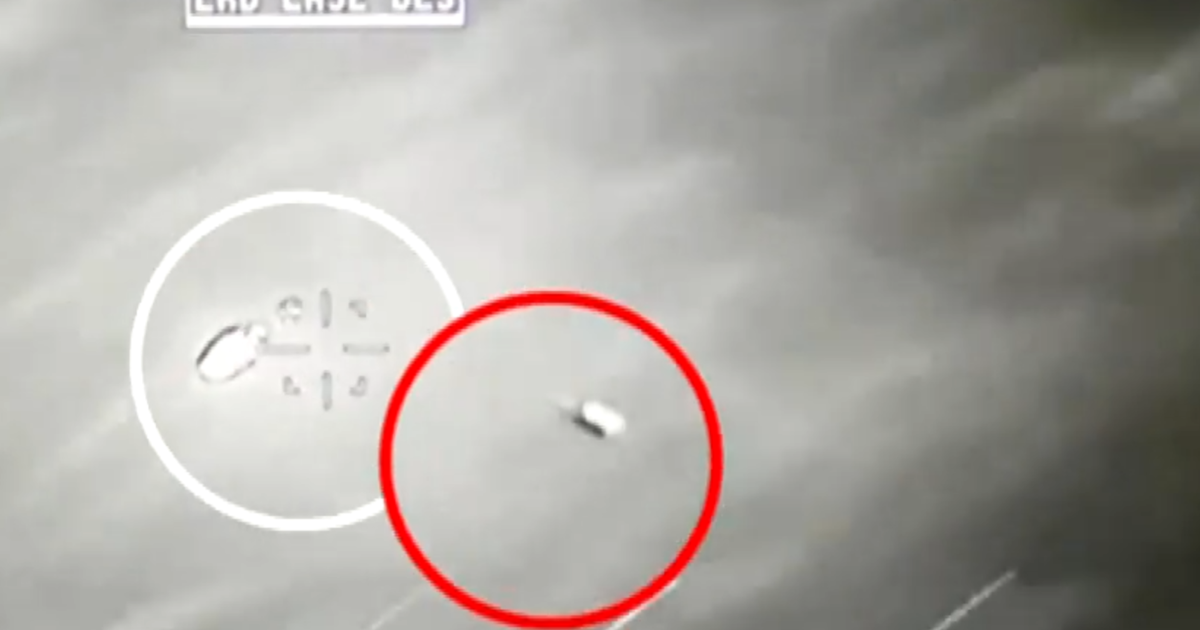
Harvard theoretical physicist Avi Loeb, a prominent researcher of anomalous phenomena, represents a more open-minded approach within the scientific community. He believes the key to examining the declassified documents is applying known physics to determine what truly defies explanation. Loeb told CBS News that he spoke with members of Congress, hoping they’ll consult scientists like himself when reviewing the files, because “something mundane might explain the data” in most cases. He points to footage shown before Congress last summer that purported to show a missile fired at what a congressman called an “orb” off the coast of Yemen – Loeb examined the footage and concluded it was simply a drone, nothing anomalous. When he gets the chance to review the classified files, he’ll be searching specifically for the unexplainable. “There might well be a few incidents out of hundreds that would really be anomalous, and that’s what I’m looking for,” he explains. Loeb’s fundamental question when examining seemingly strange data is whether the objects operate within the fundamental abilities of humans. If not, he’s intrigued, because an object that appears to defy physics could genuinely be extraterrestrial. He leads the Galileo Project, which searches for artifacts from extraterrestrial civilizations near Earth, and has written about why much currently classified material may hold little interest: some information is kept secret merely to avoid exposing sophisticated military sensors to adversarial nations, or because officials believe certain unidentified objects were manufactured by those adversaries. “I am not interested in technologies manufactured by humans on Earth,” Loeb writes. “I am far more curious about whether a more advanced civilization exists in interstellar space.”
What This Means for the Rest of Us
The impending release of government files on UFOs and potential extraterrestrial life represents a fascinating moment in the intersection of science, government secrecy, and public curiosity. While scientists overwhelmingly expect the documents will disappoint those hoping for proof of alien visitation, the exercise may still prove valuable. At minimum, it could demystify many unexplained sightings by providing data that scientists can analyze with modern tools and methodologies. It may reveal how often seemingly inexplicable phenomena have mundane explanations rooted in atmospheric conditions, experimental aircraft, optical illusions, or simple unfamiliarity with astronomical events. For the scientific community, any genuinely anomalous data – incidents that defy conventional explanation even after rigorous analysis – would be invaluable for advancing our understanding. The broader lesson may be about how we approach the unknown. Scientists like Tyson, Bianco, Wright, Levin, and even the more open-minded Loeb all emphasize the importance of evidence-based reasoning over wishful thinking. Their skepticism isn’t cynicism or closed-mindedness; it’s the disciplined approach that has allowed humanity to distinguish truth from fiction and gradually expand our knowledge of the universe. Whether or not the files contain anything truly mysterious, they offer an opportunity for the public to see how science actually works – not through dramatic revelations and conspiracy theories, but through careful analysis, peer review, and the patient accumulation of evidence. And if, against the expectations of most experts, something genuinely anomalous emerges from the documents, the scientific method provides the best framework we have for understanding it. As we await the release, perhaps the most important question isn’t whether we’ll find proof of aliens, but whether we’re ready to think critically about whatever we do find.