



Japan’s New Political Direction: Understanding Prime Minister Takaichi’s Conservative Agenda
A Decisive Victory Reshaping Japanese Politics
Japanese Prime Minister Sanae Takaichi has secured a significant electoral victory that fundamentally transforms her political standing and Japan’s policy direction. Her ruling party’s commanding performance in the crucial lower house of parliament has granted her unprecedented authority to implement what many consider the most conservative policy agenda Japan has seen in decades. Takaichi frames her vision under the banner of making Japan “strong and prosperous,” but her proposals have sparked intense debate both domestically and internationally. The election results effectively give her a mandate to pursue sweeping changes across security, defense, immigration, and social policy—areas that have long been contentious in Japanese politics. For supporters, this represents a necessary recalibration of Japan’s position in an increasingly uncertain world; for critics, it signals a worrying departure from the country’s postwar commitment to pacifism and social progressivism. What’s clear is that Takaichi’s win marks a turning point, one that will reverberate through Japanese society and its relationships with neighboring countries for years to come.
Transforming Japan’s Defense and Security Posture
At the heart of Takaichi’s agenda lies a fundamental reimagining of Japan’s defense and security policies. She has committed to revising these policies by December, with plans that represent a dramatic shift from the pacifist principles that have guided the country since World War II. Central to this transformation is her intention to lift the longstanding ban on weapons exports, a move that would fundamentally alter Japan’s role in the global arms trade and international military cooperation. Takaichi envisions Japan as a more proactive security partner, strengthening intelligence-gathering capabilities to work more seamlessly with the United States and other defense partners including Australia and Britain. To achieve this, she plans to establish a dedicated national intelligence agency, signaling Japan’s intention to play a more assertive role in regional and global security matters.
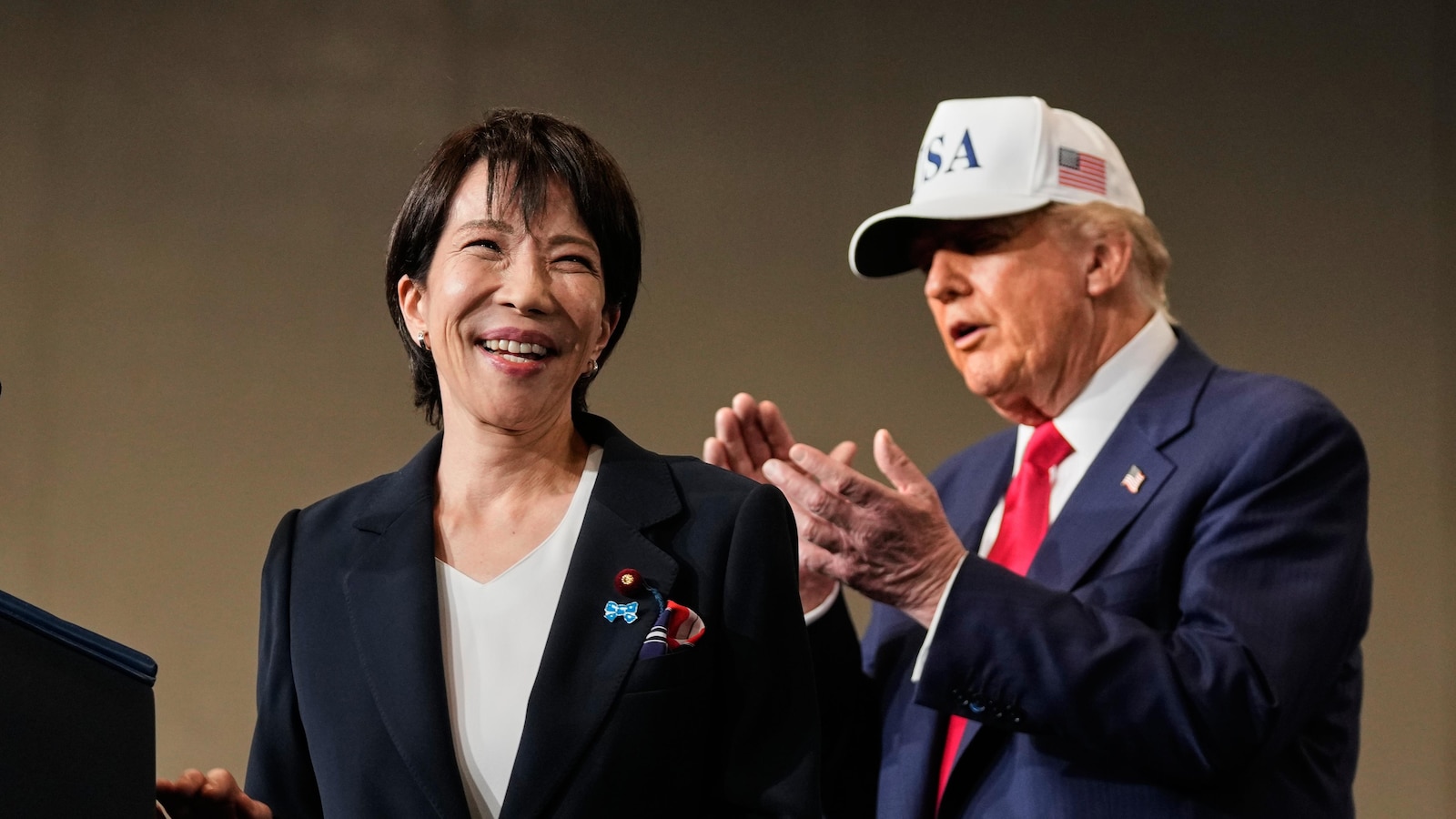
Perhaps most controversially, Takaichi is pushing forward with an anti-espionage law that has raised alarm among civil rights advocates who worry it could be used to suppress dissent and undermine fundamental freedoms. She has already demonstrated her commitment to meeting expectations from Washington by following through on a pledge to U.S. President Donald Trump to double Japan’s annual defense budget from 2022 levels, reaching 2% of the country’s gross domestic product by March. This massive increase in military spending represents not just a financial commitment but a philosophical shift in how Japan sees its role in regional security. Her upcoming visit to the White House on March 19 to meet with President Trump—who publicly endorsed her before the election—will likely focus on defense cooperation, Japan’s $550 billion investment package pledged to Washington last October, and the increasingly complex situation with China. These moves signal that Takaichi is prepared to align Japan more closely with American strategic interests, potentially at the cost of the delicate diplomatic balance Japan has maintained in the Asia-Pacific region.
Navigating the China Challenge and Regional Tensions
Takaichi’s approach to China represents perhaps the most delicate and potentially consequential aspect of her foreign policy agenda. Her remarks in November suggesting that Japan might become involved if China takes military action against Taiwan sent shockwaves through the region, prompting diplomatic and economic reprisals from Beijing. Taiwan, a self-governing island that China claims as its own territory, has become a flashpoint in regional tensions, and Takaichi’s willingness to openly discuss Japanese involvement marks a departure from the traditionally cautious language Japanese leaders have used on this sensitive issue. With her strengthened political position following the election, analysts expect Takaichi to pursue an even more hawkish stance toward China, potentially escalating tensions in an already volatile region.
A particularly symbolic indicator of her approach came when she mentioned her desire to visit Tokyo’s Yasukuni Shrine, where approximately 2.5 million Japanese war dead are honored, including convicted war criminals from World War II. Takaichi was once a regular visitor to the shrine but has avoided it since taking office, recognizing that such visits invariably provoke protests from China, South Korea, and other countries that suffered under Japanese military aggression during the war. However, in a recent interview with Fuji Television, she expressed her wish to “create an environment” that would allow a Yasukuni visit that neighboring countries could understand—a diplomatic formulation that suggests she’s looking for ways to honor what she sees as Japan’s war dead without completely abandoning regional relationships. This balancing act reveals the fundamental tension in Takaichi’s foreign policy: her desire to assert a more nationalist vision of Japan while maintaining the economic and diplomatic relationships that are essential to the country’s prosperity.
Immigration and Social Policies: A Turn Toward Restriction
Beyond security matters, Takaichi has embraced increasingly restrictive positions on immigration and the rights of foreigners in Japan, policies that resonate with a growing far-right movement in the country. This shift comes as Japan faces a demographic crisis, with a rapidly aging population and declining birth rates creating severe labor shortages across many sectors of the economy. While previous governments promoted foreign labor as a necessary solution to these challenges, Takaichi has aligned herself with voices claiming that immigration is making Japanese communities unsafe and causing cultural conflicts. This narrative has been championed by anti-globalist parties like Sanseito, which has seen its support grow among those who view increasing diversity as a threat to traditional Japanese culture and social cohesion.
In January, Takaichi’s government approved significantly tougher rules governing permanent residency and naturalization, along with new measures designed to prevent unpaid taxes and social insurance contributions by foreign residents. These policies reflect a broader philosophy that prioritizes what Takaichi frames as protecting Japanese society and culture, even if it means restricting the flow of people and ideas from outside. Her social policy positions are equally conservative: she supports maintaining the imperial family’s male-only succession rules, opposes legalizing same-sex marriage, and resists changing the 19th-century civil law that effectively requires married couples to share a surname—a practice that overwhelmingly results in women abandoning their maiden names. In what rights activists characterize as an attempt to block genuine reform, Takaichi is instead promoting a law that would allow greater use of maiden names as aliases rather than legal names. These positions have energized her conservative base but have also drawn criticism from those who see them as keeping Japan out of step with evolving social norms in other developed democracies and potentially discouraging the participation of women in professional and public life.
Economic Challenges and Controversial Fiscal Plans
On the economic front, Takaichi faces the dual challenge of addressing the immediate concerns of ordinary Japanese citizens struggling with rising prices and stagnant wages, while also managing the country’s massive national debt, which stands at roughly triple the size of its entire economy—the highest debt-to-GDP ratio among advanced economies. Her approach prioritizes government spending to stimulate growth and provide relief to households, even though economic experts warn this could further delay necessary fiscal consolidation and potentially undermine Japan’s long-term financial stability. Central to her economic agenda is what she calls “crisis-management investment” targeting 17 strategic areas including food security, energy independence, defense capabilities, and supply chain resilience—sectors she views as critical to Japan’s national security and economic sovereignty in an uncertain global environment.
Perhaps her most headline-grabbing economic proposal is a temporary sales tax cut, with her campaign pledge including consideration of suspending the 8% food consumption tax for two years to ease the burden of household living costs. While such a measure would provide immediate relief to Japanese families facing higher grocery bills, Takaichi’s ambiguity about how she would fund this tax cut has caused considerable anxiety in financial markets. Investors and economists worry that such populist measures, while politically appealing, could exacerbate Japan’s already precarious fiscal situation. The fundamental tension in Takaichi’s economic approach is that she’s trying to satisfy voter demands for immediate relief while simultaneously pursuing expensive defense buildups and strategic investments, all without a clear plan for addressing the underlying debt crisis. She must now pass a budget bill for fiscal 2026 that balances these competing priorities, a task that will test both her political skills and her economic team’s ability to craft sustainable policies. How she navigates these economic challenges will likely determine whether her vision of a “strong and prosperous” Japan proves viable or whether the contradictions in her approach create new vulnerabilities for the world’s third-largest economy.
The Road Ahead: Implications and Uncertainties
Takaichi’s electoral victory and her ambitious policy agenda represent a pivotal moment not just for Japan, but for the broader Asia-Pacific region and the global order. Her plans to fundamentally reshape Japan’s security posture, restrict immigration, resist social reforms, and pursue expansive fiscal policies while managing crushing national debt create a complex and potentially contradictory set of challenges. The international community will be watching closely to see whether she can strengthen Japan’s defense capabilities and navigate the China challenge without triggering a destabilizing regional arms race or economic conflict. Domestically, her success will depend on whether she can deliver economic improvements for ordinary citizens while maintaining the support of both traditional conservatives and the emerging far-right elements that helped power her victory. The coming months will reveal whether Takaichi’s vision of a more assertive, traditional Japan can succeed in today’s interconnected world, or whether the tensions inherent in her approach will ultimately limit what she can achieve.