
Trump Turns to Obscure Federal Agency to Insure Oil Tankers Amid Gulf Crisis
A Bold Response to Global Oil Supply Concerns
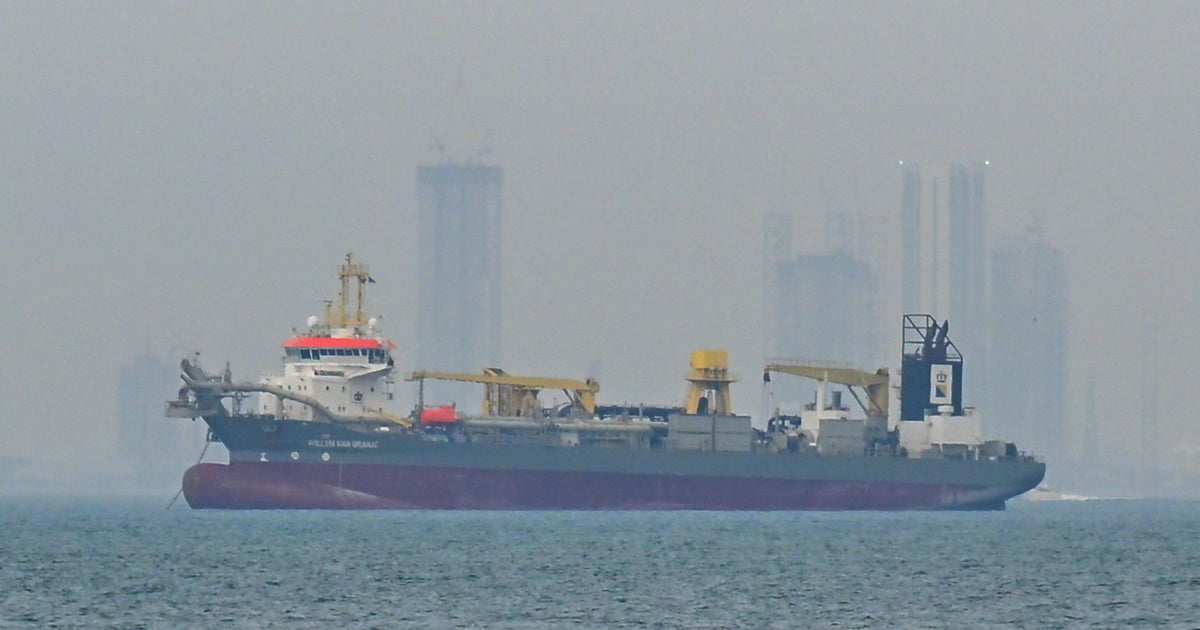
As tensions in the Persian Gulf escalate and traditional insurers retreat from the region, President Trump has announced an unprecedented solution to keep oil flowing through one of the world’s most critical shipping routes. In a move that has surprised both policy experts and industry observers, the administration is deploying the U.S. International Development Finance Corporation (DFC)—a relatively unknown government agency—to provide insurance coverage for vessels navigating the dangerous waters near Iran. The president took to Truth Social to declare that this initiative would ensure the “free flow of energy” continues despite the ongoing conflict with Iran. The announcement also included promises of U.S. Navy escorts for oil tankers traveling through the Strait of Hormuz if circumstances demand it. This narrow waterway serves as a vital chokepoint for global oil shipments, with roughly one-fifth of the world’s petroleum passing through its waters. The decision comes at a critical moment when major international insurance providers, including NorthStandard, the London P&I Club, and the American Club, have suspended coverage for ships entering Iranian waters and the broader Gulf region, citing unacceptable risks from the escalating military conflict. These disruptions are already making their presence felt in American wallets, as oil prices climb and gas station prices follow suit.
Understanding the DFC: From Development Projects to Oil Tanker Insurance
The U.S. International Development Finance Corporation represents a dramatic shift from traditional government operations. Established in 2019, the DFC emerged as the successor to the Overseas Private Investment Corporation, which had served since 1971 as America’s development finance institution. The agency’s original mission focused on channeling private investment capital toward developing nations, providing the financial tools and risk protection necessary to fund projects in regions where traditional investors hesitate to venture. The DFC’s portfolio has historically encompassed a wide range of initiatives across energy, healthcare, critical infrastructure, and technology sectors in low-income countries. Its investments have varied tremendously in scale, from modest commitments of less than $800 to massive undertakings exceeding $2 billion. Past projects have included railway system upgrades, environmental restoration efforts, and the development of liquefied natural gas facilities in emerging economies. According to Clemence Landers, who serves as vice president and senior policy fellow at the Center for Global Development, the agency has traditionally concentrated its efforts on countries where capital is scarce and economic development needs are most acute. This background makes the agency’s new role insuring commercial shipping through a war zone all the more remarkable—and controversial.
What the DFC Insurance Coverage Actually Means
In its official statement released on Tuesday, the DFC outlined its intention to support commercial shipping charterers, shipowners, and maritime insurance companies to prevent major disruptions in global trade. However, the agency has been notably tight-lipped about specific details, declining to provide further comment beyond the initial announcement. Treasury Secretary Scott Bessent offered additional context during a CNBC interview on Wednesday, revealing that DFC CEO Ben Black has been working on contingency plans for this scenario for months. According to Bessent, the agency will be reaching out to ship owners and insurance brokers in the coming days to implement the program. The DFC emphasized its readiness to “mobilize its political risk insurance and guaranty products to stabilize international commerce and support American and allied businesses operating in the Middle East during this period of conflict with the Iranian regime.” Yet significant questions remain unanswered, particularly regarding which vessels will qualify for coverage. The administration has not clarified whether the insurance will extend only to U.S.-flagged ships or include vessels registered under other nations’ flags—a distinction that carries enormous implications for both the program’s scope and its cost to American taxpayers.
Political Risk Insurance in Uncharted Waters
Political risk insurance has long been a core offering within the DFC’s toolkit, designed to protect investors against losses from war, political upheaval, and hostile actions by national or international forces. The agency’s website lists this coverage as one of its primary products, providing a safety net for businesses venturing into unstable regions where conventional insurance is unavailable or prohibitively expensive. However, policy experts emphasize that the current application of political risk insurance represents a fundamental departure from the DFC’s established practices. Landers described the move as a “profound departure” from the agency’s traditional focus on supporting economic growth in impoverished nations. She noted that the DFC’s most common use of political risk insurance in recent years has been for “debt-for-nature swaps”—innovative arrangements where the agency backs a country’s external debt in exchange for commitments to environmental conservation projects. These initiatives align clearly with the DFC’s development mission. Providing war risk insurance for commercial oil tankers in an active conflict zone, by contrast, falls well outside the agency’s historical mandate and raises questions about whether this represents an appropriate use of a development finance institution or a misapplication of government resources for purposes they were never intended to serve.
The Taxpayer Question: Who Foots the Bill?
Perhaps the most pressing concern surrounding this initiative involves its potential cost to American taxpayers. The DFC has refused to disclose estimates for how much underwriting policies for ships in the Middle East might cost, and President Trump’s promise of “reasonable” pricing offers little concrete information. Policy analysts warn that the financial implications could be staggering. Landers pointed out that given the extraordinary risks involved in the current Gulf situation, this single insurance initiative could potentially consume much or all of the agency’s total risk exposure capacity, which stood at $205 billion as of December 2025. Should an insured vessel be attacked or destroyed, American taxpayers could face liability running into hundreds of millions or even billions of dollars. “Basically, this is the public sector subsidizing potentially a massive payout to private investors,” Landers explained, highlighting the fundamental concern that taxpayer money is being put at risk to protect commercial shipping operations that primarily benefit private companies and, potentially, foreign nations. This arrangement raises fundamental questions about whether the American public should bear the financial risk for ensuring global oil supplies continue flowing, particularly when some of that oil may be destined for countries like China rather than the United States.
Broader Implications and Unanswered Questions
The controversy extends beyond financial considerations to encompass geopolitical and policy concerns. Texas Representative Joaquin Castro articulated one of the most pointed criticisms, suggesting in a social media post that “this certainly looks like the United States will be subsidizing and protecting oil shipments to China.” This observation touches on a central tension in the policy: if DFC insurance extends to vessels flying foreign flags and carrying oil to other nations, American taxpayers would effectively be underwriting the energy security of countries around the world, including potential strategic competitors. The White House has not responded to requests for comment on this specific concern or provided clarity on which vessels will qualify for coverage. The decision to deploy the DFC in this unconventional role also raises questions about precedent and mission creep within government agencies. If a development finance institution can be redirected from its core mission of supporting economic growth in poor countries to providing war risk insurance for commercial shipping, what other purposes might it serve in the future? The lack of public debate or congressional authorization for this significant policy shift has troubled some observers who see it as an example of executive overreach. As oil prices continue to rise and Americans feel the pinch at the pump, the administration clearly felt pressure to take action to stabilize global energy markets. Whether using the DFC as an insurer of last resort represents wise policy or an expensive improvisation remains to be seen, but the decision has unquestionably placed this little-known agency at the center of America’s response to one of the most complex geopolitical challenges facing the nation today.