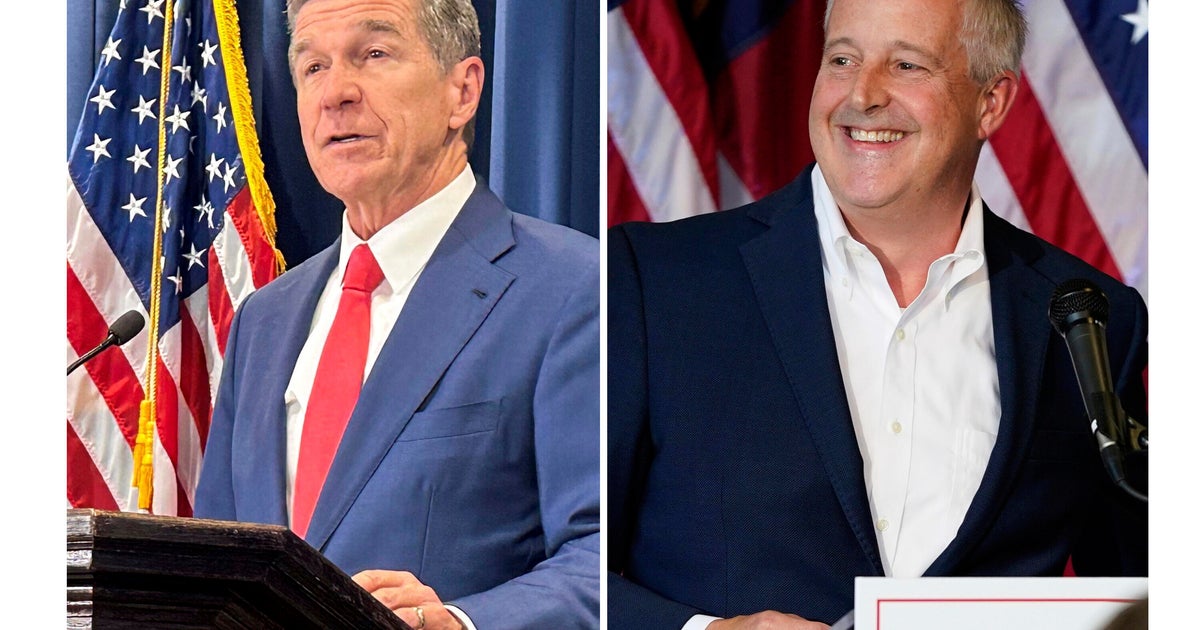

Battle for North Carolina: Cooper vs. Whatley in High-Stakes Senate Showdown
The Race Takes Shape After Primary Victories
The political landscape in North Carolina has officially shifted into high gear as two heavyweight candidates secured their party nominations for what promises to be one of the most closely watched Senate races in the country. Former Governor Roy Cooper, a Democrat with deep roots in state politics, and Michael Whatley, the former chairman of the Republican National Committee, emerged victorious from their respective primary elections on Tuesday night. While these victories came as no surprise to political observers who have been tracking the race for months, the official confirmation marks the beginning of what will likely be a bruising and expensive battle for a crucial Senate seat. The two candidates haven’t exactly been sitting idle—they’ve essentially been trading political punches for months already—but now the gloves are truly off as they face each other directly in the general election arena.
An Open Seat Creates Unprecedented Opportunity
The stakes for this Senate race became dramatically higher when two-term Republican Senator Thom Tillis made the unexpected announcement last June that he would not seek reelection. The timing of his decision was particularly noteworthy, coming just hours after President Trump publicly threatened to support a primary challenger against him. Tillis, who had earned a reputation for occasionally working across the aisle and breaking with strict party orthodoxy, expressed genuine concern about the current state of political cooperation when he withdrew from the race. In his statement, he reflected sadly on how lawmakers willing to embrace bipartisanship and find common ground with the opposing party are becoming “an endangered species” in today’s hyper-partisan political environment. His departure from the race transformed what was already expected to be a competitive election into an absolute must-win battleground for both parties. Without an incumbent to defend the seat, Democrats suddenly saw their best opportunity of the entire election cycle to flip a Republican-held Senate seat, making North Carolina the crown jewel of their 2026 strategy.
Cooper Brings Electoral Success and Name Recognition
For Democrats, Roy Cooper represents something close to an ideal candidate—the kind of political figure party strategists dream about when mapping out difficult races. His resume speaks for itself: two successful terms as governor and the distinction of being the longest-serving attorney general in North Carolina’s history. These aren’t just titles; they represent decades of winning elections in a state that hasn’t been particularly friendly to Democrats at the federal level. The challenges are real—North Carolina hasn’t sent a Democrat to the Senate since 2008, and apart from supporting Barack Obama that same year, the state has consistently backed Republican presidential candidates. But Cooper has something special that gives Democrats genuine hope: he’s proven he can win even when the political winds are blowing against his party. He captured the governor’s mansion in both 2016 and 2020, years when North Carolina voters simultaneously chose Donald Trump for president. This unique ability to attract crossover voters and build winning coalitions in a purple state is exactly what Democrats believe they need to break their long Senate drought in the Tar Heel State.
Whatley Brings Trump’s Backing and National Experience
On the Republican side, Michael Whatley presents a different profile altogether—he’s never actually run for elected office himself, which could be viewed as either a liability or an asset depending on the political mood of voters. However, what he lacks in campaign experience as a candidate, he makes up for with deep connections in Republican politics and government. His career includes time working in the George W. Bush administration and serving as chief of staff to former North Carolina Senator Elizabeth Dole, giving him insights into how Washington actually works. He went on to chair the North Carolina Republican Party before ascending to lead the Republican National Committee, where he played a central role in President Trump’s reelection efforts. Trump’s influence on the race cannot be understated—the former president didn’t just offer a casual endorsement but actively and publicly encouraged Whatley to enter the Senate race last July, declaring “I need him in Washington.” This presidential seal of approval carries enormous weight with the Republican base and brings with it access to fundraising networks and voter enthusiasm that money simply can’t buy.
Campaign Strategies Reveal Sharp Contrasts
The campaign messages from both candidates reveal fundamentally different visions for North Carolina and starkly contrasting approaches to winning over voters. Whatley has adopted an aggressive posture on hot-button conservative issues, particularly immigration and crime, seeking to tie Cooper to policies he claims have made North Carolinians less safe. His advertising campaign has been notably hard-hitting, including ads that specifically blame Cooper’s gubernatorial policies for the tragic death of Iryna Zarutska, a 23-year-old Ukrainian refugee who was killed in a stabbing attack in Charlotte last August. These ads represent the kind of emotional, direct attacks that have become common in high-stakes political campaigns, attempting to create a direct line between policy decisions and tragic outcomes. Meanwhile, Cooper has taken a completely different approach, focusing his campaign on economic issues and painting Whatley as fundamentally out of touch with the daily struggles of ordinary North Carolinians. His messaging emphasizes health care access and affordability—kitchen-table issues that Democrats believe will resonate more deeply with voters than cultural wedge issues. Cooper’s strategy involves portraying Whatley as a Washington insider who’s more comfortable in the corridors of power than understanding the challenges facing working families struggling with rising costs and limited access to quality healthcare.
National Implications Make This Race Critical
Beyond the immediate question of who will represent North Carolina in the Senate, this race carries enormous implications for the balance of power in Washington and the ability of either party to advance its agenda. The numbers tell the story: Republicans currently hold a narrow 53-47 majority in the Senate, giving them control but not an overwhelming advantage. Democrats are desperately seeking to reclaim control of the upper chamber, but the 2026 electoral map doesn’t offer them many realistic opportunities to flip seats from red to blue. To secure a majority, Democrats face a dual challenge—they must successfully defend their own vulnerable seats in several competitive states while simultaneously flipping four Republican-held seats. North Carolina sits at the very top of their target list, representing perhaps their best chance to capture a seat currently held by the opposing party. This reality ensures that money, attention, and resources will pour into the state from national party committees, outside groups, and donors across the country. Both Cooper and Whatley are skilled fundraisers with extensive political networks, virtually guaranteeing that this race will rank among the most expensive Senate contests of the entire election cycle. Voters in North Carolina should expect to see a seemingly endless stream of television ads, digital campaigns, and ground operations as both parties recognize that the outcome of this single race could determine which party controls the Senate and, by extension, shapes the legislative agenda for years to come.