
Pentagon and Anthropic Clash Over AI Military Use: A Battle for Control
The High-Stakes Ultimatum
The Pentagon has issued a stark ultimatum to Anthropic, one of America’s leading artificial intelligence companies: grant the U.S. military unrestricted access to your AI technology or face being banned from all government contracts. This confrontation, which came to a head this week in Washington, represents far more than a simple contract dispute. At its core lies a fundamental question that will shape the future of warfare and technology: who should control how artificial intelligence is deployed in military operations—the government agencies using it or the tech companies creating it? The deadline is Friday, and the stakes couldn’t be higher for both parties involved.
The conflict intensified after the military’s use of Anthropic’s flagship AI model, called Claude, during a January operation to capture former Venezuelan President Nicolás Maduro. This incident apparently crossed a line for Anthropic’s leadership, who had assumed certain ethical boundaries would be respected. Now, with the Pentagon threatening to invoke the Defense Production Act—a powerful law typically reserved for wartime production demands—or potentially blacklist the company as a “supply chain risk,” Anthropic faces an existential choice: compromise its principles or lose its relationship with one of the world’s most powerful customers.
The Pentagon’s Push for AI Dominance
Last summer, the Department of Defense awarded Anthropic a substantial $200 million contract specifically designed to develop AI capabilities that would strengthen U.S. national security. Anthropic wasn’t alone in receiving this generous funding—competitors including OpenAI, Google, and Elon Musk’s xAI also secured similar $200 million contracts. However, Anthropic holds a unique distinction: it’s currently the only AI company whose technology has been deployed on the Pentagon’s classified networks, achieved through a partnership with Palantir, the controversial data analytics giant known for its deep ties to intelligence and defense agencies.
According to senior Pentagon officials speaking to CBS News, xAI’s Grok system has already agreed to unrestricted use in classified military settings, and other AI companies are reportedly close to similar arrangements. The military’s appetite for AI capabilities continues to grow at an accelerating pace. Just last month, the Pentagon announced ambitious plans to dramatically expand its use of artificial intelligence, arguing that these technologies could help armed forces “rapidly convert intelligence data” and “make our Warfighters more lethal and efficient.” This language reveals the military’s vision: AI as a force multiplier that can process vast amounts of information faster than human analysts and potentially identify threats and opportunities that might otherwise go unnoticed.
The Battle Over Ethical Guardrails
The heart of this dispute centers on what Anthropic calls “guardrails”—specific restrictions the company wants the Pentagon to accept before allowing unrestricted military use of Claude. According to sources familiar with the negotiations, Anthropic has persistently requested that the Pentagon agree not to use Claude for mass surveillance of American citizens. The company also wants assurances that its AI won’t be used to make final targeting decisions in military operations without meaningful human involvement and oversight.
These aren’t arbitrary concerns. Sources close to the matter explain that Claude, like all current AI systems, isn’t immune to “hallucinations”—instances where the AI confidently provides incorrect information or makes faulty assessments. In a military context, such errors could prove catastrophic, potentially leading to unintended escalation of conflicts, mission failures, or even strikes against wrong targets. Without human judgment as a final checkpoint, Anthropic argues, the technology simply isn’t reliable enough for life-and-death decisions.
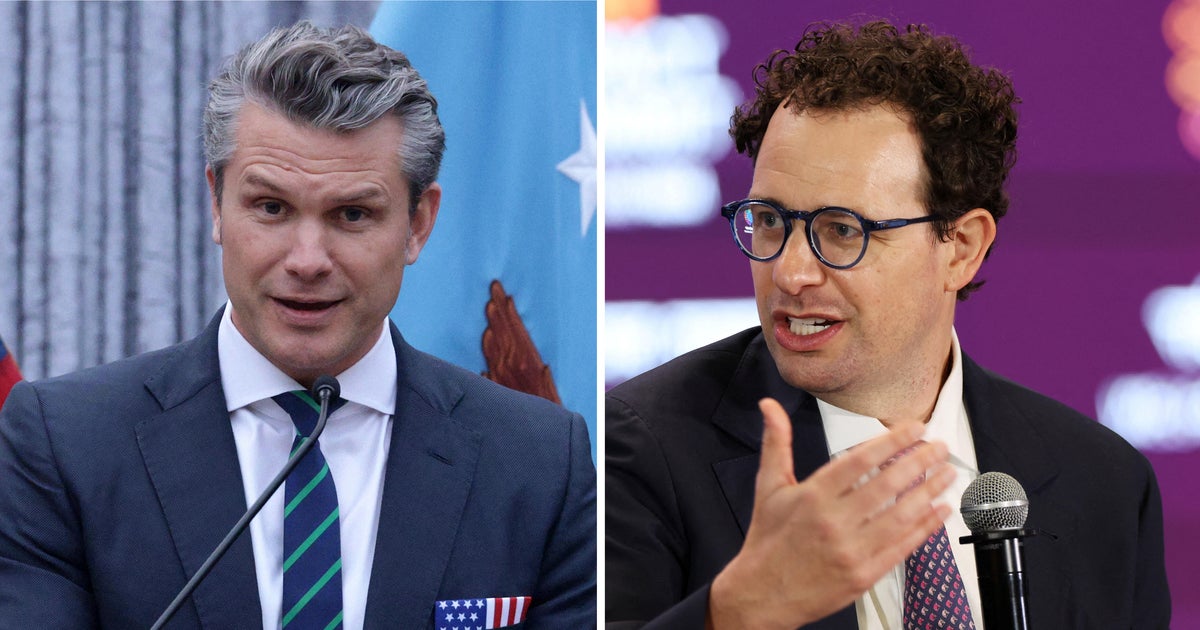
The Pentagon, however, views these proposed restrictions very differently. When asked to comment on Anthropic’s concerns, a senior Pentagon official dismissed them curtly: “This has nothing to do with mass surveillance and autonomous weapons being used. The Pentagon has only given out lawful orders.” This response suggests military leadership believes Anthropic’s worries are either unfounded or an overreach into operational matters that should remain under military control. Pentagon officials have privately expressed concerns that company-imposed guardrails could interfere with critical national security actions, such as responding to an intercontinental ballistic missile launched toward the United States. Emil Michael, the undersecretary of defense for research, articulated this worry at a February event, warning that restrictions “could create a dynamic where we start using them and get used to how those models work, and when it comes that we need to use it in an urgent situation, we’re prevented from using it.” On the crucial question of liability—who bears responsibility when AI-assisted military operations result in mistakes—defense officials maintain that legality remains the Pentagon’s responsibility as the end user.
Competing Visions from Leadership
Anthropic CEO Dario Amodei has built his company’s reputation on safety and transparency, positioning it as the responsible alternative in an industry often criticized for moving fast and breaking things. Amodei hasn’t been shy about voicing his concerns regarding AI’s potential dangers. In a lengthy essay published last month, he painted a chilling picture of how powerful AI could be abused by authoritarian regimes or even democracies with weakening safeguards. “A powerful AI looking across billions of conversations from millions of people could gauge public sentiment, detect pockets of disloyalty forming, and stamp them out before they grow,” Amodei wrote, describing a surveillance state scenario that seems pulled from dystopian fiction but which he views as a genuine risk.
His essay continued with a warning particularly relevant to the current standoff: “Democracies normally have safeguards that prevent their military and intelligence apparatus from being turned inwards against their own population, but because AI tools require so few people to operate, there is potential for them to circumvent these safeguards and the norms that support them. It is also worth noting that some of these safeguards are already gradually eroding in some democracies.” Amodei has consistently advocated for what he calls “sensible AI regulation,” including requirements that AI companies be transparent about the risks their models pose and the steps they’re taking to address those risks.
This philosophy stands in stark contrast to the Trump administration’s approach, which favors minimal regulation based on the belief that stringent rules would stifle innovation and handicap American companies in the global AI race. The administration has actively worked to block what it considers “excessive” state-level AI regulations. White House AI and crypto adviser David Sacks, a prominent venture capitalist, previously accused Anthropic of “fear-mongering” and suggested the company’s support for AI regulations is motivated by self-interest rather than genuine ethical concerns. Defense Secretary Pete Hegseth has been even more blunt, deriding what he views as “social justice infusions that constrain and confuse our employment of this technology.” In a January speech that left little room for interpretation, Hegseth declared: “We will not employ AI models that won’t allow you to fight wars. We will judge AI models on this standard alone: factually accurate, mission relevant, without ideological constraints that limit lawful military applications. Department of War AI will not be woke. It will work for us. We’re building war-ready weapons and systems, not chatbots for an Ivy League faculty lounge.”
What Happens Next
As Friday’s deadline approaches, Anthropic faces a decision that will define its future and potentially set precedents for the entire AI industry. Sources familiar with the situation confirm that Secretary Hegseth’s ultimatum is real: agree to unrestricted military use or face being blacklisted from government work. The Pentagon is reportedly considering invoking the Defense Production Act, a powerful legal tool that allows the government to compel private companies to prioritize national defense needs. Originally created to ensure wartime production of essential goods, using this act against an AI company would mark unprecedented territory and could establish a legal framework for government control over AI development.
Alternatively, if Anthropic refuses to comply and negotiations collapse, defense officials have discussed declaring the company a “supply chain risk”—a designation that would effectively push Anthropic out of government contracting entirely. Such a move would have severe financial implications for Anthropic, potentially costing the company hundreds of millions in current and future contracts. More significantly, it would send a clear message to other AI companies about the consequences of resisting Pentagon demands.
The outcome of this standoff will resonate far beyond the immediate parties involved. If Anthropic capitulates, it could signal that even the most safety-conscious AI companies will ultimately bend to government pressure, potentially undermining the credibility of their ethical commitments. If the company holds firm and faces penalties, it might inspire other tech firms to take stronger stands on principle, or conversely, discourage them from pursuing defense contracts altogether. Other AI companies are watching closely, calculating their own positions. With xAI already apparently on board with unrestricted military use and others “close” to similar arrangements, Anthropic may find itself isolated in its resistance.
Broader Implications for AI and Democracy
This confrontation between Anthropic and the Pentagon represents a microcosm of larger tensions shaping our technological future. As artificial intelligence becomes increasingly powerful and integrated into critical systems—from military operations to surveillance infrastructure to economic decision-making—questions about control, accountability, and ethics become impossible to avoid. Should private companies have the right to impose ethical restrictions on how their technologies are used, even when those technologies are deployed by democratically elected governments? Or does such corporate gatekeeping represent an unacceptable override of democratic governance and national security imperatives?
These questions don’t have easy answers, and reasonable people disagree about where the proper balance lies. Those sympathetic to Anthropic’s position argue that tech companies have not just a right but a responsibility to prevent their creations from being misused, especially when those creations have unprecedented capabilities that could enable surveillance, manipulation, or lethal force at scales previously unimaginable. They point to historical examples of technologies developed for benign purposes being repurposed for harmful ones, and they note that corporate ethical stands have sometimes protected public interests when government oversight failed. From this perspective, Anthropic’s guardrails represent a necessary check on government power, particularly given concerns about eroding democratic safeguards that Amodei highlighted.
On the other hand, Pentagon officials and their supporters argue that national security decisions must remain under the control of elected officials and military leadership accountable to the public, not private tech executives answerable only to shareholders and their own consciences. They contend that in matters of war and peace, time-sensitive decisions about defending the nation cannot be subject to corporate approval. Furthermore, they argue that the Pentagon operates under extensive legal and ethical frameworks, with layers of oversight designed to prevent abuses, making additional corporate restrictions unnecessary and potentially dangerous. As the Friday deadline approaches, both Anthropic and the Pentagon face choices that will help define the relationship between artificial intelligence, corporate responsibility, and government power for years to come. The resolution of this standoff—whether through compromise, capitulation, or confrontation—will set important precedents about who controls the increasingly powerful tools that may shape the future of warfare, governance, and society itself.