
White House Monitors Utah Ethics Scandal Amid Redistricting Battle
A Political Firestorm Over Congressional Maps and Personal Relationships
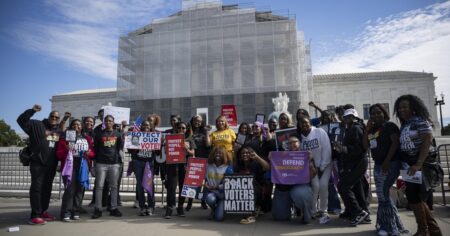
The political landscape in Utah has become unexpectedly turbulent as White House officials keep a watchful eye on an unfolding ethics scandal that could have significant implications for Republican control of Congress. According to sources who spoke with CBS News, the Trump administration is actively encouraging Utah Republicans to dig deeper into concerns about a personal relationship between two prominent figures at the center of a controversial gerrymandering case. This isn’t just about politics as usual—it’s about a battle over congressional district boundaries that has already shifted one GOP stronghold into Democratic-friendly territory, and it could play a crucial role in determining whether Republicans maintain their razor-thin majority in the House of Representatives.
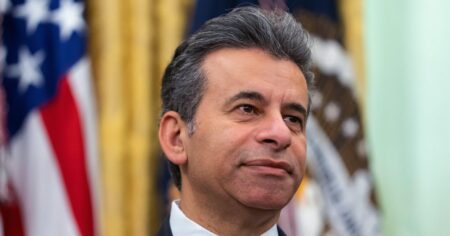
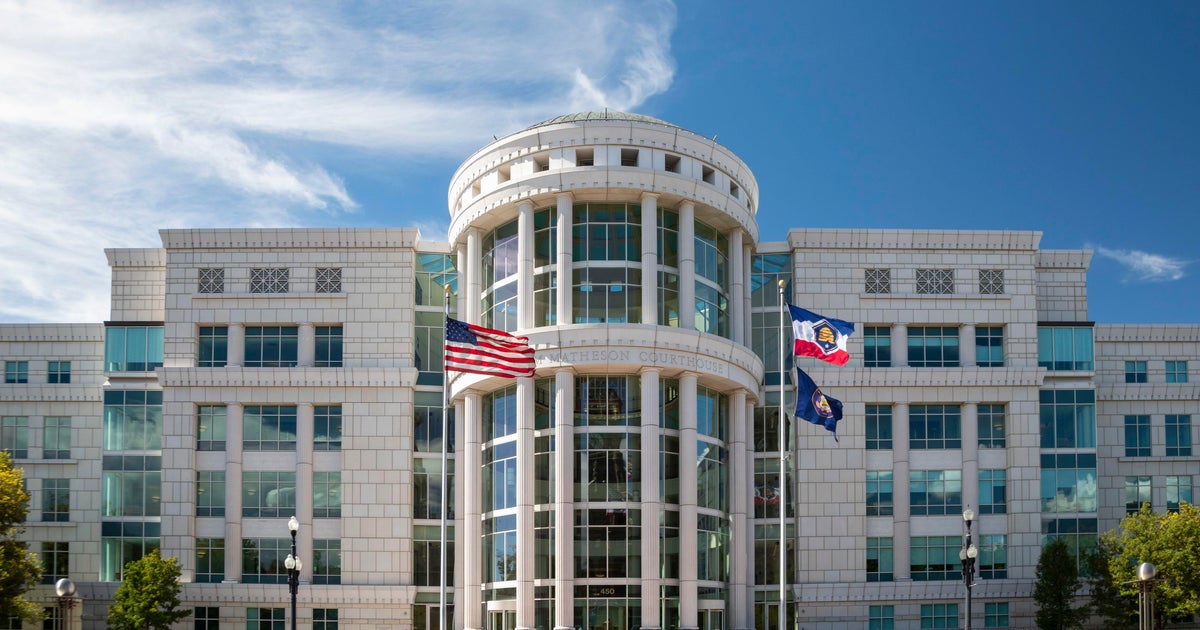
At the heart of this controversy are two individuals whose professional and personal lives have become uncomfortably intertwined in the public eye: Utah Supreme Court Justice Diana Hagen and David Reymann, who serves as chief counsel for the League of Women Voters of Utah. The situation has raised eyebrows because Hagen authored a unanimous 2024 ruling that dealt a significant blow to Republican lawmakers, finding that they had overstepped their authority when they altered Proposition 4, a voter-approved measure specifically designed to prevent gerrymandering. Reymann, meanwhile, was one of the attorneys representing the plaintiffs who challenged the Republican-drawn congressional maps as illegal. The potential conflict of interest has sparked intense scrutiny and left many wondering whether personal connections might have influenced a decision with enormous political ramifications.
The Stakes: Congressional Control and Redistricting Wars
Understanding why this matters requires looking at what’s actually at stake in Utah’s redistricting battle. The congressional map currently in place, which was ordered by a district court following the Supreme Court’s ruling, fundamentally changed Utah’s political representation. Previously, Republicans controlled all four of the state’s congressional districts—a dominance they’d maintained since 2014. The new boundaries transformed this political landscape dramatically, creating three Republican-leaning districts and one Democratic-majority district centered around Salt Lake City. For Republicans who had enjoyed complete control, this represented a significant loss, and the national implications are substantial given how narrow the GOP’s House majority has become.
The redistricting controversy didn’t emerge in a vacuum. President Trump himself has been pushing for mid-decade redistricting efforts across the country, most notably in Texas, where he encouraged Republicans to redraw congressional boundaries to help solidify Republican control of the House. Utah became another front in this nationwide battle, with Trump weighing in earlier this year on Republican efforts to repeal the anti-gerrymandering legislation. The political casualties have been real—former NFL player and U.S. Representative Burgess Owens announced last month he wouldn’t seek reelection after his lawsuit to overturn the new map failed. For Republicans, the question now is whether the alleged ethics issues involving Justice Hagen could provide grounds to challenge the ruling and restore the previous district lines. However, as Utah Senate Majority Leader Kirk Cullimore candidly acknowledged to CBS News, “There’s just a lot of unknowns at this point.”
The Relationship in Question and Ethics Concerns
The allegations that have prompted such intense scrutiny center on the nature and timing of the relationship between Justice Hagen and attorney Reymann. A complaint filed in December with the state’s Judicial Conduct Commission raised concerns about an inappropriate relationship between the two. The complaint, which CBS News obtained through a public records request, was submitted by an attorney who claimed that Hagen’s ex-husband had informed him about text message exchanges between Hagen and Reymann. The critical question that ethics watchdogs have been trying to answer is whether the pair were involved in a relationship when the state Supreme Court issued its opinion on the anti-gerrymandering case—a timeline that could determine whether Hagen’s participation in the case constituted an ethical violation.
Justice Hagen has provided her own account of the situation through a formal declaration to the Judicial Conduct Commission. In her January statement, she maintained that she had remained faithful to her ex-husband throughout their thirty-year marriage and denied having an affair before their separation. According to Hagen, she suggested divorce in September 2024, and the couple separated in April 2025. She explained that she renewed her “friendship with Mr. Reymann” after separating from her husband and promptly updated her recusal list to include his name, ensuring she wouldn’t participate in any cases involving him going forward. Speaking to local news outlet KSL-TV, which first broke the story, Hagen stated that she “voluntarily recused myself from all cases involving Mr. Reymann in May 2025.” Notably, Hagen had already recused herself from considering matters connected to Reymann in a letter, as Senate Majority Leader Cullimore confirmed. Meanwhile, Reymann has remained silent on the matter, not responding to multiple requests for comment from CBS News, and the League of Women Voters Utah, the organization he represented, has also declined to comment.
Political Response and Calls for Investigation
The political response to these revelations has been swift and coordinated. In a joint statement to CBS News, Utah’s top three Republican legislative leaders—Governor Spencer Cox, state Senate President J. Stuart Adams, and House Speaker Mike Schultz—announced their intention to move forward with an independent investigation. Their statement struck a tone of concern while emphasizing the need for transparency: “Recent media reports about a relationship between a member of the Utah Supreme Court and an attorney who has argued high-profile cases before the Court raise serious questions and concerns. An initial review by the Judicial Conduct Commission and the Court left important questions unresolved. Allegations of this nature, especially involving public officials, must be examined with transparency and accountability to establish the facts and to maintain public confidence.”
This call for further investigation comes after the Judicial Conduct Commission initially opted not to pursue the matter following a preliminary investigation. However, the political pressure has clearly intensified, particularly given the White House’s interest in the situation. According to sources, GOP officials in Utah have been in communication with the White House about the unfolding scandal, suggesting a coordinated effort to explore every possible avenue to challenge the redistricting decision. The fact that the case came before Utah’s high court a second time in September 2025, after the GOP-led legislature attempted to have the new map thrown out, and that the court again ruled against the legislature in February, upholding the new boundaries, has only added to Republican frustration and determination to find grounds for reversal.
Broader Context: A National Redistricting Push
This Utah controversy is playing out against a broader backdrop of redistricting battles happening across the country. President Trump’s call for mid-decade redistricting represents an unusual and aggressive approach to congressional mapmaking, which traditionally occurs only once per decade following the census. By urging state legislatures to redraw boundaries outside this normal cycle, the administration has effectively opened a new front in the battle for congressional control. Texas has been the most prominent example of this strategy, but Utah’s situation demonstrates how these redistricting fights can become complicated by factors beyond pure politics—in this case, ethics questions and personal relationships.
The stakes in these redistricting battles cannot be overstated. With Republicans holding only a slim majority in the House of Representatives, every congressional seat matters enormously for the party’s ability to advance its legislative agenda. Losing even one district in Utah, a reliably red state, represents a significant setback. This explains why the White House is paying such close attention to the Utah situation and why state Republicans are so eager to pursue any avenue that might allow them to challenge the new map. The interconnection of local judicial decisions, state legislative actions, and national political strategy illustrates how modern redistricting has become a multi-level chess game where personal conduct and professional ethics can suddenly become pivotal political issues.
What Happens Next: Uncertainty and Political Implications
As this situation continues to develop, the uncertainty surrounding its ultimate outcome remains profound. The independent investigation promised by Utah’s Republican leadership will need to establish clear facts about the timeline and nature of the relationship between Justice Hagen and attorney Reymann. Even if the investigation uncovers a relationship that existed during the original court proceedings, legal experts would then need to determine whether this constituted a disqualifying conflict of interest and, crucially, whether it could serve as grounds to overturn the court’s decision. Given that the ruling was unanimous, questions would arise about whether the other justices’ votes would stand independent of Hagen’s participation.
For now, the new congressional map remains in effect, and Democrats have a realistic chance of winning a House seat in Utah that had been firmly in Republican hands for over a decade. The political ramifications extend far beyond Utah’s borders, potentially influencing the overall balance of power in Congress. As Senate Majority Leader Cullimore’s comment suggests, there are indeed “a lot of unknowns at this point,” and how this scandal ultimately resolves could have consequences for redistricting battles nationwide, judicial ethics standards, and the ongoing struggle between the two parties for control of Congress. What began as a local controversy about personal relationships has evolved into a case study in how ethics, politics, and governance intersect in today’s highly polarized environment, with the White House, state officials, and the courts all playing their parts in a drama whose final act has yet to be written.