
The Battle for the Federal Reserve: Trump vs. Powell in an Unprecedented Standoff
A Power Struggle at America’s Central Bank
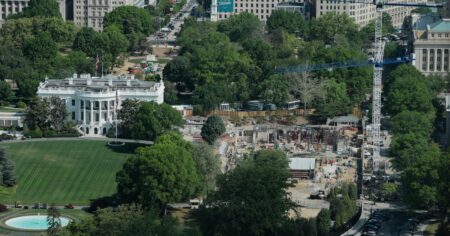
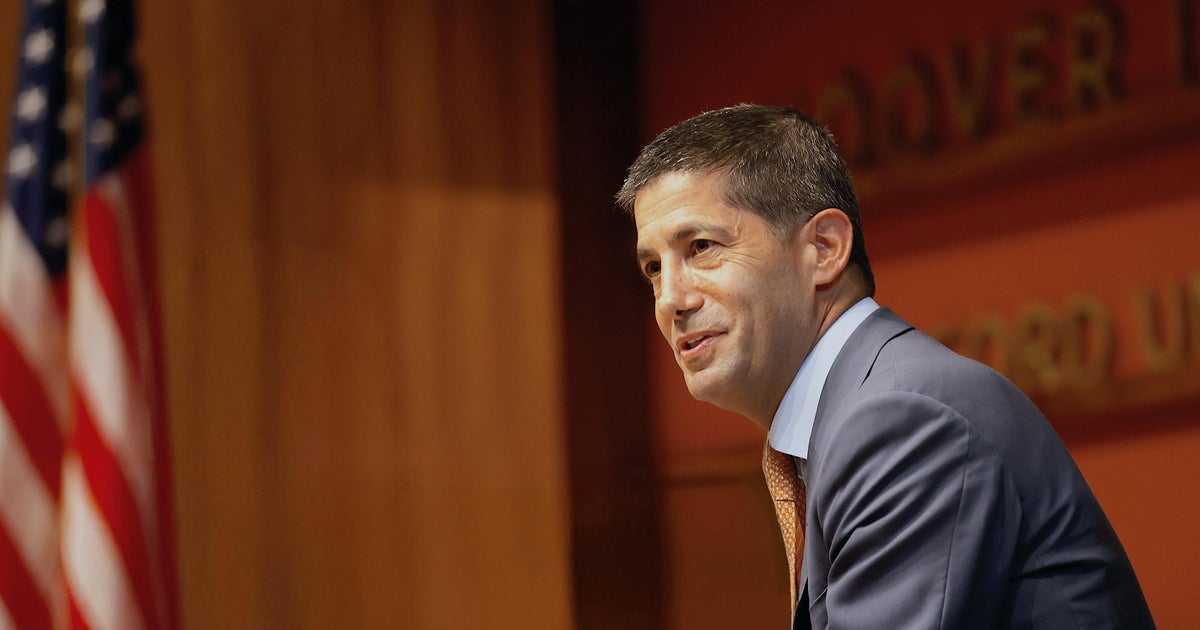
The halls of the Federal Reserve are witnessing an unprecedented drama as President Trump pushes to remove Fed Chair Jerome Powell before his term officially ends on May 15. What should be a routine transition of leadership has instead become a constitutional chess match with potentially serious consequences for America’s economy. Trump has nominated Kevin Warsh, a former Fed official with sterling credentials, to take Powell’s place, but the path to confirmation has hit significant roadblocks in the Senate. At the heart of this standoff is a controversial criminal investigation launched by the Justice Department into Powell over renovations to the Fed’s headquarters—an investigation that Powell himself claims is designed to intimidate him for not cutting interest rates as quickly as the President would prefer. The Trump administration denies these accusations, but the controversy has created a political minefield that threatens to leave America’s most important financial institution in limbo at a time when economic certainty is crucial.
Republican Senator Thom Tillis of North Carolina has emerged as an unlikely kingmaker in this situation. Despite praising Warsh’s “impeccable credentials,” Tillis has taken a principled stand by refusing to vote on any Fed nominees until the Justice Department drops what he calls a “weak and frivolous” investigation into Powell. This is more than just political theater—Tillis’s vote could be decisive on the Senate Banking Committee, which has 11 Democrats and 13 Republicans. If Tillis holds firm in his opposition, the committee could deadlock, potentially blocking Warsh’s nomination from even reaching the full Senate floor. The Justice Department, however, shows no signs of backing down. After a judge quashed subpoenas sent to the Fed last month, U.S. Attorney for D.C. Jeanine Pirro vowed to continue fighting. In an particularly unusual move, prosecutors from her office even showed up unannounced at Fed headquarters last week, escalating tensions further.
The Critical Dates That Matter
While May 15 marks the official end of Powell’s term as Fed Chair, the real deadline might actually be a month later. The Federal Reserve’s power isn’t just ceremonial—the Fed Chair leads the Federal Open Market Committee, a 12-member panel that makes crucial decisions about interest rates, balancing the delicate goals of keeping unemployment low while preventing inflation from spiraling. After each FOMC meeting, Powell traditionally holds a news conference that financial markets around the world watch with intense interest, parsing every word for clues about the economic future. The next FOMC meeting is scheduled for June 16-17, and this date represents what Jeremy Kress, an associate professor of business law at the University of Michigan and former Federal Reserve attorney, calls the true “drop-dead date for a new chair.” As Kress explained to CBS News, “That, to me, is the date that I have circled on my calendar for when this all needs to be resolved by, because certainly the public and investors, and frankly, other countries around the world are going to want to see a Fed chair who does not have a cloud of uncertainty hanging over him.”
The timing couldn’t be more delicate. The committee unanimously reelected Powell to a one-year term as its chair in January and is widely expected to keep interest rates steady at its next few meetings, with Powell citing uncertainty over the Iran war situation in his last news conference. But David Wessel, director of the Brookings Institution’s Hutchins Center on Fiscal and Monetary Policy, points to an even more worrying scenario: “At moments like that, it really matters that the public and the markets and the rest of the world think, ‘OK, we have grown-ups in charge.’ And if there’s some confusion about who’s really calling shots at the Fed, that could really be destabilizing.” If financial markets experience turbulence while confusion reigns over Fed leadership, the consequences could ripple through the entire American economy and beyond. The White House, for its part, has dismissed questions about what happens if Warsh isn’t confirmed by May 15 as “pointless speculation,” with spokesman Kush Desai insisting they’re working closely with the Senate for swift confirmation.
Powell’s Plan to Stay Put
Jerome Powell has made his intentions crystal clear: he’s not going anywhere until this mess is resolved. When asked last month what he’ll do if a successor isn’t confirmed by May 15, Powell calmly stated he plans to stay on as chair pro tempore until his replacement takes office. “That is what the law calls for, that’s what we’ve done on several occasions—including involving me—and that’s what we’re going to do in this situation,” he explained to reporters. Powell’s legal position is actually quite strong. While his four-year term as chair expires next month, his 14-year term as a regular member of the Fed’s Board of Governors doesn’t end until January 2028. Most Fed chairs have traditionally left the board entirely when their leadership term expires, but Powell is breaking with tradition for what he sees as a matter of principle.
The Justice Department investigation has clearly influenced Powell’s decision to dig in his heels. He’s stated unequivocally that he has “no intention of leaving the board until the investigation is well and truly over, with transparency and finality.” This isn’t just about personal vindication—Powell seems to view his continued presence as necessary to protect the Fed’s independence from political pressure. Interestingly, he hasn’t even ruled out staying on the board after the investigation wraps up, saying he’ll “make that decision based on what I think is best for the institution and for the people we serve.” This language suggests Powell sees himself as a guardian of the Fed’s institutional integrity during a moment of unprecedented political pressure. It’s a stance that has historical precedent in Fed history, where chairs have occasionally taken stands to preserve the central bank’s independence from presidential influence, but never quite in circumstances like these.
The Legal Gray Zone of Temporary Leadership
If President Trump decides he won’t accept Powell staying on as acting chair, he might reach for some dusty legal opinions from past administrations that have never actually been tested in court. Back in 1978, during the Carter administration, the Justice Department’s Office of Legal Counsel argued that a president has the authority to appoint an existing Fed board member as acting chair if the position becomes vacant. Five years later, during the Reagan administration, a young attorney named John Roberts—who would later become Chief Justice of the Supreme Court—took a similar position, stating the president could appoint an acting chair “if a nomination for Chairman is pending or soon to be submitted.” But there’s a catch that could undermine these old opinions: in 1979, the year after that Carter-era memo, the law governing the Federal Reserve was amended to explicitly make the chair position subject to Senate confirmation, rather than just requiring confirmation for general board membership.
Three current Fed board members are Trump appointees: Stephen Miran, Michelle Bowman, and Christopher Waller. If President Trump decided to invoke those old legal opinions and appoint one of them as acting chair, we’d be in completely uncharted legal territory. Jeremy Kress believes “the best reading [of the law] is that Powell remains as [chair] pro tem, but it hasn’t been challenged in the past, and if Trump purports to name his own Fed chair, then we’ve got a potential legal standoff that I can’t see being resolved anywhere else other than the Supreme Court.” David Wessel echoes these concerns about market reaction: “Trump might try and do something here. I don’t think he’ll succeed, and I think if it causes a lot of angst in the financial markets, he’ll back off.” Financial markets hate uncertainty more than almost anything else, and confusion over who’s actually running the Federal Reserve could trigger significant volatility in stocks, bonds, and the dollar.
Trump’s Threat to Fire Powell
Not content with merely trying to replace Powell, President Trump has escalated the confrontation by threatening to fire him outright. In an interview with Fox Business host Maria Bartiromo last week, Trump said, “Then I’ll have to fire him, OK, if he’s not leaving on time. I’ve held back firing him. I’ve wanted to fire him, but I hate to be controversial.” The statement is somewhat confusing since Powell’s term on the board doesn’t actually expire until January 2028, leaving unclear what Trump means by “on time.” The President has been remarkably colorful in his criticism of Powell in recent months, calling him a “moron,” a “stubborn mule,” and—in reference to Powell’s cautious approach to cutting interest rates—”Mr. Too Late.” These aren’t just casual insults; they reflect Trump’s fundamental frustration that the Fed hasn’t lowered interest rates as aggressively as he’d prefer, which Trump believes would stimulate economic growth.
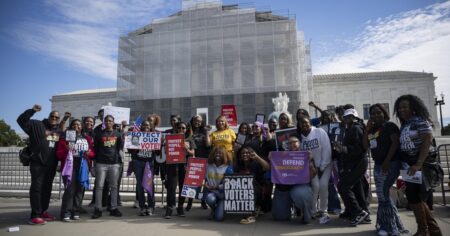
But firing Powell would be legally complicated. Federal law states that Fed board members can only be removed “for cause”—a deliberately vague term that isn’t precisely defined in statute and has rarely been tested in courts. We’re actually getting a preview of this legal battle right now. President Trump moved to fire Lisa Cook, a Biden appointee to the Fed board, last year, accusing her of making false statements on mortgage documents. Cook sued over her termination, calling the allegations “unsubstantiated” and arguing they don’t meet the legal standard of “for cause” removal. Federal courts have allowed Cook to keep her position while the case proceeds, and when the Supreme Court heard oral arguments on whether to pause those rulings earlier this year, the justices appeared inclined to let Cook stay on the job for now. This precedent doesn’t bode well for any attempt to fire Powell. As Jeremy Kress points out, trying to fire Powell could “needlessly complicate” Trump’s goal of installing a new Fed chair: “There’s a very easy path of least resistance here for Trump to get what he wants. For a rational person in the White House, dropping the DOJ investigation is the best way to get Warsh in as Fed chair and to get Powell out as Fed governor.” In other words, the simplest solution—dropping the controversial investigation—remains the most obvious, yet apparently the most politically difficult for the administration to pursue.