
The El Paso Laser Incident: What Really Happened When the Government Tried to Shoot Down Border Drones
A Case of Mistaken Identity at the Border
This week, a peculiar situation unfolded near El Paso, Texas, that highlighted the growing pains of America’s efforts to protect its borders from drone threats. What started as a seemingly routine operation to neutralize what authorities believed were cartel-operated drones ended with a brief flight ban, interagency finger-pointing, and an embarrassing revelation: at least one of the “threats” turned out to be nothing more than a party balloon. The incident has pulled back the curtain on deep disagreements within the federal government about how to handle the increasing problem of unauthorized drones along the southern border, and it raises important questions about whether we’re ready to deploy military-grade laser weapons in domestic airspace.
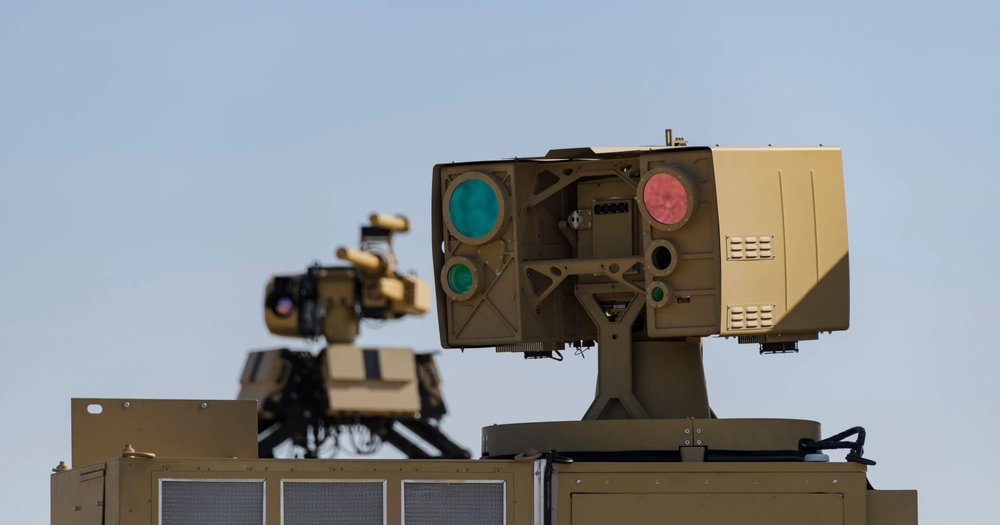
According to multiple sources who spoke to CBS News on condition of anonymity, Customs and Border Protection (CBP) deployed a sophisticated palletized high-energy laser system earlier this week—a piece of military hardware that had previously been used overseas but never considered for regular domestic use until recently. These systems work like something out of a science fiction movie: they detect an aerial threat, lock onto it, and emit a powerful laser beam that travels at the speed of light to heat up and disable the target. The technology is impressive and, in theory, highly effective. As Tom Karako, a senior fellow at the Center for International and Strategic Studies, explained, the laser’s speed makes it remarkably accurate at hitting precisely where it needs to on an object. However, the Federal Aviation Administration still had serious safety concerns about using such weapons in American airspace—concerns that CBP apparently decided to override after receiving training from the U.S. military.
The Cartel Drone Problem Is Real and Growing
While the balloon incident might seem almost comical, the underlying threat that prompted this response is anything but funny. Drones operated by drug cartels have become a persistent and growing problem along the entire southern border of the United States. These aren’t isolated incidents or occasional curiosities—this is a systematic, ongoing challenge that border security officials face daily. Austin Doctor, an associate professor at the University of Nebraska at Omaha and director of strategic initiatives at the National Counterterrorism Innovation, Technology, and Education Center, characterizes the situation bluntly: “The cartel drone problem is pervasive across the U.S. southern border.”
The cartels have become sophisticated in their use of drone technology, primarily deploying these aerial devices for surveillance purposes. These eyes in the sky help them coordinate their illegal activities, including the smuggling of narcotics, people, firearms, and other illicit goods across the border. Think of it as their own private air force, providing real-time intelligence that helps them evade law enforcement and identify the best routes and timing for their criminal operations. So far, Doctor noted, the cartels haven’t used weaponized drones inside the United States, which is a small comfort. However, they are already using armed drones in Mexico to attack rival cartels, which raises the alarming possibility that it’s only a matter of time before they escalate to using weaponized drones against U.S. personnel or critical infrastructure on American soil.
Confusion and Coordination Problems
The aftermath of Wednesday’s incident revealed just how disconnected different parts of the federal government can be when it comes to border security. After the flight restriction over El Paso was lifted, Transportation Secretary Sean Duffy announced that “the threat has been neutralized” and praised the Pentagon for acting swiftly to address what he called “a cartel incursion.” It was a confident statement that suggested decisive action and interagency cooperation. There was just one problem: when reporters asked the Pentagon for details about when or how the threat was eliminated, the Department of Defense had nothing to add. The silence was deafening and telling.
This communication breakdown points to a larger structural problem in how America responds to drone threats. Different agencies have different priorities, different authorities, and different perspectives on what constitutes an acceptable level of risk. The FAA’s job is to keep the skies safe for commercial and private aircraft, which means they tend to be extremely cautious about introducing new technologies or weapons systems that could potentially harm innocent aircraft or people on the ground. The military and border security agencies, on the other hand, are focused on neutralizing threats and may be more willing to accept certain risks in pursuit of that mission. When these competing priorities clash, as they did this week in El Paso, the result is confusion, mixed messages, and incidents where party balloons get mistaken for cartel drones.
Building a Better Defense System
The El Paso incident, combined with mysterious drone sightings near military installations like Joint Base Langley-Eustis in Virginia in 2023 and Joint Base McGuire-Dix-Lakehurst in New Jersey in 2024, helped push the Pentagon to establish a joint task force dedicated specifically to countering drone threats. This task force is meant to coordinate between federal agencies to determine what authorities should be used in specific scenarios and how to most effectively mitigate drone threats while minimizing risks to public safety. It’s a step in the right direction, but according to experts, it’s only a first step on a very long journey.
Retired Air Force General Glen VanHerck, who commanded U.S. Northern Command and NORAD from 2020 to 2024, acknowledges that the task force is “doing great things,” but he’s quick to add that “there’s so much more to be done.” VanHerck emphasizes that the task force needs to be empowered to develop clear policies about who defends what critical infrastructure with which specific capabilities. The challenge, as he sees it, is ensuring effective defense while maintaining safety for general aviation aircraft and the public, especially given the various technologies available for engaging drone threats. He advocates for a layered defense system rather than relying on any single solution. His preferred approach starts with a foundation of radio frequency and cyber techniques that can disrupt a drone’s controls and take it over, allowing operators to bring it down safely. Field experience from around the world, he notes, shows that over 80% of drones encountered are commercial models that can be neutralized with this type of technology. High-energy lasers like the one used in El Paso would serve as just one layer in this comprehensive defense approach, reserved for situations where other methods aren’t suitable.
The Golden Dome Initiative and Bigger Picture
The border drone challenge fits into President Trump’s broader “Golden Dome” initiative, which aims to defend the American homeland from all air and missile threats. Tom Karako from CSIS views the El Paso incident as an illustration of why this comprehensive approach is necessary. The episode revealed that we can’t effectively protect our borders and airspace without better integration between the various agencies involved. “Maybe the lesson here ought to be that this big effort, this big initiative coming down the pipe that is called Golden Dome will require and force us out of necessity to have better communication and better coordination,” Karako explained.
He specifically points to the need for improved coordination between the FAA’s essential functions for air traffic control and management and the Department of Defense’s national security mission. Right now, these two critical functions sometimes work at cross-purposes, as the El Paso incident demonstrated. The FAA had safety concerns about using high-energy lasers in domestic airspace, but those concerns were essentially overridden when CBP decided to deploy the system anyway. That’s not a sustainable approach to protecting America’s borders and skies. The Golden Dome initiative, if properly implemented, could provide the framework for better coordination, clearer lines of authority, and more effective responses to aerial threats of all kinds—from cartel surveillance drones to potential missile attacks.
Looking Forward: Technology Meets Policy
As we move forward, the El Paso incident should serve as both a warning and an opportunity. The warning is clear: we’re not yet ready to seamlessly integrate military-grade weapons systems into domestic airspace protection, especially when different agencies have conflicting priorities and insufficient communication. Shooting down a party balloon when you think you’re targeting a cartel drone is embarrassing, but the potential consequences of a more serious mistake—like inadvertently hitting a commercial aircraft or harming people on the ground—are unthinkable. At the same time, this incident presents an opportunity to finally address these coordination problems systematically rather than continuing to muddle through with ad hoc responses.
The technology to counter drone threats exists and continues to improve, from radio frequency jamming to cyber takeover capabilities to high-energy lasers and beyond. What we’re still developing is the policy framework, interagency coordination, and clear protocols that will allow us to deploy these technologies effectively and safely. The cartel drone problem isn’t going away—if anything, it’s likely to get worse as the technology becomes cheaper and more sophisticated. We need solutions that can protect our borders and critical infrastructure without turning our skies into a free-fire zone where party balloons get vaporized by military lasers. Finding that balance will require the kind of interagency cooperation and clear-headed policy development that, frankly, we haven’t yet demonstrated. The El Paso incident should serve as a wake-up call that we need to figure this out sooner rather than later, before a more serious incident occurs.