
Trump vs. Powell: A Brewing Constitutional Battle at the Federal Reserve
The Latest Threat and Its Implications
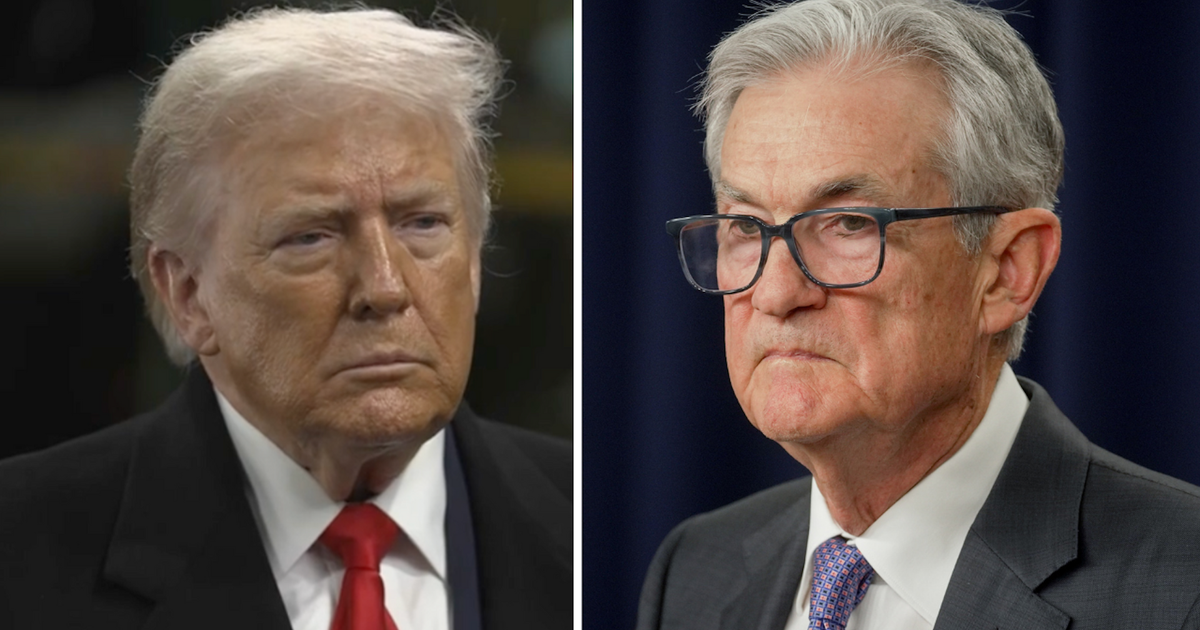
President Trump has once again escalated his conflict with Federal Reserve Chair Jerome Powell, this time threatening to fire him if he doesn’t step down when his term as chair officially ends on May 15. In a revealing interview with Fox Business’s Maria Bartiromo, Trump made his frustrations clear, stating bluntly, “Then I’ll have to fire him, OK, if he’s not leaving on time. I’ve held back firing him. I’ve wanted to fire him. But I hate to be controversial.” This latest threat represents more than just another public spat between the president and the central bank leader—it could trigger a constitutional crisis that tests the boundaries of presidential power and the independence of America’s most important financial institution.
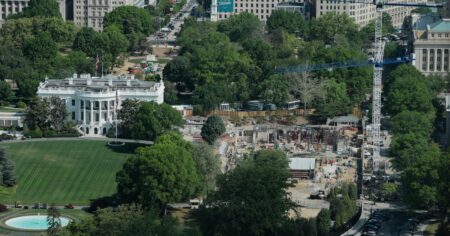
The roots of this particular confrontation trace back to an ongoing Department of Justice investigation into building renovations at the Federal Reserve. Powell has characterized this probe as politically motivated, suggesting it’s designed to either pressure him into supporting the president’s preferred policy of lower interest rates or to force him out of office entirely. Trump has made no secret of his dissatisfaction with the Fed’s approach to interest rate policy, repeatedly criticizing what he views as an overly cautious pace of rate cuts. This tension between presidential preference and Federal Reserve independence isn’t new, but the current standoff has reached unprecedented levels of public acrimony and legal complexity.
The Legal Barriers to Firing Powell
Despite Trump’s threats, legal experts are nearly unanimous in their assessment that the president lacks the authority to simply dismiss Powell from his position. Dan Urman, who directs the law and public policy minor at Northeastern University, explained the situation clearly to CBS News: “As the law currently stands, it is not legal for President Trump to fire Powell at any point—as chair or as governor—unless the firing is ‘for cause.'” The Federal Reserve Act of 1913 established strict protections for Fed governors, stipulating they can only be removed for serious misconduct. Urman emphasized that Powell “has done no such thing.”
This legal framework creates a significant complication for Trump’s threats. Fed governors serve lengthy 14-year terms, intentionally designed to insulate them from short-term political pressures, while the Fed chair position carries a four-year term. Powell’s situation is unique because while his chairmanship ends on May 15, his term as a Fed governor extends through January 2028. This means that even if Powell steps down or is somehow removed as chair, he could legally remain on the Fed’s board of governors, continuing to influence monetary policy and potentially creating an awkward and unprecedented situation where a former chair serves alongside his replacement.
The Warsh Confirmation Logjam
Complicating matters further is the stalled confirmation process for Kevin Warsh, Trump’s nominee to replace Powell as Fed chair. Warsh, a former Fed official, seemed like a straightforward choice initially, but his path to confirmation has hit serious obstacles. Republican Senator Thom Tillis of North Carolina has taken a principled stand, announcing he won’t vote to confirm any Federal Reserve nominees until the Justice Department drops its investigation into the Fed renovations—the very investigation Powell claims is politically motivated. This creates a circular problem: the investigation meant to pressure Powell also prevents his replacement from being confirmed.
Tim Duy, chief economist at SGH Macro, captured the irony of this situation perfectly in a research note: “Trump today said he intended to fire Powell if he does not leave when his term expires, which would open another legal battle that would only intensify Powell’s resolve to remain at the Fed. It increasingly appears that Trump’s animosity toward Powell prevents an offramp that would allow a smooth transition to Warsh.” Powell himself addressed this confirmation delay in March, stating he would serve as “pro tem chair” of the Fed until a successor is properly confirmed and can assume the role, demonstrating his commitment to institutional continuity regardless of political pressure.
Alternative Scenarios and Their Legal Challenges
The Trump administration does have one potential workaround: appointing Fed governor Stephen Miran as acting Fed chair on May 15. However, this option comes with its own substantial legal risks. TD Securities analyst Jaret Seiberg warned investors that such a move would almost certainly face legal challenges. Urman elaborated on the messy scenario this would create: “Jerome Powell has said that he would serve as ‘chair pro tem’ until his successor is confirmed. So Powell could sue, suggesting that he, not Miran, is chair. It’s quite messy.” The spectacle of dueling Fed chairs, each claiming legitimate authority, would create unprecedented confusion in financial markets and potentially paralyze the central bank’s decision-making process.
When asked about Trump’s remarks, the White House pointed to Treasury Secretary Scott Bessent’s more optimistic assessment at a Wednesday press conference: “I am very optimistic that Kevin Warsh will be the chair of the Fed on time, and that will be a moot question.” This response suggests the administration’s preferred path remains getting Warsh confirmed rather than forcing a confrontation with Powell. However, with Senator Tillis and potentially other senators blocking the confirmation over the Justice Department investigation, that timeline appears increasingly unrealistic. The administration finds itself caught between its desire to remove Powell and the practical obstacles preventing a smooth transition to new leadership.
Market Consequences and the Supreme Court Wild Card
Financial markets are watching this developing situation with considerable anxiety. Brett House, a professor at Columbia Business School, warned that investors would react very negatively if Trump actually attempts to fire Powell: “There’s little question that markets will sell off if President Trump attempts to fire Jerome Powell.” This isn’t merely speculation—financial markets place enormous value on the Federal Reserve’s independence from political interference. The Fed’s credibility in managing monetary policy depends on the perception that its decisions are driven by economic data and expertise rather than political considerations. Any action that undermines this independence could trigger significant market volatility, potentially raising borrowing costs and creating economic instability that would ultimately harm Trump’s own economic agenda.
Adding another layer of uncertainty, the Supreme Court is currently considering two cases that could fundamentally reshape presidential power over independent federal agencies. One case directly involves Fed governor Lisa Cook, whom Trump attempted to fire in August over allegations of mortgage fraud, which she denied and for which she has never been criminally charged. Trump claimed “sufficient cause” based on what he characterized as “deceitful and potentially criminal conduct in a financial matter.” Urman noted that “the Cook case is directly on point and asks if the president can fire a Federal Reserve Board member.” The Supreme Court is expected to issue its decision by late June—after Powell’s term as chair ends but while this broader controversy continues. Until that ruling comes down, Urman believes “any attempts to fire Powell before then would pretty clearly be unlawful.” This Supreme Court decision could either vindicate Trump’s aggressive approach to removing independent agency leaders or firmly establish that such actions exceed presidential authority, with profound implications not just for the Federal Reserve but for the entire structure of independent agencies that form a crucial part of America’s governmental architecture.