
Georgia’s 14th District Special Election: A Test of Trump’s Influence and Republican Unity
The Race to Replace Marjorie Taylor Greene
The polls have closed in Georgia’s 14th Congressional District special election, marking a significant moment in the political landscape as voters choose who will fill the seat left vacant by Marjorie Taylor Greene. The controversial congresswoman resigned in January following a very public and prolonged dispute with President Trump over foreign policy matters and the handling of documents related to the Jeffrey Epstein case. The tension between Greene and Trump reached a breaking point when the president announced his support for a primary challenger against her just a week before she decided to step down. What began as a crowded field of twenty-two candidates eventually narrowed to seventeen contenders appearing on Tuesday’s ballot, including twelve Republicans, three Democrats, one Libertarian, and one independent. This diverse field reflects both the competitive nature of the race and the various political perspectives vying for representation in this historically conservative district.
Among the frontrunners, the race has essentially become a three-way contest with national implications. Former District Attorney Clay Fuller has secured the coveted endorsement of President Trump, positioning himself as the establishment choice backed by the former president’s still-considerable influence. Facing him is former Republican state Senator Colton Moore, who represents a potentially independent conservative voice not necessarily aligned with Trump’s preferences. On the Democratic side, retired Army Brigadier General Shawn Harris has emerged as a formidable challenger, having raised an impressive $4.3 million for the campaign with approximately $290,000 remaining in campaign funds. Harris brings name recognition to the race, having previously faced Greene in the 2024 general election for this same seat, though he ultimately lost that contest. Notably, Greene herself has remained neutral in the race to replace her, declining to endorse any of the candidates seeking to fill her former position.
Voter Sentiment and Electoral Fatigue
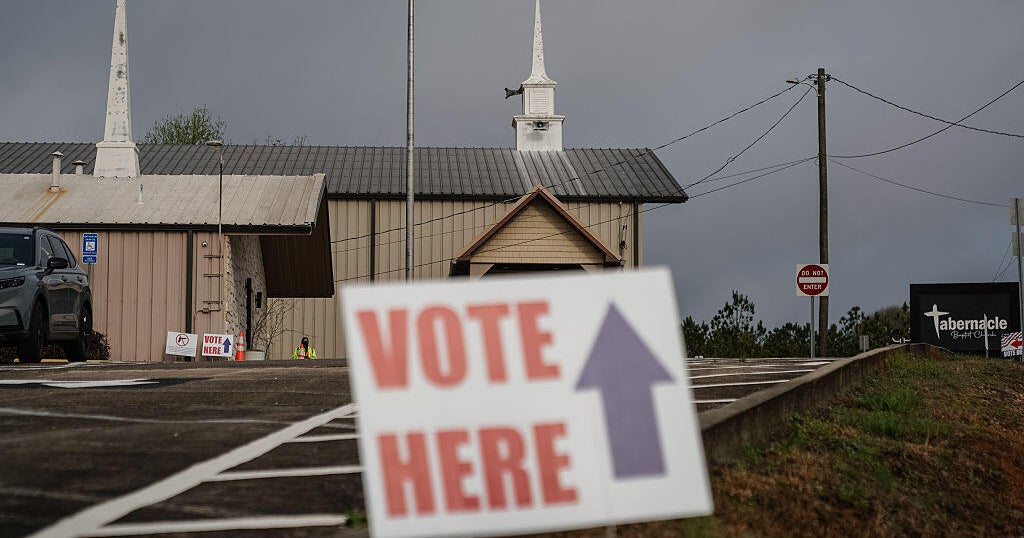
Voters in Rome, Georgia, expressed a mixture of enthusiasm and frustration as they cast their ballots in this special election. Many acknowledged the likelihood that they would need to return to vote again in what is expected to be a runoff election, given the large number of candidates splitting the vote. The crowded field has created concerns among voters about candidate quality and experience. One voter candidly expressed skepticism about some candidates’ qualifications, noting that “too many people think they’re politicians—some I know personally that have no experience, that Washington would just swallow them up like it does most people.” This sentiment reflects a broader concern about political opportunism and the desire for genuinely qualified representation.
Another common complaint among voters centered on the nature of modern political campaigns. As one voter put it, “What I look for in a candidate is tell me your policies. That’s the problem that I have with both sides today. They attack each other, they hate each other, and they don’t ever get around to telling you what their actual policies are.” This frustration with negative campaigning and the lack of substantive policy discussion resonates with many Americans who feel exhausted by the constant partisan warfare that dominates political discourse. Despite their willingness to fulfill their civic duty, Floyd County Republican Vice Chair David Guldenschuh acknowledged that party officials are concerned about voter fatigue, stating, “There’s real fatigue out there, and I sense and feel for them.” The complicated electoral schedule, with multiple potential elections over the coming months, adds to this exhaustion. However, Guldenschuh remained confident that the crowded field wouldn’t hurt Republican chances of retaining this deeply conservative seat.
A National Litmus Test for Trump’s Political Power
CBS News Political Director Fin Gómez emphasized that this special election carries significance far beyond the boundaries of Georgia’s 14th Congressional District. Politicians across Georgia and throughout the nation are watching this race closely as an early indicator of where the Republican Party stands and whether its base remains firmly aligned with Donald Trump. The race represents one of the first real tests of the former president’s endorsement power since his very public falling out with Greene, one of his most loyal supporters in Congress. The central question being examined is whether Trump retains the same level of influence over Republican primary voters that he demonstrated during the 2024 election cycle.
According to Gómez’s analysis, even if Clay Fuller doesn’t win outright in the first round, a strong performance would still be viewed as a positive sign for Trump’s continued dominance within the party. “I do think that if Clay Fuller does well, even if he doesn’t clear the threshold that’s needed to avoid a runoff, I think that bodes well for the president, because that means Republican voters are still adhering to what the president says,” Gómez explained to CBS News Atlanta. Such an outcome would demonstrate that Trump’s endorsement still carries substantial weight with the Republican base, even in the aftermath of his split with Greene. Conversely, if Colton Moore or another non-Trump-endorsed candidate performs well or wins, it could signal that the Republican base is becoming more unpredictable and less reflexively loyal to Trump’s preferences, potentially resembling the more independent-minded Tea Party era of 2010.
Local Republican Confidence Versus Democratic Hopes
Despite the unusual circumstances surrounding this election, local Republican leaders express confidence in maintaining their hold on this seat. David Guldenschuh articulated the complicated emotions within the district regarding the Trump-Greene split: “We all appreciated and loved Marjorie. And when she and Trump had the falling out, we still supported both here in this district, even though they weren’t getting along very well. And still are, as I understand.” This statement reflects the genuine affection many constituents felt for Greene and their continued respect for Trump, making the situation particularly delicate for local Republicans. However, Guldenschuh emphasized the district’s fundamental conservative character, noting that “this district is very solid conservative, and from Floyd County north, it’s really conservative. So I don’t see a big change going on now.” This confidence is rooted in the district’s voting history and demographic composition.
On the Democratic side, Vincent Mendes, chair of the county’s Democratic Party, sees an opportunity but acknowledges the uphill battle ahead. While he expects Shawn Harris to advance to a runoff, Mendes is realistic about what it will take to flip this deeply red seat: “We will have to work our butts off to make him win if he gets to a runoff, but that’s how we should treat every single election.” This pragmatic approach reflects Democratic awareness that winning in Georgia’s 14th District would require an extraordinary effort, significant resources, and possibly Republican vote-splitting or depressed turnout. Democrats are hoping that the potential infighting among Republicans and the confusion created by the crowded field might create an opening for an upset victory that would narrow the already-slim Republican majority in the House of Representatives.
The Complex Road Ahead: Multiple Elections on the Horizon
The convoluted electoral calendar facing Georgia’s 14th District voters highlights the complexity of special election rules and could contribute to the voter fatigue that local officials have noted. Given the crowded field of seventeen candidates, it’s highly unlikely that any single candidate will achieve the majority required to win outright in this first round. Georgia’s special election rules mandate that a candidate must secure more than fifty percent of the vote to avoid a runoff. If no candidate reaches this threshold—which seems almost certain given how the vote will be split among so many contenders—the top two vote-getters will advance to an April 7 runoff election. This means voters will need to return to the polls in just a few weeks to make their final decision on who will complete Greene’s term.
However, the April runoff won’t be the end of the electoral process for this seat. Whoever wins will only serve out the remainder of Greene’s current term, which is relatively brief. If the winner wants to continue serving in Congress beyond this abbreviated period, they’ll need to run again in the May 19 party primaries for a full two-year term. Those primary races could potentially go to party runoffs themselves, scheduled for June 16 if necessary. Finally, the primary winners will face off in the November general election. This means that over the span of less than nine months, voters in this district could potentially vote up to five times for congressional representation. Ten Republicans, including both Fuller and Moore, have already qualified for November’s general election, along with Harris, who is the sole Democratic candidate to qualify. The Cook Political Report rates this as the most Republican-leaning district in Georgia, with Trump having carried it with sixty-eight percent of the vote in 2024 and Greene receiving over sixty-four percent. With Republicans currently holding a narrow 218-214 majority in the House of Representatives, both parties understand that every seat matters, making this special election a closely watched contest with implications that extend far beyond northwest Georgia.