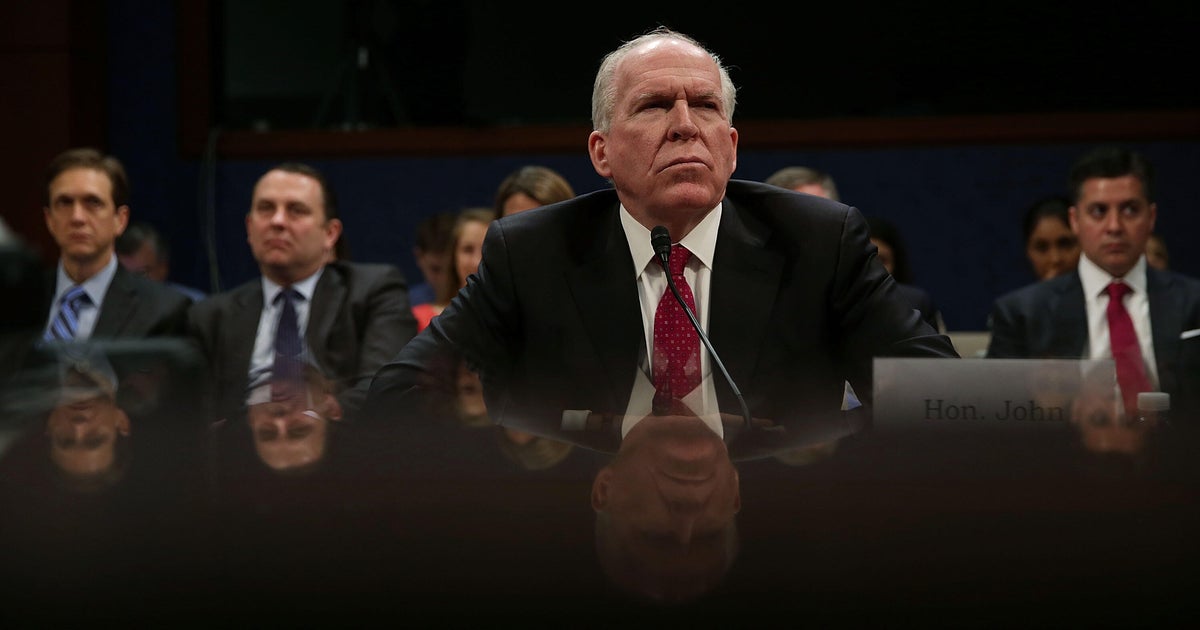

Federal Investigation of Former CIA Director John Brennan Intensifies Under Trump Ally
Grand Jury Subpoenas Signal Escalation in Controversial Probe
A criminal investigation into former CIA Director John Brennan has taken a dramatic turn, with former senior intelligence and FBI officials receiving grand jury subpoenas over the weekend. These individuals, who have been cooperating with the Justice Department’s probe into whether Brennan lied to Congress, were told to appear before a grand jury in Washington, D.C., according to multiple sources who spoke with CBS News. The investigation centers on testimony Brennan gave to Congress regarding the CIA’s involvement in preparing the 2017 intelligence assessment about Russian interference in the 2016 presidential election. What makes this development particularly noteworthy is the timing—the subpoenas were issued shortly after Joe DiGenova, a well-known conservative attorney and loyal Trump supporter, was appointed to take over the investigation. DiGenova’s involvement has raised eyebrows among legal experts and former prosecutors, who view his appointment as a potential politicization of what should be an independent criminal investigation.
Controversial Leadership Change Raises Questions About Political Motivation
The circumstances surrounding the leadership change in this investigation have sparked concern among legal professionals and those familiar with Justice Department procedures. Until DiGenova’s appointment, the case was being handled by Maria Medetis Long, a career prosecutor based in Miami who specializes in national security matters. Late last week, Long informed attorneys representing witnesses in the case that she was being removed from her position, without providing any explanation for the sudden change. However, a source with knowledge of the situation told CBS News that Long was removed after she raised concerns about the strength of the evidence against Brennan—a detail that has significant implications for the legitimacy of the investigation. When asked about this personnel shift, a Justice Department spokesperson described it as “healthy and normal,” a characterization that former prosecutors have disputed, calling it contrary to standard operating procedures. The removal of a career prosecutor who questions the evidence, only to be replaced by a political ally of the former president, follows a troubling pattern that has emerged in other high-profile cases.
Pattern of Politically-Motivated Prosecutions Under Scrutiny
This isn’t the first time such concerns have arisen during investigations connected to Trump and his allies. A similar situation unfolded last year when President Trump removed the top federal prosecutor in Virginia’s eastern district and replaced him with Lindsey Halligan, another loyalist, after the original prosecutor raised concerns about the strength of evidence against former FBI Director James Comey and New York Attorney General Letitia James. Halligan managed to secure indictments against both Comey and James, but those victories were short-lived. A federal judge quickly dismissed both indictments after ruling that Halligan had been unlawfully appointed to her position. This precedent raises serious questions about the current investigation into Brennan and whether it will face similar legal challenges down the road. The pattern suggests a willingness to push forward with prosecutions even when career prosecutors with expertise in these matters express doubts about the underlying evidence. Legal experts have noted that the decision to suddenly switch from voluntary interviews with cooperating witnesses to requiring in-person grand jury testimony is highly unusual and may indicate an attempt to pressure grand jurors into returning an indictment, even in a case that might be perceived as politically motivated.
Origins of the Investigation and Allegations Against Brennan
The investigation into Brennan originated from a referral made by the Republican-led House Judiciary Committee in October of last year. Representative Jim Jordan, who chairs the committee, alleged that Brennan had lied to Congress about the CIA’s role in developing the 2017 intelligence assessment regarding Russian efforts to interfere in the 2016 presidential election. Specifically, Jordan claimed that in testimony given in 2023, Brennan “falsely” denied that the CIA had relied on the so-called Steele dossier when drafting the intelligence assessment and had also falsely told the committee that the CIA had opposed including information from the Steele dossier in the final assessment. The Steele dossier, prepared by former British intelligence officer Christopher Steele, contained sensational and unverified allegations against Donald Trump when he was still a presidential candidate. These allegations became a focal point of political controversy and have been repeatedly cited by Trump and his supporters as evidence of a conspiracy against him. Brennan’s attorney has firmly denied any wrongdoing on behalf of his client, maintaining that Brennan’s testimony to Congress was truthful and accurate.
Witness Testimony Appears to Support Brennan’s Account
The evidence that has emerged so far from cooperating witnesses doesn’t appear to support the allegations against Brennan. According to sources who spoke with CBS News, at least one witness—a former CIA official—was scheduled to be interviewed for the third time in early May, before the new grand jury subpoenas were issued. This witness had previously answered questions about Brennan’s 2023 congressional testimony and, according to one source, offered no information that contradicted Brennan’s account of events. The witness has also been questioned about a disagreement he had with Brennan over whether there was sufficient intelligence to conclude that Russia was actively trying to help Donald Trump while harming his opponent, then-Secretary of State Hillary Clinton. It remains unclear whether this internal disagreement about intelligence assessments will become a factor in the investigation into whether Brennan made false statements to Congress. The fact that cooperating witnesses have been unable to provide testimony that contradicts Brennan’s version of events may explain why the career prosecutor originally handling the case raised concerns about the strength of the evidence—concerns that ultimately led to her removal from the investigation.
Additional Investigation and Broader Implications
The situation is further complicated by a separate but related investigation. The U.S. attorney’s office in Miami is also looking into another referral, this one from Director of National Intelligence Tulsi Gabbard, in which she claimed—without providing evidence—that Brennan and other officials from the Obama administration “manufactured” the 2017 intelligence assessment about Russian interference. Defense lawyers involved in the case have referred to this as the “grand conspiracy” case. The current status of this broader investigation remains unclear, though DiGenova is expected to be involved in it as well. The appointment of a Trump loyalist to oversee these investigations has raised fundamental questions about the independence of the Justice Department and whether prosecutorial decisions are being made based on evidence and law or on political considerations. The use of grand jury subpoenas to compel testimony from witnesses who were already cooperating voluntarily is seen by legal experts as an unusual tactic that may be designed to overcome grand jurors’ increasing reluctance to indict targets in cases that appear politically motivated. As this investigation moves forward, it will be closely watched as a test of whether the Justice Department can maintain its independence and credibility, or whether it will be seen as a tool for settling political scores against perceived enemies of the former president.