


Japan’s Unconventional Prime Minister: Sanae Takaichi Breaks the Mold
A New Face of Leadership in Japanese Politics
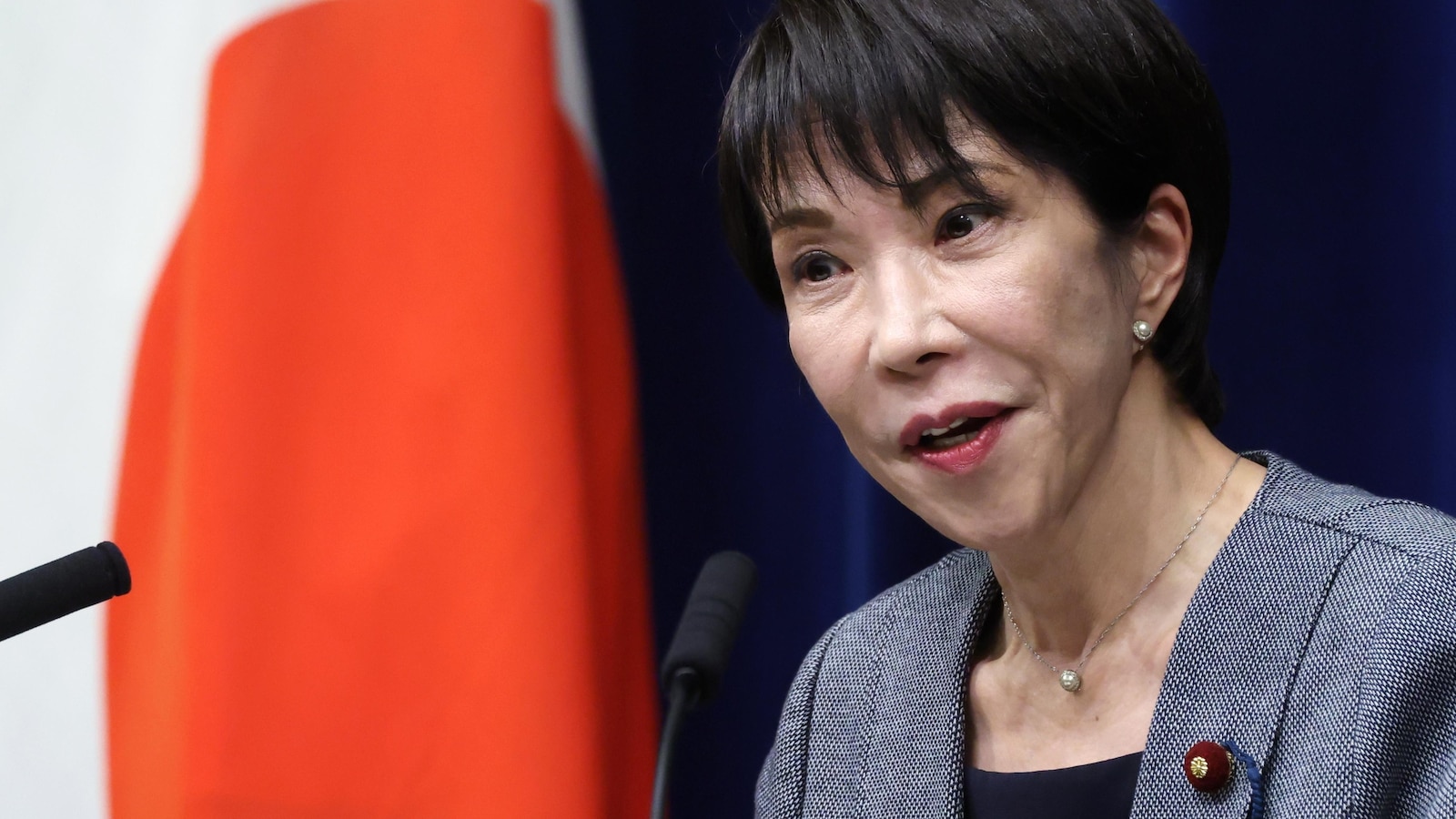
Japan has found an unlikely political star in Prime Minister Sanae Takaichi, a heavy metal enthusiast who rides motorcycles, plays drums, and isn’t afraid to jam with visiting dignitaries. In a nation where company loyalty is practically sacred, she captured hearts by declaring her formula for success: “work, work, work, work, work.” This refreshing blend of toughness and playfulness has transformed her into something Japan hasn’t seen in decades—a genuinely popular prime minister. While her Liberal Democratic Party has faced significant challenges in recent years, Takaichi represents a dramatic departure from the parade of elderly men who have traditionally held the office. Her appeal particularly resonates with younger Japanese citizens, who affectionately call her “Sana” and eagerly follow everything from her fashion choices to her stationery preferences and even her favorite food—steamed pork buns. Despite the LDP’s well-documented problems, polling suggests the party is positioned to make substantial gains in the upcoming lower house Parliamentary elections, largely riding on Takaichi’s coattails. Her success could enable her to steer Japan toward the hawkish, deeply conservative vision championed by her late mentor, former Prime Minister Shinzo Abe, and potentially even further in that direction.
Roots in Traditional Japan
Sanae Takaichi’s story begins in Nara, Japan’s ancient capital, where she was raised by conservative parents who instilled prewar moral values. Her upbringing was distinctly traditional—her mother served as a police officer while her father worked at a machinery manufacturer. As a child, she listened to her parents recite an 1890 imperial document extolling paternalistic family values and government loyalty, an experience she recalled in 2012 interviews. Despite earning admission to prestigious Tokyo universities, her parents insisted she attend Kobe University while living at home—a common requirement for unmarried daughters in conservative families of that era. This traditional foundation didn’t prevent her from seeking international exposure; she briefly interned for a Democratic lawmaker in Denver during the late 1980s. Upon returning to Japan, she carved out a diverse career path as a television personality, author, and critic before entering politics. University of Tokyo politics expert Izuru Makihara notes that Takaichi’s uniqueness lies in her combination of speaking her mind while maintaining an easygoing demeanor. He observes that she’s particularly respected by women and younger generations who feel trapped and hopeless about their prospects in contemporary Japan.
Breaking Barriers and Facing Criticism
Takaichi’s political journey began in 1993 when she defied her parents’ wishes and won her first Parliamentary seat at age 32. The campaign proved brutal, with some voters dismissing her as “a little girl.” Reflecting on that experience in 2023, she recalled how women considered too young were simply unwelcome in politics during that period. She faced baseless allegations of being a senior politician’s mistress and endured criticism—often from other women—for wearing heels, flashy jewelry, and short skirts. Her response to these attacks was characteristically defiant: “I am who I am. The only way to prove myself is with the work I do.” Since becoming prime minister in October following her Parliamentary election, her early tenure has been marked by hawkish statements, particularly regarding potential Chinese military action against Taiwan. These comments angered China by departing from Japan’s historical strategic ambiguity on the issue. Her policy positions reflect deeply conservative values: she supports maintaining the imperial family’s male-only succession, opposes same-sex marriage, and rejects amending the 19th-century law requiring married couples to share a surname—a regulation that typically pressures women into abandoning their family names. Unsurprisingly, feminists have expressed disappointment, viewing Takaichi’s leadership as a setback for gender equality in Japan. However, supporters like 43-year-old office worker Riho Shimogomi take a different view, saying that when evaluating Takaichi’s policies, “her being a woman doesn’t matter. I think she has strong leadership skills and charisma.”
The Abe Legacy and Political Rise
As the protégé of Shinzo Abe, Takaichi has embraced and amplified his nationalistic worldview, defending Japanese wartime actions, advocating for enhanced military capabilities and increased defense spending, promoting more patriotic education, and championing traditional family values. Under Abe’s leadership, she advanced rapidly through party ranks, receiving important ministerial and party positions. After Abe stepped down, he endorsed her as “the star of the conservatives,” though her path to the top wasn’t immediate. She competed unsuccessfully for LDP leadership in both 2021 and 2024 before finally securing the position in October, replacing Abe’s rival, the more centrist Shigeru Ishiba. Now firmly in control, Takaichi has surrounded herself with some of Abe’s top advisers as her lieutenants. Political observers expect that strong performance in Sunday’s election will empower her to push Japan even further rightward on security matters, gender issues, and immigration policy. Her approach represents not merely a continuation of Abe’s vision but potentially an expansion of it, taking conservative policies into new territory. This trajectory concerns progressives who worry about Japan’s direction on social issues, while conservatives see an opportunity to cement their vision for the nation’s future.
The Workaholic Prime Minister
Takaichi has openly acknowledged her preference for studying at home over attending drinking parties, though she made conscious efforts to socialize more with colleagues after her two failed leadership bids. Upon winning the LDP leadership, she urged party members to “work like a horse” and declared she would abandon “work-life balance” to simply “work, work, work, work and work.” While these phrases became popular buzzwords, they struck an uncomfortable chord in a country already notorious for punishing work hours and widespread overwork. Analysis of her schedule during her first three months in office revealed telling patterns. Kyodo News Agency reported that she remained largely “holed up” in the official residence or office, while the Mainichi newspaper noted she had no dinner appointments with political or business leaders during her entire first month. Her intense work ethic traces back to maternal influence. She once recounted returning to Nara and complaining about work fatigue, only to have her mother slap her face and scold her for complaining about a path she’d chosen herself. Even after achieving ministerial rank, her mother continued this tough-love approach. At her mother’s 2018 funeral, Takaichi shared these stories, delivering what local television executive Nobumitsu Nagai described as a speech “not formal and filled with affection for her mother,” adding, “I felt she has inherited that strictness.”
The Human Side of Power
Yet beneath the strict work ethic and conservative politics lies a surprisingly playful personality. Nagai recalls discovering they’d attended the same elementary school in Nara, whereupon Takaichi asked if he remembered the school song—and they sang it together. “While she gives out a strong impression of being right wing and a hawk,” he reflected, “I realized she also has a playful side like that.” This duality—the serious policymaker who also loves heavy metal, the strict leader who spontaneously breaks into childhood songs, the traditional conservative who challenges gender barriers simply by existing in her role—makes Takaichi a fascinating and complex figure in Japanese politics. Her motorcycle rides and drum sessions offer glimpses of someone who refuses to fit neatly into established categories. As Sunday’s election approaches, Japan stands at a crossroads. Takaichi’s popularity, particularly among younger voters seeking authentic leadership, could reshape the political landscape. Whether her vision of a more militarily capable, socially conservative Japan aligned with Abe’s legacy represents progress or regression depends largely on perspective. What’s undeniable is that this unconventional prime minister has energized Japanese politics in ways her predecessors couldn’t, proving that sometimes breaking the mold—even while embracing traditional values—can capture a nation’s imagination. Her journey from a young woman dismissed as “a little girl” to Japan’s first female prime minister embodies contradictions that may define Japan’s future direction.