


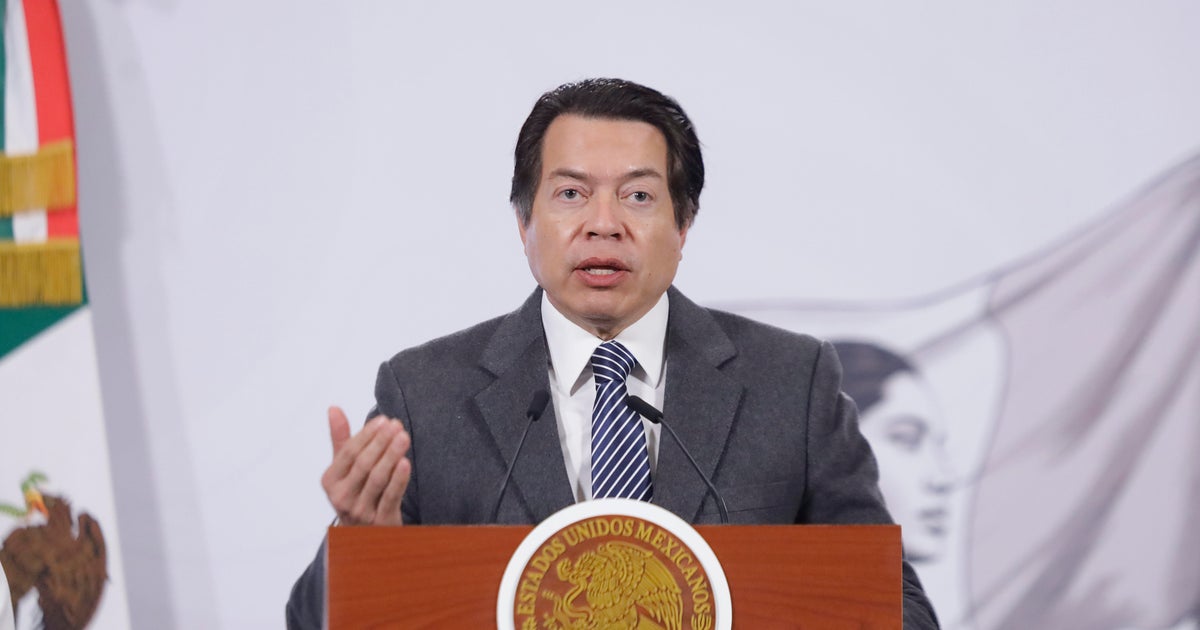

Tragedy Strikes Mexico’s Education Secretary as Family Members Are Murdered in Violent State
A Personal Loss Amid Rising Violence
In a heartbreaking incident that highlights Mexico’s ongoing security crisis, two family members of Mario Delgado, Mexico’s Secretary of Public Education, were brutally murdered in their home early Saturday morning in Colima, a state on Mexico’s Pacific coast. The victims were identified by Delgado as his aunt, Eugenia Delgado—affectionately known as “Queña” by family members—and his cousin Sheila. The shooting occurred around 4:30 in the morning, shattering the lives of a family and bringing national attention once again to the violence plaguing certain regions of Mexico. Delgado’s public expression of grief on social media painted a touching portrait of his aunt as a hardworking woman who supported herself by baking cakes and preparing traditional Colima cuisine, someone who had been a constant, loving presence throughout his childhood by making his birthday cake every year.
The loss is particularly poignant as Delgado shared that his aunt is now reunited with his grandparents and his father, whom she dearly loved. This personal tragedy has resonated across Mexico, reminding citizens that violence doesn’t discriminate—it affects ordinary people trying to make honest livings, as well as the families of high-ranking government officials. The shooting took place in Colima, which has earned the unfortunate distinction of being one of Mexico’s most dangerous states, recording the highest homicide rate in the country for both 2023 and 2024 according to U.S. State Department data. This context makes the attack even more troubling, as it underscores the persistent security challenges facing Mexican authorities despite various government initiatives to combat organized crime and reduce violence.
Swift Response and Confrontation with Suspects
Following the early morning murders, Mexican authorities moved quickly to track down those responsible for the brutal killings. The local prosecutor’s office in Colima launched an immediate investigation, and by Saturday afternoon, officers had located a vehicle believed to belong to the suspects. The trail led them to a home in Colima, where a violent confrontation ensued. In the resulting gunfight, three individuals suspected of carrying out the shooting were killed by security forces. While the swift response demonstrated the authorities’ commitment to bringing those responsible to justice, it also meant that crucial questions about the motive behind the attack and whether these were the only individuals involved may never be fully answered.
During their investigation of the suspects’ home, authorities discovered evidence linking the three deceased individuals to the double homicide. Investigators found weapons and clothing that connected them to the crime scene, providing physical evidence to support their identification as the perpetrators. However, despite these findings, the prosecutor’s office did not publicly identify a clear motive for why Delgado’s family members were targeted. This absence of information has left many wondering whether this was a random act of violence, a case of mistaken identity, or something more sinister—perhaps a deliberate attack meant to intimidate or send a message to the high-ranking government official. Furthermore, authorities have not indicated whether they are searching for additional suspects, leaving open the possibility that others may have been involved in planning or executing the attack.
Understanding Colima’s Security Crisis
Colima’s designation as Mexico’s most violent state is not merely a statistical anomaly but reflects deep-rooted problems with organized crime, cartel activity, and territorial disputes that have turned parts of the state into battlegrounds. Despite being one of Mexico’s smallest states geographically, Colima has become a strategic prize for drug trafficking organizations due to its port city of Manzanillo, one of the busiest ports in Mexico and a crucial entry point for precursor chemicals used in drug manufacturing, as well as an exit point for drugs heading to international markets. The competition for control of these lucrative smuggling routes has resulted in brutal turf wars between rival cartels, with civilians often caught in the crossfire.
The violence in Colima reflects a broader pattern across several Mexican states where the presence of organized crime has overwhelmed local security forces and created environments of fear and impunity. Residents of these areas often face daily risks simply going about their normal lives, whether running businesses, traveling to work, or, as in the case of Delgado’s aunt, operating a small home-based food business. The high homicide rates represent not just statistics but individual tragedies—families torn apart, communities traumatized, and economic development stunted as businesses close and residents flee to safer areas. For government officials like Delgado, who work at the national level on education policy and other matters, the violence in states like Colima represents both a policy challenge and, now, a deeply personal wound.
Mario Delgado’s Role in Mexican Government
Mario Delgado holds a significant position in Mexico’s current administration as Secretary of Public Education, a role to which he was appointed by President Claudia Sheinbaum in 2024. His profile photo on social media showing him alongside President Sheinbaum reflects the close working relationship between the two leaders. Before taking on this cabinet position, Delgado served as the national president of Morena, Mexico’s ruling political party, giving him considerable political experience and influence. In this capacity, he helped shape the party’s platform and strategy, making him one of the most recognizable political figures in Mexico. His transition from party leadership to heading one of the country’s most important ministries—education—demonstrates the confidence President Sheinbaum has in his abilities and judgment.
As Education Secretary, Delgado is responsible for overseeing Mexico’s vast educational system, which serves millions of students from elementary schools through universities. The position places him at the forefront of efforts to improve educational outcomes, address inequality in access to quality education, and prepare Mexican youth for the challenges of the modern economy. Now, however, this public servant must somehow balance his professional responsibilities with processing profound personal grief. The murder of his family members brings into sharp focus the human cost of Mexico’s security crisis and may influence how he and other government officials approach policy discussions about crime, violence, and public safety. It also raises questions about the security provided to government officials and their families, and whether more should be done to protect them from the reach of criminal organizations.
National Security Challenges and International Pressure
The timing of this tragedy is particularly significant given the broader context of Mexico’s security situation and its relationship with the United States. Just last month, President Sheinbaum publicly stated that Mexico’s efforts to crack down on drug cartels and control migration northward were showing “compelling results.” These comments were made in response to increasingly aggressive rhetoric from the Trump administration regarding U.S. intervention in Mexico’s fight against drug trafficking organizations. President Trump has repeatedly threatened to take direct action against Mexican cartels, telling Fox News that the United States had “knocked out 97% of the drugs coming in by water” and that the U.S. was preparing to “start now hitting land, with regard to the cartels.”
This escalating tension between the two countries over how to address cartel violence and drug trafficking creates a complicated diplomatic and security environment. President Sheinbaum’s administration is walking a fine line—attempting to demonstrate that Mexico can handle its own security challenges while also cooperating with the United States on shared concerns like drug trafficking and migration. However, incidents like the murder of Secretary Delgado’s family members undermine claims that the situation is under control and provide ammunition to those in the U.S. who argue for more aggressive intervention. The violence in states like Colima suggests that despite government efforts, criminal organizations continue to operate with disturbing levels of impunity and capability. For the Mexican government, each such incident represents not only a human tragedy but also a political challenge, as citizens question whether their leaders can truly protect them and restore order to the most violent regions of the country. The path forward requires both immediate security responses and longer-term strategies to address the root causes of violence, including poverty, corruption, and the enormous profits generated by illegal drug markets that fuel cartel power and brutality.