


A Young Hero’s Incredible Ocean Rescue: How a 13-Year-Old’s Courage Saved His Family
The Unthinkable Decision No Parent Should Face
When Joanne Appelbee looked into the eyes of her 13-year-old son Austin that fateful Friday afternoon off the Australian coast, she faced what she would later describe as one of the hardest decisions of her life. The family of four—Joanne, 47, and her three children Austin, 12-year-old Beau, and 8-year-old Grace—had been enjoying what was supposed to be a relaxing vacation from their home in Perth. They had rented kayaks and paddleboards from their hotel around noon, looking forward to a pleasant day on the water. But the ocean had other plans. Rough conditions and powerful winds began pulling them relentlessly away from shore, and what started as a family outing quickly transformed into a life-threatening emergency. As the reality of their dire situation set in, Joanne made the agonizing choice to send her eldest child on a desperate mission to reach land and summon help, knowing she couldn’t leave the three children together in the water. “Try and get to shore and get some help,” she told Austin. “This could get really serious really quickly.” It was a mother’s impossible gamble—trusting her teenage son to undertake a perilous journey alone so that all of them might have a chance at survival.
Four Hours of Superhuman Determination
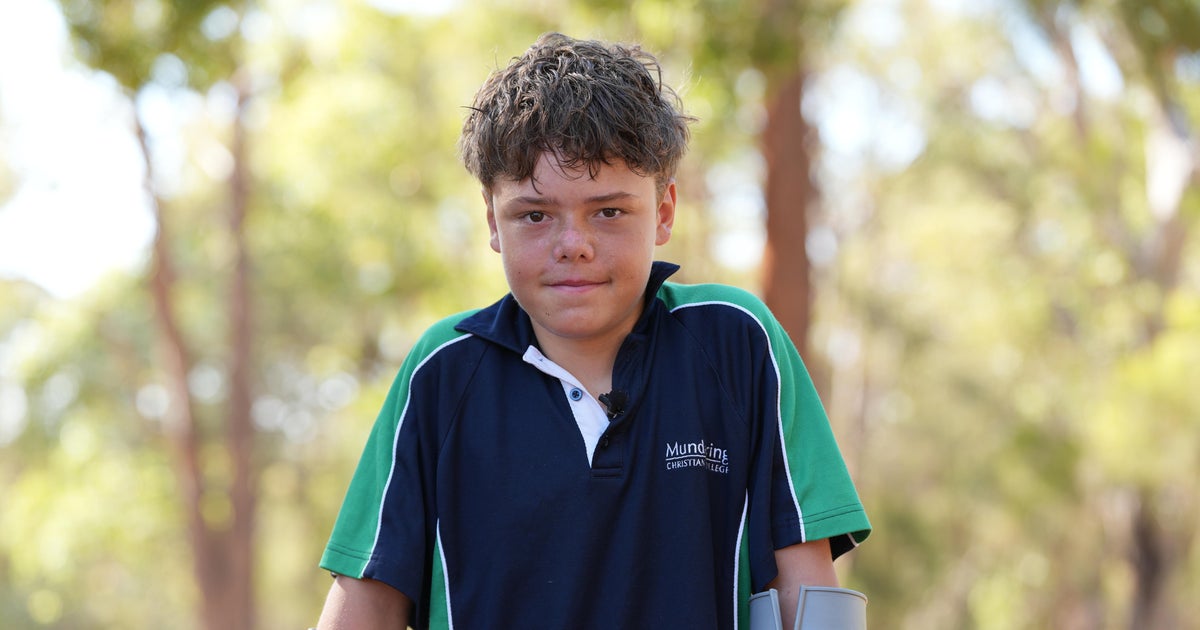
What Austin Appelbee accomplished that day can only be described as extraordinary. The 13-year-old embarked on what would become a grueling four-hour swim covering approximately 4 kilometers (2.5 miles) through massive waves and rough seas. He initially attempted to reach shore on an inflatable kayak, but it began taking on water and proved useless for the journey ahead. In a decision that showed remarkable judgment under pressure, Austin abandoned the failing kayak and began swimming with his life jacket on. For the first two hours, he pushed through the churning ocean waters, but the life jacket that was meant to save him actually began to work against him, impeding his ability to swim efficiently. In what Paul Bresland, the Naturaliste Marine Rescue commander, would later call a “superhuman” decision, the brave teenager removed his life jacket and continued swimming for another two hours without it. During those endless hours battling the ocean, Austin drew on an inner reservoir of mental strength that few adults possess, let alone a child. “The waves are massive and I have no life jacket on,” he recalled. “I just kept thinking ‘just keep swimming, just keep swimming.'” The simple mantra, reminiscent of the popular animated film, became his lifeline, each repetition pushing him forward stroke after stroke. When he finally felt the ocean floor beneath him at 6 p.m., Austin dragged himself onto the beach and collapsed, his body spent but his mission accomplished.
A Mother’s Vigil in the Darkening Sea
While Austin battled toward shore, Joanne faced her own nightmare, trying to keep her two younger children alive in increasingly dangerous conditions. Armed with a paddleboard and life jackets, she worked tirelessly to keep Beau and Grace together and afloat as hours passed and they drifted farther from land. To combat the terror that threatened to overwhelm them, Joanne turned their ordeal into what she described as “a bit of a game.” They sang songs, told jokes, and tried to maintain positive spirits even as their bodies grew colder and their situation more desperate. “We kept positive,” she later told reporters, her voice carrying the weight of those harrowing hours. But as any parent would understand, beneath her brave face lurked profound fear and doubt. She had been confident Austin would make it to shore when she first sent him off, but as the sun began its descent toward the horizon and no rescue appeared, that confidence began to waver. The ocean grew choppier, the waves larger, and still they waited, treading water and clinging to their paddleboard in the vast expanse of the sea. Physically, Joanne was reaching her limits. “I’m struggling, I can’t,” she confessed to Bresland later, but when she looked into the eyes of Beau and Grace—her babies depending on her—she found the strength to continue. She kept them together, kept them alive, kept hope burning even as darkness fell.
The Desperate Search and Miraculous Discovery
Once Austin raised the alarm from shore, emergency services launched into action, but the family’s ordeal was far from over. By the time a search helicopter finally spotted Joanne, Beau, and Grace at 8:30 p.m., they had spent up to 10 agonizing hours in the water. The ocean had carried them an astonishing 14 kilometers (9 miles) from their starting point at Quindalup in Western Australia. The helicopter crew found them exactly as Austin had left them—wearing life jackets and desperately clinging to the paddlboard that had become their only solid anchor in a world of water. By this time, all three were shivering uncontrollably from the prolonged exposure to cold water, and young Beau had lost all sensation in his legs, a frightening symptom of hypothermia. The physical toll of their ordeal was evident, but they were alive. When Police Inspector James Bradley later issued a statement about the rescue, he didn’t mince words about who deserved the credit. “The actions of the 13-year-old boy cannot be praised highly enough—his determination and courage ultimately saved the lives of his mother and siblings,” he declared. Without Austin’s incredible swim, without his refusal to give up when every muscle screamed and every wave threatened to pull him under, the outcome could have been tragically different. The search would have started much later, if at all, and the chances of finding three people in the dark, cold ocean would have diminished with each passing hour.
The Aftermath: Gratitude and Recognition
In the days following their rescue, the Appelbee family became the focus of national attention in Australia and beyond. When Joanne spoke to reporters on Tuesday, just days after the ordeal, her emotions were still raw and her gratitude boundless. “I have three babies. All three made it. That was all that mattered,” she said, her words capturing the pure relief of a mother who had stared into the abyss and somehow brought her children back from the brink. Remarkably, despite the severity of their experience, all four family members were medically assessed following the rescue and none required hospital admission—a testament to their physical resilience and the effectiveness of the rescue operation. The Naturaliste Volunteer Marine Rescue Group took to social media to praise the family, with special recognition for Austin’s heroic efforts. “The bravery, strength, and courage shown by this family were extraordinary, especially the young fella who swam 4km to raise the alarm and set everything into motion,” the group wrote on Facebook. Their post resonated with thousands who were moved by the story of a young teenager who rose to an impossible challenge when his family’s lives hung in the balance.
Lessons in Courage and the Power of the Human Spirit
The Appelbee family’s story is more than just a dramatic rescue tale—it’s a powerful reminder of what humans are capable of when faced with life-or-death circumstances. Austin’s four-hour swim against massive waves without a life jacket defies the limitations we typically associate with a 13-year-old child. His ability to maintain focus, to repeat his simple mantra of “just keep swimming” when fear and exhaustion must have been overwhelming, speaks to an inner strength that many adults never discover in themselves. Equally remarkable is Joanne’s ability to keep her younger children calm and alive for up to 10 hours in rough, cold seas, turning terror into games and songs, finding strength she didn’t know she possessed because her children needed her to find it. Their story also highlights the unpredictable dangers of the ocean and the importance of respecting changing conditions. What began as a pleasant family activity with rented equipment from their hotel transformed within hours into a fight for survival, a stark reminder that the sea’s moods can shift with deadly speed. But beyond the cautionary elements, this is fundamentally a story about the unbreakable bonds of family and the extraordinary lengths to which we will go to protect those we love. Austin didn’t just swim for four hours through dangerous seas—he swam because his mother and siblings needed him, because turning back wasn’t an option, because failure meant losing everything that mattered. And Joanne didn’t just tread water for 10 hours—she fought against physical exhaustion and mental despair because giving up meant abandoning her children. Together, through individual acts of remarkable courage, they all made it home. All three babies survived, and that, as Joanne so perfectly stated, was all that mattered.