


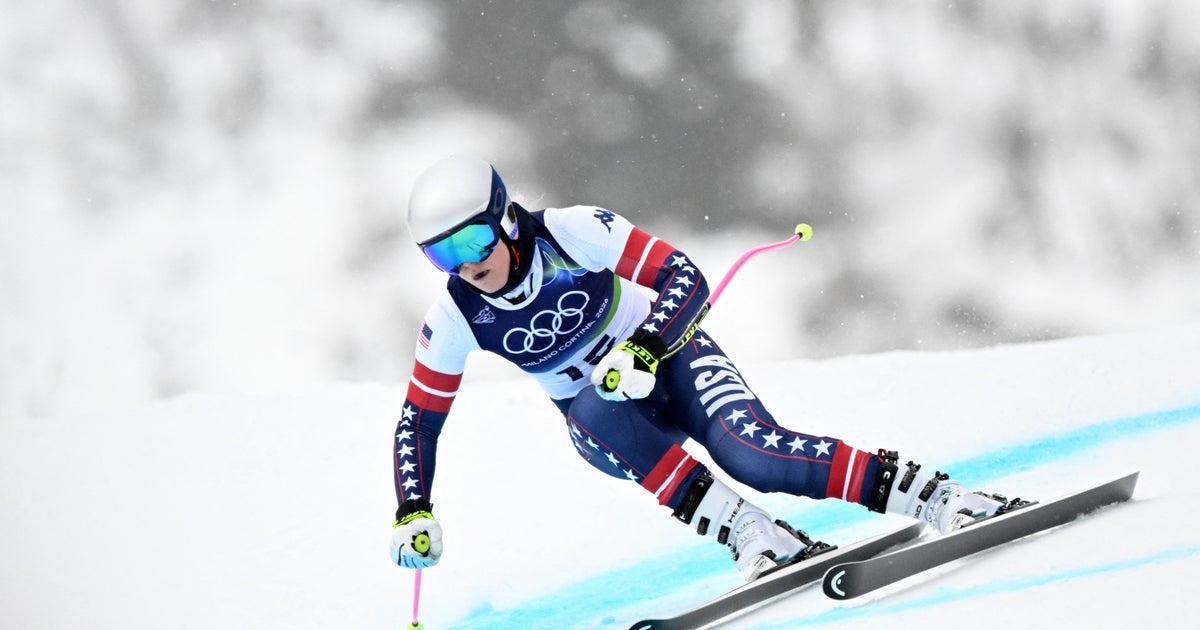

Lindsey Vonn’s Remarkable Return: Training with a Ruptured ACL Ahead of Olympic Downhill
The Injury That Shocked the Skiing World
Lindsey Vonn, the legendary 41-year-old Alpine skiing champion, found herself facing one of the most daunting challenges of her illustrious career just days before what would be her final Olympic competition. During a World Cup race in Crans-Montana, Switzerland, approximately one week before the Olympic downhill event, Vonn suffered a devastating crash that resulted in a complete rupture of her left anterior cruciate ligament (ACL). For most athletes, this type of injury would signal an immediate end to competition, requiring months of recovery and rehabilitation. However, Vonn is not like most athletes. Despite the severity of her injury, which she herself confirmed was a complete, 100% rupture of the ligament, the skiing icon remained steadfast in her determination to compete in Sunday’s Olympic downhill race. Her decision to push forward has sparked both admiration and concern from the medical community, fellow athletes, and fans around the world who have followed her remarkable career.
Defying Medical Expectations and Critics
The severity of Vonn’s injury became a topic of public discussion when she took to social media to respond directly to skeptics, including medical professionals who questioned whether competing with such an injury was even physically possible. In a characteristically bold response to a doctor’s post expressing doubt about her ability to race, Vonn wrote: “lol thanks doc. My ACL was fully functioning until last Friday. Just because it seems impossible to you doesn’t mean it’s not possible. And yes, my ACL is 100% ruptured. Not 80% or 50%. It’s 100% gone.” This candid acknowledgment removed any ambiguity about the situation – Vonn wasn’t dealing with a partial tear or minor damage, but rather the complete absence of a crucial knee ligament that provides stability during the high-speed, high-impact movements required in competitive downhill skiing. Her willingness to be transparent about the injury while simultaneously dismissing doubts about her ability to compete demonstrates the mental fortitude that has defined her career. The medical community remains divided on whether competing under these circumstances is advisable, but Vonn has made it clear that the decision is hers alone to make, and she has chosen to race.
Navigating Weather Delays and Training Challenges
As if skiing with a completely ruptured ACL wasn’t challenging enough, Vonn and her fellow competitors faced additional obstacles in the form of unpredictable Alpine weather conditions that disrupted the official training schedule leading up to Sunday’s race. The original plan called for three official downhill training runs to allow athletes to familiarize themselves with the course and fine-tune their approach. However, the first training session, which had been scheduled for Thursday, was canceled entirely due to adverse weather conditions in the Italian Alps. This meant that athletes had one fewer opportunity to practice on the actual Olympic course before race day – a significant disadvantage under normal circumstances, and an even greater challenge for someone competing with a major injury. Despite these setbacks, Vonn participated in Friday’s training event, which itself experienced weather-related delays before eventually proceeding. Saturday’s training run marked the second and final official practice session before Sunday’s competitive event, and Vonn completed it without any apparent difficulties or visible signs of struggle, demonstrating remarkable physical resilience and technical skill despite the compromised structural integrity of her left knee.
Support and Belief from Team USA
Vonn’s teammates on the U.S. Alpine ski team have rallied around their veteran colleague, expressing both admiration for her determination and confidence in her ability to compete at the highest level despite her injury. During training sessions ahead of the Games’ opening ceremonies, fellow Team USA skier Isabella Wright spoke to CBS News about Vonn’s situation, saying, “If anyone can come back from this, if anyone could do it, it’s Lindsey.” This sentiment reflects the respect Vonn has earned throughout her career, not just for her technical abilities and competitive achievements, but for her mental toughness and willingness to push beyond what others consider possible. Another teammate, Breezy Johnson, offered additional perspective on Vonn’s decision to compete injured, telling CBS News: “If it’s your last Games, and you know, already probably have a lot of knee damage, then there’s not that much to lose.” Johnson’s comments acknowledge the reality that Vonn’s knees have already endured decades of extreme stress from world-class competition, multiple previous injuries, and numerous surgeries. For an athlete at the end of her career, the calculation of risk versus reward differs significantly from that of a younger competitor with many years of racing ahead.
The Context of a Legendary Career Coming Full Circle
Vonn’s determination to compete in this Olympic downhill race carries special significance when viewed in the context of her entire career trajectory. At 41 years old, she is competing in what she has indicated will be her final Olympic Games, bringing her remarkable journey in competitive skiing to a close on the world’s biggest stage. Throughout her career, Vonn has accumulated an impressive collection of achievements, including multiple Olympic medals, World Championship titles, and World Cup victories that have cemented her status as one of the greatest Alpine skiers of all time. She has also weathered numerous injuries, setbacks, and comebacks that would have ended lesser athletes’ careers multiple times over. Her knees, in particular, have been the source of multiple surgeries and ongoing challenges throughout her later competitive years. This history of battling through adversity and refusing to let physical limitations define her capabilities makes her current situation less surprising to those who have followed her career closely. For Vonn, the opportunity to compete one final time at the Olympic level appears to outweigh the considerable physical risks and pain involved in skiing downhill at speeds exceeding 80 miles per hour with no ACL to stabilize her left knee.
The Bigger Picture: Courage, Legacy, and Personal Choice
Vonn’s decision to race with a completely ruptured ACL raises important questions about athlete autonomy, the culture of toughness in elite sports, and where the line should be drawn between admirable perseverance and dangerous recklessness. Medical professionals will undoubtedly continue to debate whether her choice is wise from a health perspective, and some will argue that competing under these circumstances could lead to further, potentially catastrophic injury. However, there is also something undeniably inspiring about an athlete who has given everything to her sport choosing to end her Olympic career on her own terms rather than allowing an injury to make that decision for her. Vonn’s situation highlights the complex reality that elite athletes often view their bodies and the risks they take differently than the general population might. For someone who has dedicated nearly her entire life to mastering the art of descending mountains at breathtaking speeds, the chance to do so one final time on the Olympic stage clearly represents something worth the risk. Regardless of how she performs in Sunday’s downhill race, Vonn has already demonstrated the qualities that made her a champion: courage, determination, and an unwillingness to accept others’ limitations. Her story reminds us that sometimes the most meaningful victories aren’t measured in medals or times, but in the simple act of showing up and competing when every logical reason says you shouldn’t. As the skiing world watches her final Olympic run, Vonn’s legacy as not just a great athlete, but as a symbol of resilience and unbreakable spirit, is already secure.