
Senate Votes on Limiting Trump’s Military Authority Against Iran Amid Growing Concerns
The War Powers Resolution Returns to the Senate Floor
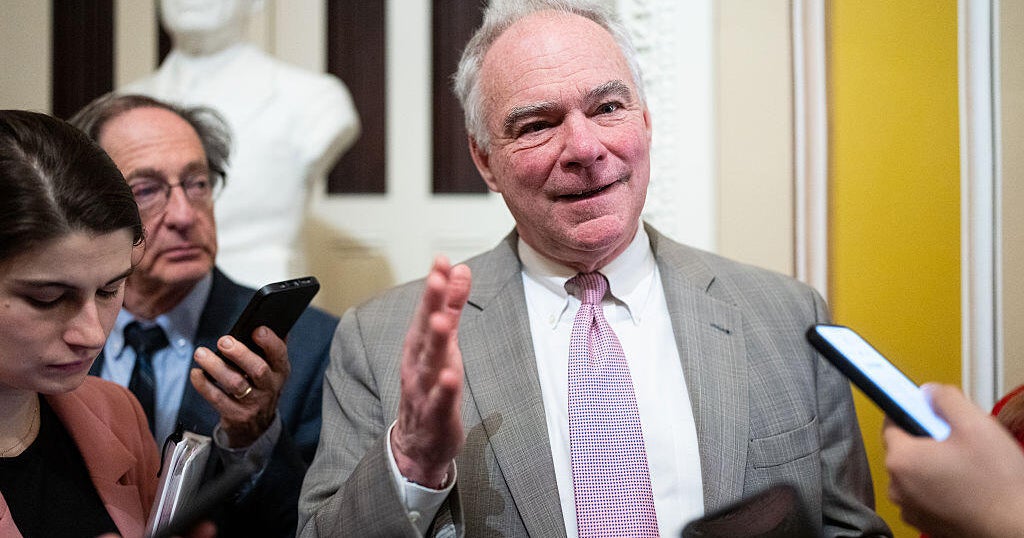
The United States Senate is preparing for a critical vote on Wednesday that could potentially restrict President Trump’s ability to take further military action against Iran without congressional approval. This vote comes at a particularly tense moment, as the Trump administration faces mounting criticism over inconsistent messaging about recent strikes and ominous warnings about additional American casualties that may lie ahead. Leading this effort is Democratic Senator Tim Kaine from Virginia, who has made it his mission to ensure Congress fulfills its constitutional role in matters of war. This isn’t Kaine’s first attempt at reining in executive military power regarding Iran – he pushed for a similar vote just last June, following U.S. bombing campaigns targeting three key sites in Iran’s nuclear program. That previous effort failed, but Kaine remains undeterred. This time, he’s joined by Republican Senator Rand Paul of Kentucky in sponsoring a resolution that would “direct the removal of United States Armed Forces from hostilities within or against the Islamic Republic of Iran that have not been authorized by Congress.” The timing couldn’t be more significant, as massive military operations launched over the weekend have dramatically raised the stakes and added urgency to what might otherwise be seen as a routine legislative procedure.
Republicans Hold the Cards, But the Vote Sends a Message
The political mathematics working against this resolution are straightforward and sobering for its supporters. With Republicans holding a 53-seat majority in the Senate, the measure needs only a simple majority to advance, but even that modest threshold appears out of reach. The challenge became steeper when Democratic Senator John Fetterman of Pennsylvania announced he would vote against the resolution, breaking ranks with most of his Democratic colleagues. This means supporters would need at least four additional Republican senators beyond Rand Paul to join their cause – an unlikely scenario given the current political climate. Senate Minority Leader Chuck Schumer, a New York Democrat, voiced deep concerns on Tuesday about the administration’s approach, saying “They have shifting goals, different goals all the time, different answers every day. And I am truly worried about mission creep.” His words echo a familiar refrain from previous American military engagements where initial objectives became muddled and missions expanded far beyond their original scope. Even if both the Senate and House somehow managed to pass this resolution, the victory would be largely symbolic rather than practical. President Trump retains the power to veto any such measure, and Democrats would face the nearly impossible task of securing two-thirds majorities in both chambers to override that veto – a political mountain too steep to climb in today’s polarized environment.
Lawmakers Demand Accountability for War Decisions
Despite acknowledging the resolution’s dim prospects for success, Senator Kaine argues that the vote serves a crucial purpose beyond its immediate legislative impact. In a candid call with reporters on Sunday, he explained his reasoning with pointed language: “If you don’t have the guts to vote yes or no on a war vote, how dare you send our sons and daughters into war where they risk their lives.” This statement cuts to the heart of what Kaine and his supporters see as a fundamental abdication of congressional responsibility. They believe that forcing members of Congress to publicly declare their position on military engagement creates accountability and ensures that those who represent the American people cannot hide from one of government’s most consequential decisions. The Constitution explicitly grants Congress the authority to declare war, yet that power has been steadily eroded over decades as successive presidents have expanded executive military authority. President Trump himself offered mixed signals about the Iran operation’s scope and duration. On Monday, he projected the operation would last four to five weeks while simultaneously claiming the U.S. has the “capability to go far longer than that.” He also noted that operations were “substantially ahead of our time projections,” though what those projections were or what metrics define success remained unclear. Perhaps most concerning for those worried about escalation, Trump has not ruled out deploying ground troops to Iran, a move that would dramatically expand American involvement and risk.
Classified Briefings Leave Democrats Deeply Troubled
Following a classified briefing with Trump administration officials on Tuesday, Democratic senators emerged visibly frustrated and alarmed by what they heard behind closed doors. Senator Chris Murphy of Connecticut painted a disturbing picture: “They told us in there that this is an open-ended operation that hasn’t even really started in earnest yet. There will be more Americans killed. They refuse to take off the table, the insertion of ground troops.” These revelations suggest that what the public has witnessed so far may only be the opening chapter of a much longer and more dangerous military engagement. Senator Cory Booker of New Jersey challenged one of the administration’s key justifications for the strikes, stating bluntly, “There clearly was no imminent threat.” This assertion directly contradicts administration claims that immediate action was necessary to protect American lives and interests. The disconnect between what administration officials say publicly and what they tell lawmakers privately has deepened concerns about transparency and the true objectives of the military campaign. Public opinion appears to align with these congressional concerns. A recent CBS News poll found that most Americans disapprove of the war with Iran and believe the Trump administration has failed to clearly explain its goals. About half of Americans surveyed expect the conflict could drag on for months or even years, suggesting widespread skepticism about quick victory claims and concern about another protracted Middle Eastern conflict that could consume American lives and resources for the foreseeable future.
Constitutional Questions and Historical Precedents
The constitutional and legal dimensions of this debate highlight fundamental tensions in American governance that have existed for decades. Senate Majority Leader John Thune, a South Dakota Republican, defended the administration’s actions on Monday, saying they were “consistent with what previous administrations have done” in prior conflicts. At a Tuesday news conference, he added that “the president was perfectly within his rights to take the steps that he took.” This argument essentially claims that precedent trumps the Constitution’s clear assignment of war-making powers to Congress. The 1973 War Powers Resolution was Congress’s attempt to reassert its constitutional authority following the Vietnam War, which had expanded dramatically without a formal declaration of war. This law requires presidents to consult with Congress before introducing military forces whenever possible and to report to Congress within 48 hours of deploying forces if war hasn’t been declared. It also limits unauthorized military engagements to 60 days. However, no president from either party has fully accepted the constitutionality of this law, creating an ongoing constitutional standoff. Secretary of State Marco Rubio acknowledged this tension on Monday, telling reporters, “No presidential administration has ever accepted the War Powers Act as constitutional — not Republican presidents, not Democratic presidents. All that said, we complied with the law 100%, and we’re going to continue to comply with it.” In his formal notification to Congress, President Trump cited “repeated efforts to achieve a diplomatic solution to Iran’s malign behavior,” but concluded “the threat to the United States and its allies and partners became untenable.”
Looking Ahead: More Votes and Uncertain Outcomes
Senator Kaine has indicated he may continue forcing votes on this issue in the coming weeks, holding out hope that some senators who initially oppose the resolution might change their positions as the situation in Iran develops and potentially deteriorates. He pointed to the Venezuela situation earlier this year as a precedent, where several Republicans eventually supported a war powers resolution after the U.S. military captured former President Nicolás Maduro, driven by concerns about potential troop deployments and Trump’s comments about running Venezuela. However, that effort ultimately stalled when the Trump administration applied pressure on holdout senators to reverse their positions, demonstrating the executive branch’s formidable ability to shape legislative outcomes even on matters of congressional prerogative. Senator Josh Hawley of Missouri, who previously supported limiting presidential power to strike Venezuela, now says he believes the Trump administration is complying with the law on Iran and plans to vote against the current war powers resolution. He clarified his position by stating, “My view has always been, ground troops will require congressional authorization,” suggesting he sees a distinction between air strikes and boots on the ground. Last year’s efforts to limit U.S. involvement in Iran similarly lost momentum after the 12-day war between Iran and Israel concluded with a ceasefire and it became clear that American involvement had been relatively limited. The Senate vote will be followed by a similar vote expected in the House of Representatives later this week, where the political dynamics may differ slightly but the ultimate outcome seems equally uncertain. What remains clear is that this debate represents far more than a single vote – it’s part of an ongoing struggle over who decides when America goes to war, how transparent those decisions should be, and whether the constitutional system of checks and balances can function in an era of rapid military action and expansive claims of executive power.