
The Growing Conflict: Iran, the Houthis, and an Escalating Middle East Crisis
Yemen’s Houthi Rebels Face a Difficult Decision
The Iranian-backed Houthi movement in Yemen finds itself at a critical crossroads as tensions escalate between Iran and the combined forces of the United States and Israel. Controlling a significant portion of Yemen, the Houthis have long relied on weapons, funding, and strategic support from Iran’s theocratic government. Now, as their primary benefactor faces an unprecedented military assault, the rebel group must make a choice that could determine not only their own fate but potentially reshape the broader Middle Eastern conflict. On Sunday, the Houthi leader delivered a speech expressing unwavering solidarity with Iran and announced a “general mobilization” of their armed forces, yet stopped short of committing to direct military intervention. This careful balancing act reveals the profound dilemma facing the group’s leadership as they weigh their loyalty to Tehran against the potentially catastrophic consequences of engaging with two of the world’s most formidable military powers.
The internal debate within the Houthi leadership was made clear when Hizam al-Assad, a prominent member of the group’s political bureau, spoke to Al Jazeera on Tuesday night. His carefully worded statement indicated that the decision to enter the conflict “remained subject to assessments by the supreme leadership and the competent authorities monitoring developments on the ground.” Al-Assad suggested that if American and Israeli aggression continues to expand and threatens security and stability across the broader region, then “every scenario will be on the table.” This calculated ambiguity reflects the Houthis’ precarious position—they cannot afford to abandon their Iranian patrons who have sustained them throughout Yemen’s devastating civil war, yet they also recognize that joining a direct confrontation with U.S. and Israeli forces could invite destruction upon their territory and effectively end their control over northern Yemen. The coming days will reveal whether regional loyalty or pragmatic self-preservation ultimately guides their decision.
Direct Strikes Hit U.S. Military Installations
The conflict took a significant turn when Iranian ballistic missiles targeted Al-Udeid Air Base in Qatar, the largest American military installation in the Middle East. Qatari officials confirmed Wednesday that the base was struck by at least one missile, though fortunately no casualties were reported. According to Qatar’s Ministry of Defense, Iran fired two ballistic missiles toward Qatari territory, with one successfully intercepted by defense systems while the other reached its target. This attack represents a dramatic escalation, demonstrating Iran’s willingness to strike directly at U.S. military infrastructure despite the overwhelming superiority of American forces. Al-Udeid has served as a central hub for U.S. operations throughout the region for years, housing thousands of American personnel and serving as a command center for air operations across the Middle East.
The strike on Al-Udeid sends a clear message that Iran, despite being on the defensive following the killing of Supreme Leader Ayatollah Ali Khamenei, retains both the capability and determination to hit back at American interests. The fact that Qatar, a nation that has historically maintained diplomatic relations with both Iran and the United States, found itself in the crossfire illustrates how quickly this conflict could engulf the entire region. While the lack of casualties in this particular strike may have prevented an even more severe American response, the targeting of such a strategically vital installation marks a threshold that, once crossed, makes de-escalation increasingly difficult. U.S. military planners will now need to reassess the vulnerability of their regional bases and potentially adjust their force posture throughout the Middle East.
European Allies Draw Boundaries on Military Support
As the conflict intensifies, fractures have emerged within the Western alliance regarding support for American military actions. Spain’s Prime Minister Pedro Sanchez delivered a forceful rebuke to President Trump on Wednesday, defending his government’s refusal to allow U.S. planes to use Spanish bases for attacks on Iran. In a televised address that came one day after Trump threatened to sever all trade relations with Spain, Sanchez summarized his government’s position in four straightforward words: “no to war.” The Spanish leader went further, declaring that his country would not be “complicit in something that is harmful to the world and contrary to our values and interests, simply out of fear of retaliation.” Sanchez invoked the specter of historical catastrophes, warning that “this is how humanity’s great disasters start” and that world leaders “cannot play Russian roulette with the destiny of millions.”
This public split between the United States and Spain, a NATO ally, reveals the international community’s deep unease about the trajectory of the conflict. While many European nations maintain strong security partnerships with both the U.S. and Israel, support for military strikes that have reportedly killed over a thousand Iranian civilians, including hundreds of children, has proven politically untenable for some governments. Sanchez’s willingness to risk economic consequences by standing firm against American pressure demonstrates that even traditional allies have limits to their support when they believe military actions violate international norms or risk spiraling into a broader regional catastrophe. The Trump administration’s threat to cut trade ties with Spain also signals a potentially dangerous willingness to damage longstanding alliances over this conflict, which could have lasting implications for Western unity well beyond the current crisis.
Israel Intensifies Attacks Across Multiple Fronts
Israel has dramatically escalated its military operations, launching what its military described as a new “broad wave of strikes targeting infrastructure of the Iranian terror regime in Tehran.” Israeli Defense Forces spokesman Avichay Adraee announced that strikes were hitting dozens of military sites across Iran’s capital, including headquarters of the Basij paramilitary force, which is closely linked to Iran’s Revolutionary Guards. The targets also included missile launchers, defense systems, and supply and logistics facilities affiliated with Iran’s ground forces. Adraee stated that the IDF would “intensify their strikes” on Iranian regime infrastructure, suggesting that the current bombardment represents only a portion of Israel’s planned operations. Iran’s semi-official student news agency ISNA reported loud explosions in eastern Tehran on Wednesday, confirming the ongoing assault on the Iranian capital.
In a significant milestone, Israel’s military announced that one of its F-35I “Adir” fighter jets had shot down an Iranian YAK-130 fighter jet over the skies of Tehran—marking the first time in history that a manned fighter aircraft has been shot down by an F-35. The “Adir” is Israel’s heavily customized variant of the U.S.-made F-35 II Lightning, representing some of the most advanced aerial combat technology in the world. This air-to-air engagement over Iran’s capital demonstrates the depth of Israeli penetration into Iranian airspace and the apparent inability of Iran’s air defenses to effectively protect even its most sensitive territory. Meanwhile, Israel has continued its assault on Iranian-backed forces closer to home, with military spokesman Adraee warning residents of Beirut to evacuate areas near buildings allegedly affiliated with Hezbollah. The IDF has hammered suspected Hezbollah sites across Beirut and southern Lebanon for days, and on Tuesday announced that ground troops had crossed into Lebanese territory “to create an additional layer of protection for our towns,” raising the prospect of a wider ground war.
Mounting Civilian Casualties and Information Warfare
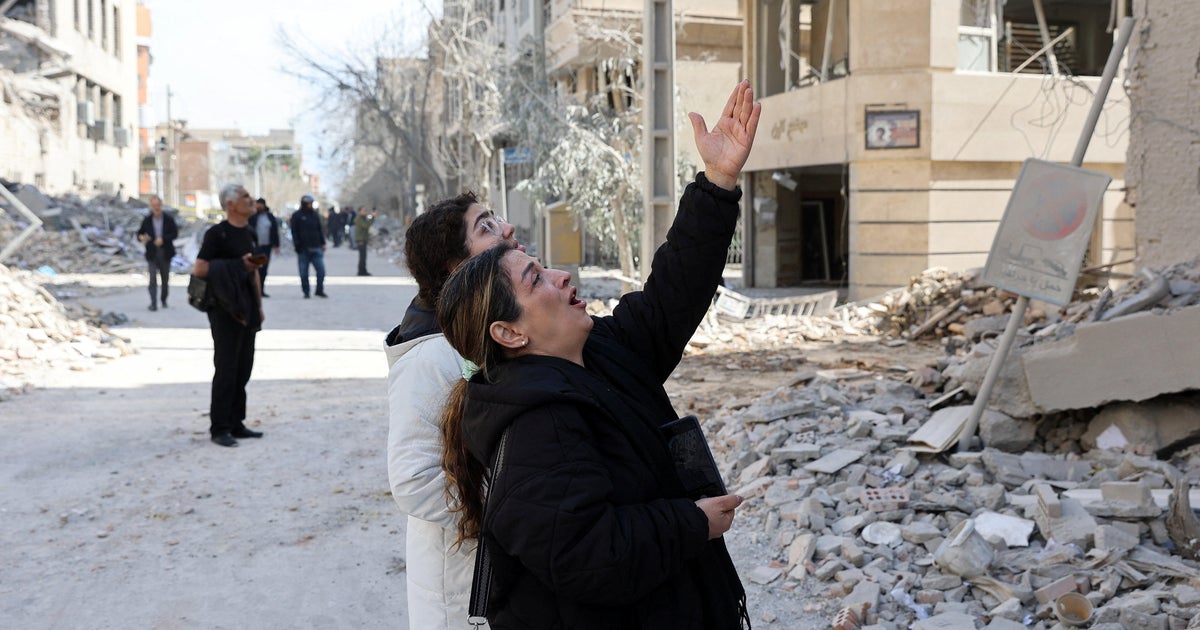
The human cost of this rapidly expanding conflict continues to mount at an alarming rate. The U.S.-based Human Rights Activists News Agency reported Wednesday that at least 1,097 civilians have been killed in Iran since the U.S. and Israel launched their strikes on Saturday, including 181 children under the age of ten. The organization noted that an additional 880 reported deaths remain under review for verification, while the number of reported civilian injuries has reached 5,402, including 100 children. CBS News’ producer in Tehran reported that unconfirmed accounts circulating inside Iran suggested the death toll could actually number in the thousands as early as Sunday. Both the U.S. and Israeli militaries have declined to respond to requests for information regarding reports that dozens of young victims were killed when a strike hit a girls’ elementary school in the southern Iranian city of Minab.
As the casualty figures rise and disturbing images circulate globally, the battle over information has become nearly as intense as the military conflict itself. Elon Musk’s X platform announced Tuesday that it would impose 90-day bans from its revenue-sharing program on users who post AI-generated videos of armed conflict without disclosing that the content was created using artificial intelligence. X product chief Nikita Bier explained that “during times of war, it is critical that people have access to authentic information on the ground,” noting that modern AI technologies make it “trivial to create content that can mislead people.” This policy change reflects growing concerns that deepfakes and AI-generated misinformation could manipulate public opinion, inflame tensions, or even influence military decision-making during this crisis. The challenge of distinguishing authentic documentation of the conflict from fabricated content adds yet another layer of complexity to an already chaotic situation.
Iran Prepares to Bury Its Leader as Succession Looms
As Iran reels from the ongoing bombardment, the country prepares to say goodbye to Supreme Leader Ayatollah Ali Khamenei, who was killed in the first wave of U.S.-Israeli strikes on Saturday. Iran’s official IRNA news agency announced Wednesday that a three-day state funeral would begin that evening, with the faithful able to pay their final respects at the Imam Khomenei grand mosque in Tehran before Khamenei’s body is transported to his home city of Mashhad in northeastern Iran for burial. The funeral represents not just a moment of national mourning but a critical juncture in Iran’s political future. The New York Times reported, citing unnamed Iranian officials, that Khamenei’s son, Mojtaba Khamenei, had emerged as a front-runner to succeed his father, with a decision by the Assembly of Experts potentially coming as soon as Wednesday morning.
The question of succession carries enormous implications for both the continuation of the conflict and Iran’s long-term trajectory. Israeli Defense Minister Israel Katz has already issued a chilling warning that any new supreme leader who continues with Iran’s alleged plans to “destroy Israel, to threaten the United States,” and to “suppress the Iranian people” will be “an unequivocal target for elimination.” Israel’s Mossad intelligence agency reinforced this message with a social media post in Farsi declaring that it doesn’t “matter who is chosen today; his fate has been decreed,” accompanied by an image of senior Iranian clerics depicted as falling dominoes. Reuters cited two Iranian sources suggesting that Mojtaba Khamenei survived the most recent round of attacks on Tehran, though his survival offers no guarantee of safety should he assume his father’s position. Iran’s next leader will inherit a country under assault, its military degraded, its civilians dying in large numbers, and its regional proxy network potentially on the verge of collapse—yet also a nation with deep reserves of nationalism and a population that may rally around even the most hardline leadership in the face of foreign attack.