
Americans Stranded Abroad as Middle East Conflict Escalates
Trapped in a War Zone: The Growing Crisis for U.S. Citizens
As military operations between the United States and Iran intensify across the Middle East, thousands of Americans find themselves in an increasingly desperate situation. The U.S. Department of State has issued urgent warnings for American citizens to leave 14 countries in the region, including major hubs like the United Arab Emirates, Israel, Kuwait, and Saudi Arabia. However, many Americans are discovering that leaving is far easier said than done. With airspace closures, canceled flights, and closed embassies, these stranded citizens are voicing mounting frustration over what they perceive as a lack of adequate government support during this crisis. Their stories paint a picture of confusion, fear, and abandonment as they navigate the terrifying reality of being caught in an active war zone thousands of miles from home.
Sasha Hoffman’s experience illustrates the predicament facing many Americans abroad. The Chicago resident was enjoying what should have been a relaxing vacation in Dubai when military action began. Initially, she believed she could simply wait for the situation to calm down. However, when President Trump announced that Operation Epic Fury could continue for four to five weeks, her calculations changed dramatically. “We’re honestly trapped,” Hoffman explained in an interview with CBS News. Despite having multiple flights booked over consecutive days, every single one has been canceled due to airspace closures throughout the United Arab Emirates. The frustration in her voice is palpable as she describes the impossible situation: the government is urging Americans to leave while simultaneously creating conditions that make departure virtually impossible. “You can’t tell us to get out and create no zone where we can all leave on commercial flights,” she said, highlighting the fundamental contradiction in the government’s messaging.
The Psychological Toll of Being Caught in Conflict
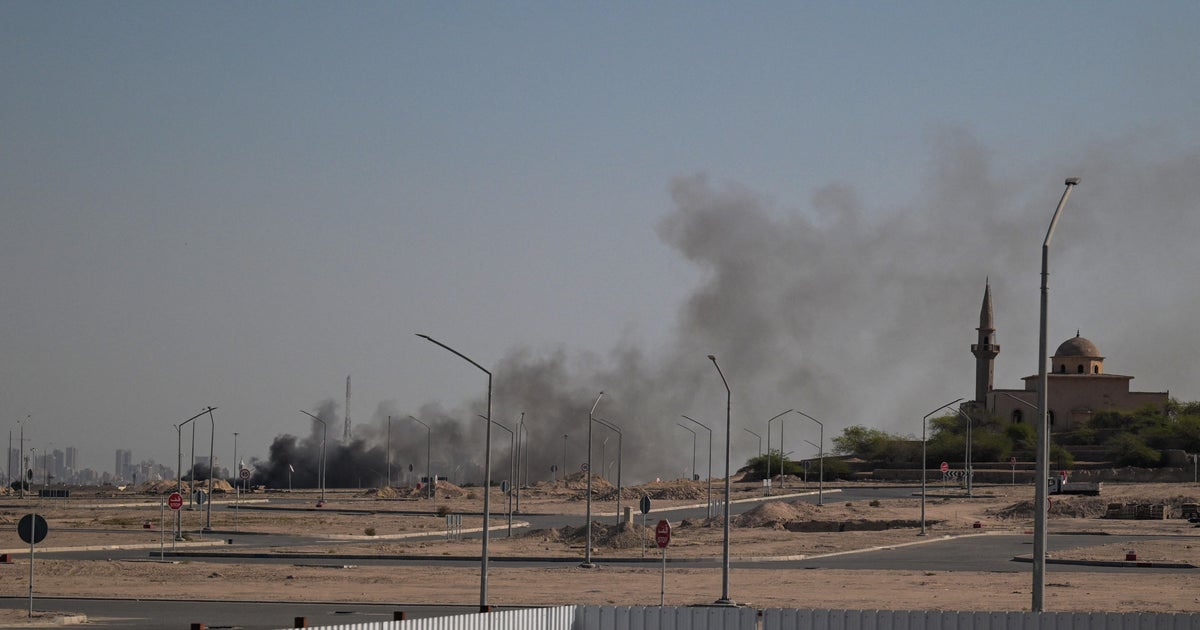
Beyond the logistical nightmare, Americans trapped in the Middle East are experiencing profound psychological distress. For many, this is their first exposure to the realities of warfare, and the experience is deeply traumatic. Hoffman described the constant terror of her situation: “It’s terrifying. We’re not used to it in the U.S., where you just hear fighter jets going on all day long, and you certainly don’t hear the missiles actually landing and blowing up … nor smoke plumes.” Having lived through the Boston Marathon bombing—one of the most traumatic events in recent American domestic history—Hoffman has a unique perspective on fear and violence. Yet even with that harrowing experience as a point of comparison, she says the current situation is “so much worse than that.” The relentless nature of the conflict, with constant aerial activity and explosions, creates an environment of sustained terror that wears down even the most resilient individuals.
Travel blogger and influencer Alyssa Ramos found herself in an equally dire situation in Kuwait. Her timing couldn’t have been worse—the airport was struck by Iranian attacks approximately two hours after her plane landed. Like many Americans, she initially considered turning around and leaving immediately, but was advised to proceed to her hotel as the airport would be closing anyway. Since then, every flight she’s attempted to book has been canceled, leaving her exploring increasingly desperate alternatives. Her backup plan involves a dangerous overland journey to Saudi Arabia, where she hopes to catch a flight out of Riyadh. The experience of being under attack is taking its toll: “We heard the sirens all day, all night. In the middle of the night we hear the explosions in the sky, and of course we see the news of places around us getting struck,” Ramos recounted. The combination of constant alerts, the sound of missiles overhead, and watching news reports of strikes on nearby locations creates what she describes as a “nerve-wracking” and “terrifying” atmosphere where hope centers entirely on finding any possible escape route.
Government Response Falls Short of Citizen Needs
More than 9,000 Americans have successfully returned to the United States from the Middle East over recent days, according to State Department figures, including over 300 from Israel. While these numbers might suggest a functioning evacuation effort, they represent only a tiny fraction of the estimated one million Americans believed to be in the region, according to sources who spoke with CBS News. This massive gap between those who need help and those who have received it is fueling anger and disillusionment among stranded citizens. Many, like Ramos, feel they have no choice but to take matters into their own hands “because the government simply is not helping us and there’s no way to get a hold of anyone.” The inability to even establish contact with officials amplifies the sense of abandonment. The closure of the U.S. Embassy in Kuwait “until further notice” due to ongoing regional tensions—coming just a day after smoke was seen rising from the building following Iranian attacks—further reduces the already limited support infrastructure available to Americans in crisis.
Nate Bowling, a U.S. Air Force Reserve veteran and former National Teacher of the Year finalist who has lived in the United Arab Emirates since 2019, offered a particularly pointed critique of the government’s handling of the situation. His military background and teaching credentials lend additional weight to his observations. “There are no flights,” he told CBS Philadelphia bluntly. “And to be clear about that: The United States began a war. And then, after the war began, told people to evacuate. But there are no flights, and so nobody can get out.” His statement captures the fundamental failure in planning and execution—the sequence of events left Americans with no viable exit strategy. Bowling and his family experience the reality of the conflict daily: “We hear interceptions multiple times a day. There was an alert that went off at like 3 o’clock in the morning, woke us up, and we could hear the interceptions.” While he assures people they are “safe and well here right now,” the qualification “right now” underscores the precarious and unpredictable nature of their situation.
Desperate Journeys and Difficult Decisions
As commercial aviation remains largely grounded throughout the region, Americans are being forced to consider increasingly complex and risky alternatives to reach safety. Tamar Rubinstein, an American woman pregnant with twins, exemplifies the difficult calculations people are making. Rather than wait for the situation to resolve or for organized government assistance, she decided to undertake an arduous multi-leg journey from Israel to her home in Chicago. Her plan involves taking a bus to Egypt, then flying through Europe—a route that will consume approximately two and a half days of continuous travel. For a woman carrying twins, such a journey presents obvious physical risks and discomforts, yet she deemed it preferable to remaining in an active conflict zone. “There’s such a lack of clarity,” Rubinstein explained, identifying information deficits as a major factor in her decision-making. “So I didn’t want to get to the point where I wouldn’t be clear to travel anymore.” Her concern reflects a legitimate fear: that pregnancy-related limitations on air travel, combined with deteriorating security conditions, could create a situation where departure becomes medically inadvisable or practically impossible.
The experiences of these stranded Americans reveal critical failures in crisis preparedness and response. When the State Department issues warnings to leave 14 countries spanning the entire Middle East region—from Egypt and Israel to Yemen, from Iran to the United Arab Emirates—the assumption is that viable departure options exist. Yet the reality on the ground tells a different story. Closed airspace, canceled flights, shuttered embassies, and the basic chaos of an active military conflict create conditions where even the most determined travelers cannot execute an exit strategy. The psychological impact of this situation cannot be overstated. These are not diplomats, military personnel, or conflict correspondents who accepted risk as part of their professional responsibilities. These are tourists, teachers, expatriate workers, and ordinary citizens who now find themselves listening to air raid sirens, watching missiles streak overhead, and wondering if their government has simply forgotten about them. As the conflict shows no signs of immediate resolution and President Trump’s timeline suggests weeks more of military operations, the plight of stranded Americans represents an ongoing humanitarian concern that demands more robust and effective government intervention than has been provided thus far.