


Ukraine’s Energy Crisis: A Nation’s Resilience Under Fire
The Reality of Life Without Power in Kyiv
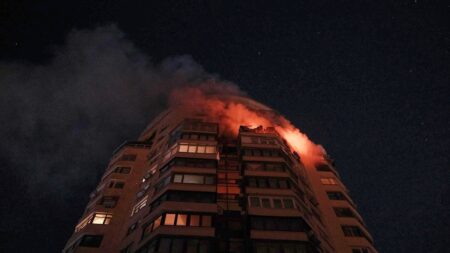
The bitter cold settled over Dorohozhychi, a neighborhood in northwest Kyiv, as residents faced yet another morning plunged into darkness and freezing temperatures. On a night when thermometers plummeted to a bone-chilling minus 7 degrees Fahrenheit, Russian drones and missiles rained down on energy facilities across Ukraine’s capital. For the people living there, this wasn’t just an inconvenience—it was a matter of survival. President Volodymyr Zelenskyy called out the assault as the first major attack on Kyiv’s energy infrastructure since President Trump had announced what seemed like a breakthrough: Russian President Vladimir Putin had reportedly agreed to pause strikes on Ukrainian towns and cities for a week following a late January cabinet meeting. But as engineers scrambled to restore power to freezing neighborhoods, it became painfully clear that five days of respite—less than the promised week—wasn’t nearly enough time to repair the extensive damage or prepare for what came next.
Engineers Fight a Losing Battle Against Time and Winter
Maxim Yevchuk, an engineer with DTEK, Ukraine’s largest private electricity provider, stood among the damaged equipment at the Dorohozhychi electrical substation on that frigid Tuesday morning. His words painted a grim picture of the challenges his team faced daily. “Since there is currently severe frost outside, the load on the power grids and on the equipment is increasing, and it is wearing out,” he explained to reporters. The combination of extreme weather and relentless Russian attacks had created a perfect storm of infrastructure failure. Yevchuk and his crew successfully brought the substation back online, but their relief was short-lived. They knew similar emergencies awaited them in other neighborhoods throughout the city. The engineer’s assessment revealed a deeper, more troubling reality: even without additional Russian strikes, Ukraine’s power grid was being pushed beyond its limits. “Almost every day we have an emergency like this,” Yevchuk said, describing how the systematic destruction caused by Russian attacks, coupled with the strain of brutal winter conditions, had left the country’s electrical infrastructure in a perpetually fragile state. Minor technical issues that would normally be routine fixes now cascaded into major crises, plunging entire neighborhoods into cold and darkness.
Broken Promises and Diplomatic Setbacks
The concept of an “energy truce” had emerged as a glimmer of hope following the first trilateral peace negotiations between Ukrainian, Russian, and American officials in Abu Dhabi at the end of January. When President Trump announced during a cabinet meeting that he had personally asked Putin to pause attacks on energy infrastructure and that the Russian leader had agreed, many saw it as a potential turning point. President Zelenskyy had expressed cautious optimism in a social media post, stating, “Our teams discussed this in the United Arab Emirates. We expect the agreements to be implemented. De-escalation steps contribute to real progress toward ending the war.” But as Ukrainian, Russian, and American officials prepared to return to Abu Dhabi for a second round of talks scheduled for Wednesday and Thursday, the mood had darkened considerably. The massive overnight assault that hit Ukraine on Tuesday morning shattered any remaining illusions about Russian intentions. According to Ukraine’s Foreign Minister Andrii Sybiha, Russia had launched an overwhelming barrage of 450 drones and more than 60 missiles at targets across Ukraine, leaving 1,170 apartment buildings in Kyiv without heating in the dead of winter—a humanitarian crisis unfolding in real-time.
International Condemnation and Ukraine’s Response
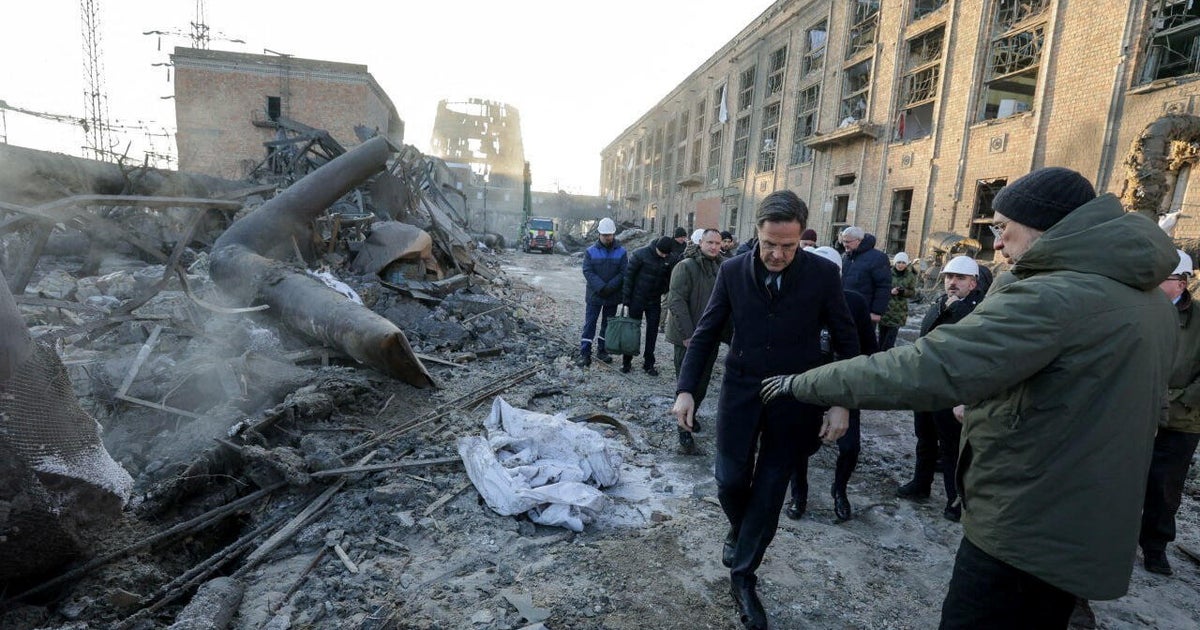
President Zelenskyy didn’t mince words in his response to what many viewed as a betrayal of the tentative agreement. The attacks demonstrated, he said, that “attitudes in Moscow have not changed: they continue to bet on war and the destruction of Ukraine, and they do not take diplomacy seriously.” He made it clear that Ukraine’s approach to the upcoming negotiations would be adjusted accordingly—a diplomatic way of saying trust had been broken. NATO Secretary General Mark Rutte arrived in Kyiv on Tuesday for a show of solidarity, echoing Zelenskyy’s sentiments during an address to Ukraine’s parliament. “Russian attacks like those last night do not signal seriousness about peace,” Rutte declared, his words carrying the weight of the entire alliance’s frustration with Moscow’s duplicity. During his visit, Rutte toured a thermal power plant that had been heavily damaged by Russian missile and drone strikes, witnessing firsthand the systematic destruction of civilian infrastructure. The silence from Moscow in response to this international criticism spoke volumes about the Kremlin’s strategic calculations and its apparent indifference to diplomatic niceties or humanitarian concerns.
A Nation’s Unwavering Resolve
Despite the hardships, both Rutte and Zelenskyy emphasized Ukraine’s remarkable capacity to endure even the war’s harshest conditions. In his address to Ukrainian lawmakers, the NATO chief delivered a powerful message of defiance directed at the Kremlin: “Putin has long thought he could wait us out, that Ukraine was weak, that your supporters would grow weary, that our will would falter. He was gravely mistaken. Ukraine is strong, and our support is unwavering.” These weren’t just empty words meant to boost morale; they reflected a measurable reality on the ground. Public opinion surveys conducted within Ukraine appeared to support this assessment of national determination. A poll carried out by the Kyiv International Institute of Sociology between January 23-29 revealed that an impressive 65% of Ukrainian respondents said they were “ready to endure war for as long as necessary” to secure what they perceived as a fair peace. This data suggests that despite the daily hardships, the power outages, the freezing temperatures, and the constant threat of attack, the Ukrainian people remained committed to their cause and unwilling to accept peace at any price.
The Daily Grind of Survival and Repair
According to DTEK, the Monday night attack represented the worst assault on Ukraine’s energy infrastructure so far in 2026, and marked the 12th major attack in just the last four months alone. This relentless campaign of destruction had created a new normal for Ukraine’s energy workers—a grueling cycle of damage and repair, attack and recovery. For Maxim Yevchuk and his crew, however, the work remained consistent regardless of the attack’s intensity or scale. “The work does not change from attack to attack,” he explained with the matter-of-fact tone of someone who had learned to focus on what could be controlled rather than dwelling on the overwhelming nature of the challenge. Every day brought the same mission: “We continue to do whatever is necessary so that our customers receive as much power as possible.” This simple statement captured both the mundane routine and the extraordinary heroism that had become ordinary life in wartime Ukraine. Behind the technical language of substations, power grids, and electrical loads were real people—families huddled in cold apartments, hospitals trying to maintain critical care, and children doing homework by candlelight. The engineers working to restore power weren’t just fixing infrastructure; they were maintaining the lifeline that allowed their nation to continue functioning, to resist, and to hope. As winter’s grip tightened and diplomatic efforts stumbled, these daily acts of resilience and repair had become Ukraine’s most powerful weapon—the stubborn refusal to let darkness win.