



The Fragile Gaza Ceasefire: A Promise of Peace Amid Continued Violence
A Ceasefire in Name Only
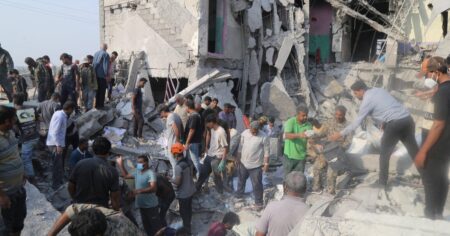
The sounds of explosions continue to shatter the quiet mornings in Gaza, leaving residents wondering whether they’re living in peacetime or still trapped in war. When the bodies of twenty-four Palestinians arrived at Gaza hospitals on a recent Wednesday, Dr. Mohamed Abu Selmiya, director of Shifa Hospital, captured the frustration felt by millions in a simple Facebook post: “Where is the ceasefire? Where are the mediators?” His words reflect the painful reality that despite an official truce agreement brokered by the United States last October, the violence in Gaza has never truly stopped. Since the ceasefire supposedly took effect, at least 556 Palestinians have lost their lives in Israeli strikes, while four Israeli soldiers have been killed and several others injured, including one who was severely wounded when militants fired near the ceasefire line in northern Gaza. The agreement that was meant to bring what President Donald Trump called “Strong, Durable, and Everlasting Peace” appears to be anything but everlasting, as both sides accuse each other of violations while civilians continue to bear the heaviest burden.
Broken Promises and Stalled Progress
The ceasefire agreement, a comprehensive 20-point plan accepted by both Israel and Hamas after months of difficult negotiations, was supposed to address the core issues plaguing the Gaza Strip. The deal came after Hamas’ devastating attack on Israel on October 7, 2023, which killed approximately 1,200 people and resulted in around 250 hostages being taken into Gaza. While Hamas did fulfill its initial obligation by releasing all living hostages it held in exchange for thousands of Palestinian prisoners and the remains of deceased captives, nearly every other aspect of the agreement has stumbled or stalled completely. The deployment of an international security force that was meant to help stabilize the region hasn’t materialized. Hamas’ promised disarmament remains a distant prospect, and the reconstruction of Gaza’s devastated infrastructure hasn’t begun in any meaningful way. Even the opening of the Rafah border crossing between Gaza and Egypt, which briefly raised hopes for progress, has been disappointingly limited, with fewer than fifty people allowed to cross on its first day of operation. The return of hostage remains also stretched far beyond the 72-hour timeline specified in the agreement, with Israel only recovering the body of the last hostage the previous week, leading to bitter accusations between the parties about who was responsible for the delays.
The Humanitarian Crisis Continues
For Gaza’s two million residents, the promised immediate influx of humanitarian aid remains largely unfulfilled. The ceasefire agreement specifically called for urgent delivery of supplies, including equipment necessary to clear the massive amounts of rubble and begin rehabilitating basic infrastructure that was destroyed during the intense fighting. However, the United Nations and various humanitarian organizations report that aid deliveries have fallen drastically short of what’s needed, citing problems with customs clearance and numerous other bureaucratic delays that prevent supplies from reaching desperate families. COGAT, the Israeli military body responsible for overseeing aid delivery to Gaza, has categorically denied these claims, calling the UN’s statements “simply a lie” and insisting that they are doing everything possible to facilitate aid. Meanwhile, Palestinians living in displacement camps struggle with basic survival, their tents literally falling apart around them as they wonder when—or if—they’ll be able to return to rebuild their destroyed homes. The violence may have sharply declined compared to the height of the war that killed more than 71,800 Palestinians according to Gaza’s Health Ministry (figures maintained by the Hamas-led government but considered generally reliable by UN agencies and independent experts), but for families who continue to lose loved ones in ongoing strikes, the distinction between war and peace has become meaningless.
Accusations and Counter-Accusations
Both Israel and Hamas continue to use the word “ceasefire” in their official communications and maintain that the agreement is still technically in effect, yet each side paints a very different picture of who’s responsible for the ongoing violence. Israel accuses Hamas fighters of routinely crossing the truce line that currently splits Gaza in half, threatening Israeli troops stationed there and occasionally opening fire on them. Israeli military officials argue that they’re simply responding to daily violations by Hamas and acting to protect their soldiers. Lieutenant Colonel Nadav Shoshani, a military spokesperson, explained that the military must be prepared for the possibility that “Hamas is using a deception tactic like they did before October 7 and rearming and preparing for an attack when it’s comfortable for them.” Meanwhile, Hamas and Palestinian civilians tell a completely different story, accusing Israeli forces of conducting gunfire and airstrikes on residential areas far from any military line, killing civilians including children. Among those killed in Wednesday’s strikes alone were five children, including two babies. Hamas has accused Israel of hundreds of ceasefire violations, calling the continued strikes a “grave circumvention of the ceasefire agreement.” In a rare show of unified concern, eight Arab and Muslim countries issued a joint statement condemning Israel’s actions since the agreement took effect and urging all sides to show restraint “to preserve and sustain the ceasefire.”
Small Steps Forward Amid Uncertainty
Despite the persistent violence and mutual recriminations, there have been small signs that both parties may still be willing to move forward with the broader peace process. The eventual return of all hostage remains, though delayed, showed that Hamas was ultimately willing to fulfill this painful obligation. The limited opening of the Rafah crossing, while disappointing in scale, at least represented movement in the right direction. Perhaps most significantly, Palestinian authorities have named a committee to govern Gaza and oversee its eventual reconstruction, suggesting a willingness to begin planning for a post-war future even while violence continues. Last month, Steve Witkoff, the U.S. envoy who played a crucial role in brokering the original truce, declared it was time for “transitioning from ceasefire to demilitarization, technocratic governance, and reconstruction.” However, achieving these goals will require Israel and Hamas to confront and resolve the fundamental issues that divide them, questions on which they remain sharply and perhaps irreconcilably opposed. Will Israel fully withdraw its military forces from Gaza? Will Hamas genuinely disarm and give up its weapons? Who will ultimately govern the territory? These questions remain unanswered, and until they are addressed, the ceasefire will likely remain fragile and contested.
Living in Limbo: The Human Cost of Uncertainty
For ordinary Palestinians trying to survive in Gaza, the technical debates about whether a ceasefire exists or who’s violating its terms mean little when explosions still shatter the morning calm. Atallah Abu Hadaiyed experienced this painful confusion firsthand when he heard explosions during his Saturday morning prayers in Gaza City. Running outside, he found his cousins lying on the ground, flames curling around their bodies. Speaking from a displacement camp, with strips of tarpaulin blowing off the tent behind him in the wind, he captured the surreal quality of life in Gaza today: “We don’t know if we’re at war or at peace.” This uncertainty may be the cruelest aspect of the current situation—families don’t know whether it’s safe to begin rebuilding, whether children should return to whatever schools are still standing, or whether tomorrow will bring renewed full-scale conflict. Political leaders on both sides may be holding onto the term “ceasefire” and haven’t yet formally withdrawn from the peace process, but for Gaza’s residents, the distinction between a violated ceasefire and outright war grows thinner each day. The despair is growing among people who have already endured unimaginable suffering and who were told that peace had finally arrived, only to discover that the violence, though reduced, has never really stopped. Until the fundamental issues are resolved and both sides genuinely commit to ending the cycle of violence, the people of Gaza will continue living in this painful limbo, never quite at war but never truly at peace either.