


The World’s Water Crisis: Understanding Global “Water Bankruptcy”
A Stark New Reality for Our Planet’s Most Vital Resource
Imagine checking your bank account only to discover you’re not just overdrawn—you’re so far in the red that recovery is impossible. This is essentially what’s happening to Earth’s water systems, according to groundbreaking research from the United Nations University Institute for Water, Environment and Health (UNU-INWEH). The world has entered what scientists are calling an era of “water bankruptcy,” a sobering term that reflects damage so severe that many of our planet’s water basins can never return to their former state. This isn’t about temporary drought or seasonal shortages that resolve with the next rainy season. We’re talking about permanent, irreversible changes to the natural systems that have sustained human civilization for millennia. The research reveals a troubling catalog of interconnected problems: groundwater reserves that are being drained faster than nature can refill them, rivers and streams allocated to more users than their flow can support, widespread deforestation that disrupts natural water cycles, and pollution that renders once-pristine water sources unusable. According to the researchers, many regions worldwide have moved beyond the “crisis” stage into what they term a “post-crisis condition”—a state where the natural water capital has been so depleted that bouncing back to historical norms is no longer possible, no matter what actions we take.
The World’s Most Vulnerable Water Bankruptcy Hot Spots
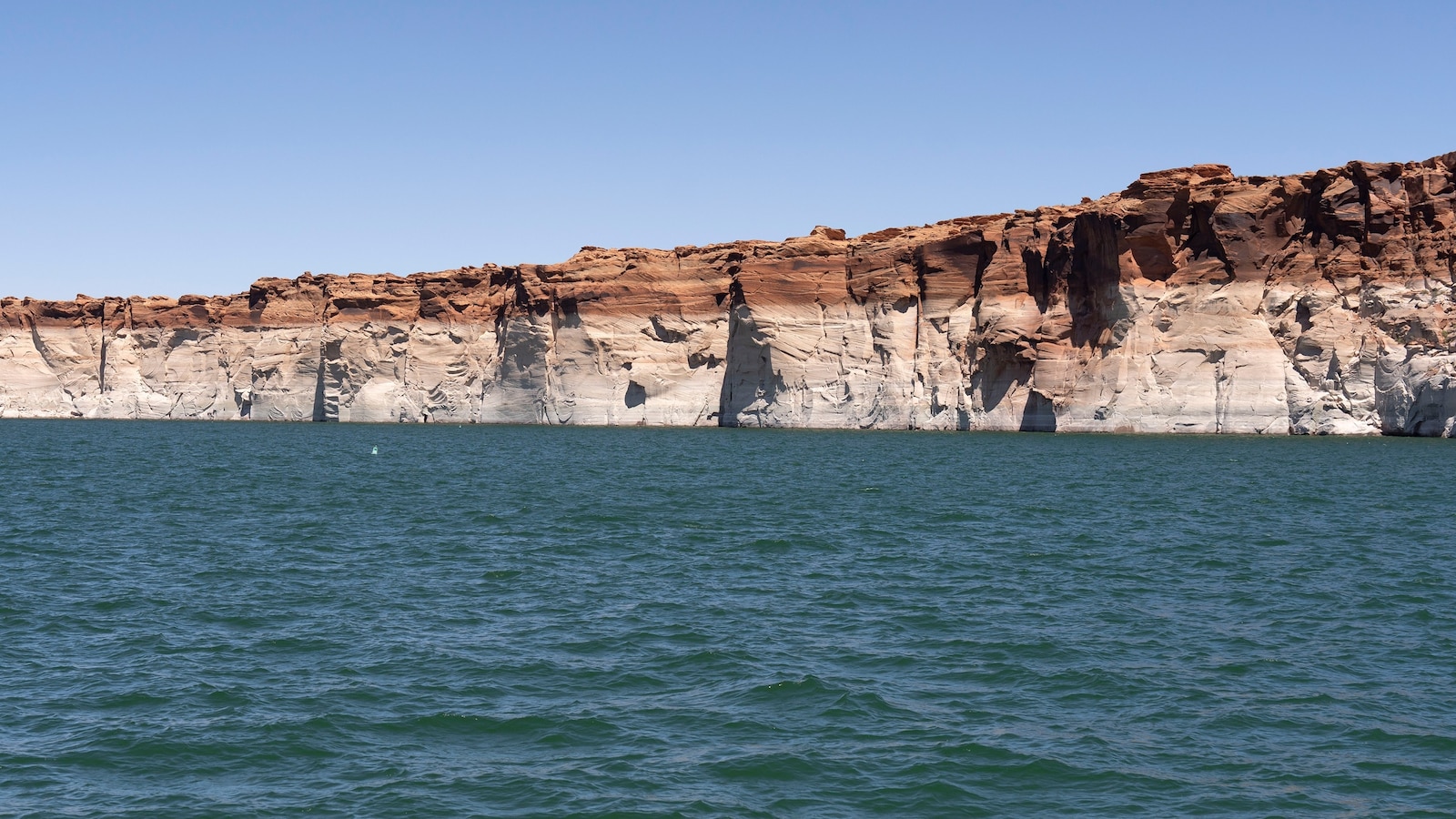
The impacts of water bankruptcy aren’t distributed evenly across the globe—certain regions are experiencing particularly acute challenges that threaten both their environments and the people who call these places home. The Middle East and North Africa stand out as among the most vulnerable areas, facing a perfect storm of problems including extreme water stress, vulnerability to climate change, struggling agricultural systems, and heavy reliance on energy-intensive desalination plants to produce drinking water. These regions also contend with increasingly frequent sand and dust storms and complex political situations that make coordinated responses more difficult. South Asia represents another critical hot spot, where the combination of agriculture heavily dependent on groundwater and rapid urbanization has created a dangerous situation. Water tables are dropping chronically across the region, and in some areas, the land itself is sinking as the underground aquifers are drained. Even wealthy nations aren’t immune to these challenges. In the United States, the Southwest has earned its place on the water bankruptcy hot spot list, with the iconic Colorado River and its massive reservoirs serving as powerful symbols of what the U.N. report calls “over-promised water”—water that has been allocated to more users than the system can sustainably support, leaving everyone vulnerable.
The Alarming Numbers Behind the Crisis
When we look at the statistics, the scope of the water bankruptcy crisis becomes strikingly clear, and the numbers are genuinely alarming. Since the early 1990s—within the lifetime of many people reading this—half of the world’s large lakes have lost significant amounts of water. These aren’t minor water bodies; they’re major lakes that directly support a quarter of all humanity with drinking water, food, transportation, and livelihoods. The groundwater situation is equally concerning: half of all domestic water worldwide now comes from underground sources, and 40% of irrigation water is pumped from aquifers that are being steadily drained. Of the world’s major aquifers—those massive underground reservoirs that took thousands of years to fill—70% are showing long-term decline. Mountain glaciers, which serve as natural water towers for billions of people downstream, have lost 30% of their mass since 1970. Scientists project that entire mountain ranges in low- and mid-latitude regions will lose their functional glaciers within just a few decades, eliminating a critical water source for communities that have depended on glacial melt for generations. The human toll of these changes is staggering: 2 billion people worldwide are literally living on sinking ground as aquifers beneath them are depleted, and 4 billion people face severe water scarcity at least one month out of every year. Between 2022 and 2023 alone, 1.8 million people were living under drought conditions. The researchers emphasize an uncomfortable truth: the overwhelming majority of these statistics reflect human-caused problems, not natural variations in climate or water availability.
Why “Water Bankruptcy” Represents a Fundamental Shift in Thinking
The choice to use the term “water bankruptcy” rather than more familiar phrases like “water stress” or “water crisis” is deliberate and significant, reflecting a fundamental change in how we need to think about water challenges. As Kaveh Madani, director of UNU-INWEH and the report’s lead author, explains: “This report tells an uncomfortable truth: many regions are living beyond their hydrological means, and many critical water systems are already bankrupt.” The researchers carefully defined water bankruptcy as the persistent withdrawal of water from surface sources and underground aquifers at rates exceeding what can be naturally renewed, combined with the resulting irreversible or prohibitively expensive loss of water-related natural capital. The key distinction is permanence and severity. “Water stress” suggests high pressure on water systems that remains theoretically reversible—tighten your belt, make some changes, and things can improve. “Water crisis” describes acute shocks that, while serious, can potentially be overcome with emergency measures and recovery efforts. Water bankruptcy, by contrast, acknowledges that some damage cannot be undone, at least not within timeframes relevant to human civilization. It’s the difference between facing a difficult financial period and declaring actual bankruptcy—the latter represents a fundamental break with the past and requires completely rethinking your approach going forward.
A Global Problem, Not Just Local Crises
One of the report’s most important insights is that water bankruptcy shouldn’t be understood as a collection of isolated local problems happening to unlucky regions—it represents a shared global risk that connects us all in surprising ways. The connection becomes clear when we consider that agriculture accounts for the vast majority of freshwater use worldwide, and our food systems are tightly interconnected through international trade and global pricing mechanisms. When water scarcity undermines farming in one region, the effects don’t stay local. They ripple outward through global markets, affecting food prices in distant countries, creating political instability, and threatening food security for people who may never have heard of the affected region. A drought in one country can mean higher food prices in another; groundwater depletion in a major agricultural region can shift production to areas less suitable for farming; water conflicts in one basin can trigger migration that affects neighboring countries. This interconnectedness means that even regions currently enjoying adequate water supplies have a stake in addressing water bankruptcy wherever it occurs. In our globalized world, we’re all downstream from someone, and we’re all affected by water problems happening seemingly far away. This global dimension also suggests that solutions need to be coordinated internationally, not just implemented locally, and that wealthy nations with currently adequate water supplies have both an interest and a responsibility in helping address water bankruptcy in more vulnerable regions.
Pathways Forward: Resetting Our Approach to Water
The researchers behind this sobering report aren’t simply documenting problems—they’re calling for a fundamental reset of how the world approaches water management, and their recommendations offer pathways forward even in the face of such daunting challenges. Released strategically ahead of the 2026 U.N. Water Conference in Dakar, Senegal, the report argues that water must be recognized as both a constraint that limits what we can do and an opportunity for meeting broader commitments related to climate change, biodiversity protection, and land management. Managing water bankruptcy will require governments and societies to focus first on preventing further irreversible damage—stopping the destruction of wetlands, halting destructive groundwater depletion before aquifers are permanently damaged, and controlling pollution before water sources become unusable. But prevention alone isn’t enough; we also need transformation of water-intensive sectors. Agriculture and industry must fundamentally change their relationship with water through strategies like shifting to less water-intensive crops, reforming irrigation systems to dramatically reduce waste, and creating more efficient urban water systems that treat every drop as the precious resource it is. These aren’t simple changes that can happen overnight, but the research makes clear that incremental adjustments to our current approach won’t be sufficient. We’ve already crossed thresholds in many water systems, and only fundamental transformation can prevent further bankruptcy and help us adapt to the new reality. The peer-reviewed paper, set to be published in the journal Water Resources Management, represents a scientific consensus that our water crisis has evolved into something more permanent and serious—and that our response must evolve accordingly to meet this defining challenge of our time.