
Trump’s New Tariff Order Threatens Cuba’s Fragile Energy Lifeline
A Strategic Move Targeting Cuba’s Oil Supply
President Trump has signed an executive order that represents a significant escalation in U.S. pressure on Cuba, threatening to impose tariffs on goods from any country that sells or provides oil to the island nation. This sweeping measure comes at a particularly vulnerable moment for Cuba, which is already struggling with a devastating energy crisis that has left its population desperate for basic necessities. The order essentially puts any nation trading oil with Cuba in the crosshairs of American economic policy, forcing them to choose between their relationship with Havana and their economic ties with the United States. While the order technically applies to any oil-supplying nation, its primary target is unmistakably Mexico, Cuba’s most reliable energy partner in recent months. This move demonstrates the Trump administration’s willingness to leverage America’s economic power to isolate the Cuban government, even if it means putting pressure on neighbors and trading partners. For ordinary Cubans, already enduring frequent blackouts and fuel shortages, this development signals that their struggles may only intensify in the coming months.
Mexico Caught Between Solidarity and Economic Survival
The executive order places Mexican President Claudia Sheinbaum in an extremely difficult position, forcing her to navigate between her country’s historical solidarity with Cuba and the economic realities of its relationship with the United States. Mexico has served as a crucial oil lifeline for Cuba, with the state-owned oil company Pemex shipping nearly 20,000 barrels per day to the island from January through September 2025. However, following a visit to Mexico City by U.S. Secretary of State Marco Rubio last September, those shipments reportedly dropped dramatically to around 7,000 barrels per day, according to satellite tracking data from energy experts. President Sheinbaum has been notably evasive when questioned about her government’s oil policy toward Cuba, offering ambiguous and sometimes contradictory statements that reflect the intense pressure she faces from Washington. She has alternated between suggesting that any reduction in shipments is merely part of normal supply fluctuations and describing oil decisions as “sovereign” choices not influenced by external pressure, while simultaneously pledging continued “solidarity” with Cuba without specifying what form that support would take. This week, she claimed that she never said Mexico had completely “suspended” shipments and suggested that “humanitarian aid” would continue, while also stating that Pemex contracts determine when shipments occur. This lack of clarity reveals just how precarious Mexico’s position has become as Trump adopts an increasingly confrontational approach to Latin American politics following recent developments in Venezuela.
Cuba’s Energy Crisis Deepens Amid International Isolation
Cuba’s energy situation has become increasingly desperate, a crisis fueled by a combination of factors including strict U.S. economic sanctions, crumbling infrastructure, and the island’s dependence on foreign oil shipments from a shrinking number of allies. For years, Cuba has relied on oil assistance from sympathetic governments including Mexico, Russia, and Venezuela, but these lifelines have been systematically cut off or reduced. The situation became even more dire after a recent U.S. military operation that ousted former Venezuelan President Nicolás Maduro, previously one of Cuba’s most generous benefactors. President Trump has made it clear that “no more Venezuelan oil will go to Cuba” and has openly stated his belief that the Cuban government is “ready to fall.” On January 11, Trump declared on social media that “there will be no more oil or money going to Cuba — zero,” signaling his administration’s determination to maximize economic pressure on the island’s communist government. While a U.S. official told CBS News that the administration doesn’t seek to trigger a complete collapse of the Cuban government but rather hopes to negotiate a transition away from its authoritarian communist system, the practical effect of these policies on ordinary Cubans has been severe. The energy shortages have led to widespread blackouts, transportation difficulties, and economic disruption that touches every aspect of daily life on the island.
The Human Cost: Long Lines and Growing Anxiety
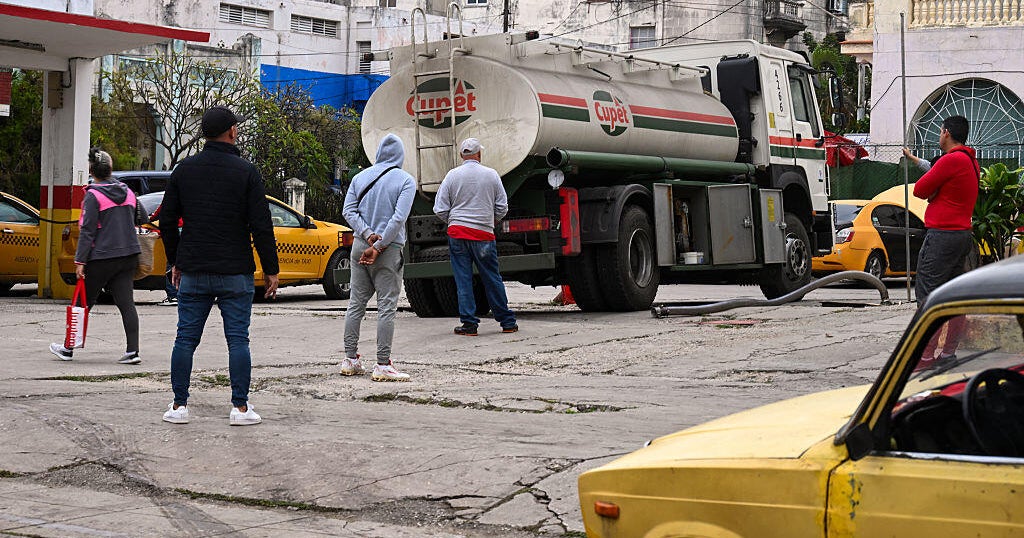
For everyday Cubans, the political maneuvering between Washington, Mexico City, and Havana translates into very real hardships that affect their daily survival. This week, anxious drivers have waited in long lines at gas stations across the Caribbean island, uncertain about when or if fuel supplies will be replenished. The sight of these queues has become increasingly common as the energy crisis has intensified, with many Cubans spending hours waiting for the chance to fill their tanks with rationed amounts of gasoline. The uncertainty surrounding Mexico’s oil shipments has only heightened the anxiety, as people worry about what the future holds for their ability to get to work, transport goods, or simply move around their communities. Beyond transportation, the energy crisis affects electricity supply, leading to rolling blackouts that disrupt businesses, spoil food, and make daily life increasingly difficult, especially during Cuba’s hot and humid climate. The U.S. embargo, which has been in place for decades, has already created chronic shortages of many goods, and the additional pressure on oil supplies threatens to push an already strained population to the breaking point. While policymakers in Washington and Mexico City debate sovereignty, diplomatic relationships, and economic leverage, the people of Cuba face the immediate reality of trying to survive in an economy that seems to be unraveling further with each passing week.
Latin American Nations Under Mounting Pressure
Mexico isn’t the only Latin American country feeling the weight of Trump’s more aggressive foreign policy approach. The executive order and the broader strategy it represents underscore the extreme pressure that regional governments face as Washington demands they distance themselves from Cuba. For decades, many Latin American nations have maintained relationships with Cuba based on regional solidarity, shared history, and the principle of non-interference in other countries’ internal affairs. However, the Trump administration’s willingness to use economic leverage—particularly tariffs that could affect entire economies—is forcing these governments to reconsider their positions. The situation has been further complicated by the recent Venezuelan operation, which has demonstrated the administration’s readiness to take dramatic action in the region. Countries that have historically supported Cuba now find themselves calculating whether their solidarity is worth the potential economic consequences of defying U.S. policy. This creates a diplomatic dilemma where nations must weigh their principles against their practical economic interests, particularly given how integrated many Latin American economies have become with the United States through trade agreements and business relationships. The Trump administration appears to be banking on the fact that most countries will ultimately prioritize their economic well-being over ideological solidarity with Cuba.
An Uncertain Future for Cuba and Regional Relations
The full implications of President Trump’s new executive order remain unclear, but what is certain is that it represents another tightening of the economic noose around Cuba at a moment when the island can least afford additional pressure. The combination of reduced Venezuelan oil, uncertain Mexican shipments, and now the threat of tariffs on any nation that supplies Cuba with energy creates an increasingly dire situation for the Caribbean nation. Whether this pressure will achieve the Trump administration’s stated goal of encouraging a transition away from authoritarian communist rule, or whether it will simply deepen the humanitarian crisis for ordinary Cubans, remains to be seen. The order also raises questions about the future of U.S.-Latin American relations more broadly, as countries in the region watch how Washington treats nations that don’t align with its policy preferences. President Sheinbaum’s evasive responses about oil shipments suggest that Mexico is trying to find some middle ground, but the executive order may make such compromises impossible, forcing a clear choice between Cuba and the United States. As fuel lines grow longer in Havana and anxiety mounts about what comes next, the people of Cuba find themselves once again caught in the middle of a geopolitical struggle that will shape not just their immediate access to energy, but potentially the future direction of their entire nation.