


Tensions Flare in the Strait of Hormuz as Iranian Gunboats Confront U.S. Tanker
A Tense Encounter in Critical Waters
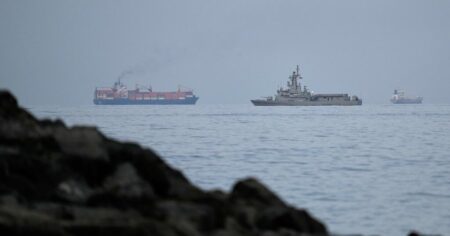
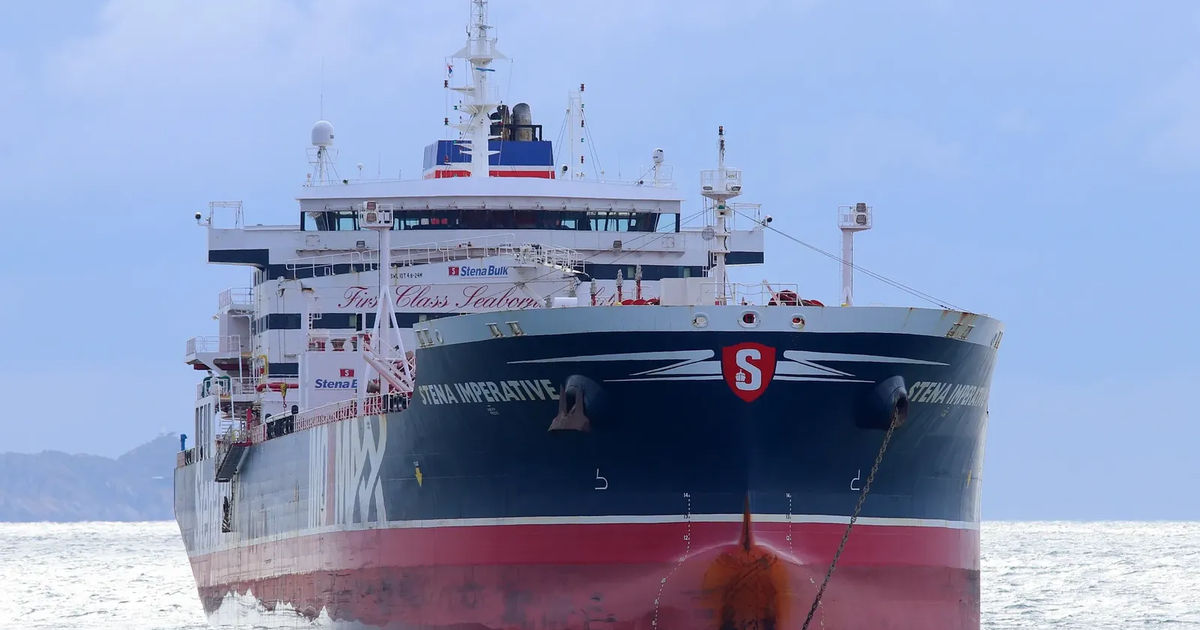
The already volatile relationship between the United States and Iran experienced another concerning moment this week when Iranian Revolutionary Guard Corps vessels attempted to intercept a U.S.-flagged oil tanker navigating through the strategically vital Strait of Hormuz. According to British maritime security company Vanguard Tech, the incident unfolded approximately 16 nautical miles off the coast of Oman, when the tanker Stena Imperative suddenly found itself surrounded by three pairs of small armed Iranian gunboats. The Iranian vessels made radio contact with the tanker’s captain, issuing a direct command to cut the engines and prepare for boarding. However, rather than complying with these demands, the captain made the decision to increase speed and maintain the vessel’s original course, refusing to yield to the Iranian forces. The company was quick to emphasize an important detail: at no point during this tense standoff did the American tanker stray into Iranian territorial waters, remaining firmly within international shipping lanes throughout the entire incident.
Military Protection and Safe Passage
Following the confrontation, the situation evolved with the arrival of U.S. military protection. The Stena Imperative received an escort from an American warship, which accompanied the commercial vessel as it continued its journey toward its intended destination in Bahrain. By Tuesday afternoon, maritime tracking data from MarineTraffic showed that the tanker was still on course, with an expected arrival at the port of Sitrah scheduled for February 5th. This military response demonstrates the United States’ commitment to protecting American-flagged vessels and maintaining freedom of navigation in international waters. The British maritime security agency UKMTO, which monitors shipping safety in the region, had earlier reported the incident in more general terms, noting that a vessel had been “hailed on VHF by numerous small armed vessels” but had wisely chosen to ignore the request to stop and continued along its planned route. The agency subsequently issued warnings to all vessels transiting the Strait of Hormuz, urging them to “transit with caution and report any suspicious activity,” acknowledging the heightened risks in these strategically important waters.
Conflicting Narratives and Strategic Importance
As is often the case in incidents involving Iran and Western nations, the two sides presented conflicting versions of events. Iran’s Fars news agency, which maintains close ties to the Revolutionary Guards, quickly published a denial of the British security firm’s account. Citing unnamed government officials, the Iranian outlet claimed that any interception that may have occurred was justified because a vessel had entered Iran’s territorial waters without proper authorization. However, this claim is contradicted by independent tracking data from MarineTraffic, which clearly showed the Imperative remained within Oman’s maritime economic zone throughout its passage through the Strait. This discrepancy highlights the ongoing information warfare that accompanies physical confrontations in the region. The Strait of Hormuz itself cannot be overstated in terms of global economic importance—this narrow waterway serves as an absolutely critical chokepoint for the worldwide transportation of oil and liquefied natural gas. Approximately one-fifth of the world’s petroleum passes through this strait, making it one of the most strategically significant maritime passages on the planet. This isn’t the first time tensions have boiled over in these waters; the strait has been the scene of numerous incidents over the years as Iran and Western nations, particularly the United States, have engaged in periodic confrontations and displays of military strength.
Escalating Threats and Military Posturing
The timing of this latest incident is particularly significant given the escalating rhetoric from Iranian officials. Just last week, a senior official from the Revolutionary Guards issued a stark threat: if the United States were to launch any military attack against Iran, the country would respond by blocking passage through the Strait of Hormuz entirely. Such an action would have catastrophic consequences for global energy markets and the world economy. To underscore this threat, the Revolutionary Guards conducted military exercises in the strategic waterway over the weekend, a clear demonstration of both capability and intent. These exercises serve multiple purposes for Iran—they’re both a practical training opportunity and a psychological message to the United States and its allies about Iran’s willingness to disrupt global commerce if pushed. Meanwhile, President Trump has repeatedly made his own threats about potential military action against Iran. He has stated that he could authorize new strikes against the country for two primary reasons: Iran’s brutal crackdown on recent domestic protests, which have resulted in numerous deaths, and the country’s refusal to negotiate a new agreement regarding its nuclear program. The previous nuclear deal, known as the Joint Comprehensive Plan of Action, has been a point of contention for years, with different U.S. administrations taking vastly different approaches to Iran policy.
Behind-the-Scenes Diplomacy Amid Public Threats
Despite the public displays of military force and threatening rhetoric, there are indications that diplomatic channels remain open between Washington and Tehran. President Trump revealed in conversations with CBS News last week that he has already had discussions with Iranian officials “in the last few days” and indicated that he is “planning” to have more such conversations in the near future. According to Trump, he delivered two non-negotiable demands to the Iranian leadership during these talks: first, Iran must abandon any pursuit of nuclear weapons, and second, the country must immediately cease killing protesters who have taken to the streets to voice opposition to the regime. Trump claimed that Iranian forces have killed demonstrators “by the thousands,” though independent verification of such numbers is difficult given the closed nature of Iranian society and the government’s control over information. These behind-the-scenes diplomatic contacts suggest that despite the public confrontations and military maneuvering, both sides may still be seeking a way to resolve their differences without resorting to full-scale conflict. However, the gap between the two nations’ positions remains substantial, and whether meaningful progress can be achieved through negotiation remains an open question.
Military Buildup and the Path Forward
The military dimension of this standoff has grown increasingly visible in recent weeks. As of last week, at least ten U.S. warships were heading toward Iranian coastal waters, representing a significant show of force. This naval deployment includes heavy hitters: an aircraft carrier, which serves as a mobile airbase capable of launching dozens of fighter jets, and at least five destroyers, sophisticated warships equipped with advanced missile systems and defensive capabilities. President Trump has characterized this deployment as an “armada,” though he has expressed hope that he won’t actually need to use this military force and that its presence alone might be sufficient to bring Iran to the negotiating table on more favorable terms. This strategy of “peace through strength” is a familiar one in international relations, though it always carries the risk of miscalculation or accidental escalation. Looking ahead, U.S. and Iranian officials are expected to hold direct talks at the end of this week, which could prove to be a crucial moment in determining whether this crisis will be resolved diplomatically or whether the region is headed toward more serious military confrontation. These negotiations will likely focus on the core issues that have divided the two nations: Iran’s nuclear ambitions, its support for various militant groups throughout the Middle East, its treatment of domestic dissent, and the United States’ economic sanctions that have severely impacted Iran’s economy. The international community will be watching these talks closely, as the consequences of failure could be severe not just for the two countries involved, but for global energy security and regional stability throughout the Middle East. The incident with the Stena Imperative serves as a reminder that even as diplomats talk, the potential for dangerous confrontations at sea remains very real.