
Ukraine-Russia Peace Talks Continue in Abu Dhabi: A Step Toward Ending the Conflict
Historic Trilateral Negotiations Show Promise
In what many are calling a cautiously hopeful development, American, Ukrainian, and Russian negotiators wrapped up their second day of talks in Abu Dhabi, United Arab Emirates, on Thursday. The meetings, which have been described as “productive” by White House officials, represent one of the most significant diplomatic efforts to end the war in Ukraine since the conflict began. The conversations that took place over Wednesday and Thursday brought together high-level representatives from all three nations in a carefully orchestrated attempt to find common ground and chart a path toward peace.
The most immediate and tangible result of these discussions came in the form of a planned prisoner exchange that would see 314 individuals returned to their respective countries. Steve Witkoff, President Donald Trump’s peace envoy, announced this development on social media Thursday morning, emphasizing that this would be the first such exchange in five months. For the families of these prisoners, this news brings a glimmer of hope after months of waiting and uncertainty. Ukrainian President Volodymyr Zelenskyy had indicated on Wednesday that his country was expecting a new exchange “in the near future,” and that expectation now appears to be materializing into concrete action. While prisoner exchanges don’t resolve the fundamental issues at the heart of the conflict, they represent a humanitarian gesture that demonstrates both sides’ willingness to engage in good-faith negotiations and find areas of agreement even amid ongoing hostilities.
High-Stakes Delegations Reflect Serious Intent
The composition of the delegations present in Abu Dhabi underscored just how seriously all parties are taking these negotiations. Ukraine sent some of its most senior security and military officials, including Rustem Umerov, the secretary of Ukraine’s National Security and Defense Council, and Kyrylo Budanov, who recently transitioned from heading Ukrainian military intelligence to leading President Zelenskyy’s presidential office. Also present was Andrii Hnatov, the chief of the General Staff, bringing crucial military perspective to the discussions. On the Russian side, the delegation included Kiril Dmitriev, CEO of the Russian Direct Investment Fund who has emerged as a key figure in direct negotiations with the Trump administration, and Igor Kostyukov, head of the GRU military intelligence service. The American team was led by Witkoff alongside Jared Kushner, President Trump’s son-in-law, whose presence signals the administration’s high-level commitment to brokering a peace deal.
The talks themselves, which concluded around 4 p.m. local time (7 a.m. Eastern Time) on Thursday, were characterized by participants as “substantive and productive.” Umerov described the work as focused on “specific steps and practical solutions,” suggesting that these weren’t merely ceremonial meetings but serious working sessions aimed at addressing concrete issues. Dmitriev, speaking to reporters after Wednesday’s session, acknowledged “good, positive movement forward,” though he also took the opportunity to criticize what he termed “warmongers from Europe, from Britain” whom he accused of trying to obstruct the peace process. This comment reveals the complex international dynamics at play, with different Western allies potentially having varying approaches to how the conflict should be resolved.
The Long Road Ahead: Managing Expectations
Secretary of State Marco Rubio urged patience when addressing the media on Wednesday, acknowledging that progress in these delicate negotiations might not be immediately visible to the public or even leaked to the press until significant breakthroughs occur. “For the first time in a very long time we have technical military teams from both Ukraine and Russia meeting in a forum that we’ll also be involved with,” Rubio noted, emphasizing the historic nature of these direct discussions. His comments suggest that the administration is taking a measured approach, recognizing that complex negotiations of this nature require time, discretion, and persistence. The goal, as Rubio stated, is to “remain committed” to the process even when visible progress seems slow or uncertain.
President Zelenskyy, however, made clear in his Wednesday evening address that Ukraine is focused on achieving a “clear and lasting end to the war,” not a temporary ceasefire that would simply allow Russia to regroup and potentially restart hostilities in the future. He emphasized that Russia must be genuinely ready for peace and that Ukraine’s international partners must provide “real guarantees” – concrete security assurances backed by meaningful pressure on Russia to ensure compliance with any agreement. Zelenskyy’s concerns reflect a fundamental challenge in these negotiations: how to create conditions that prevent future aggression while addressing current territorial disputes. He stressed that the Ukrainian people “must feel that the situation is genuinely moving toward peace” and not toward a scenario where Russia exploits diplomatic processes while continuing attacks. His warning was stark: “There must be no rewards for the aggressor – if any reward is given to the aggressor, Russia will, over time, break any agreement.”
Contentious Issues at the Heart of Negotiations
The talks are grappling with several extraordinarily difficult issues that have no easy solutions. Among the most contentious is the fate of Ukraine’s eastern Donbas region, which Russia has partially occupied and from which Moscow is demanding a complete Ukrainian military withdrawal. Ukraine, naturally, resists ceding territory that it considers integral to its sovereignty and where many Ukrainian citizens still live. Also under discussion is control of the Zaporizhzhia Nuclear Power Plant in southern Ukraine, which has been under Russian military occupation since March 2022. The presence of military forces at an active nuclear facility has been a source of international concern throughout the conflict, and resolving its status is both symbolically and practically important.
Perhaps most crucial to Ukraine’s long-term security are the post-war Western security guarantees that Kyiv insists must be part of any peace agreement. Without credible, enforceable commitments from Western allies to defend Ukraine if Russia violates any peace agreement, Ukrainian officials argue that Moscow would simply use a ceasefire to rebuild its military capabilities before launching a new offensive. This issue gets to the heart of Ukraine’s strategic dilemma: how to secure peace today without compromising security tomorrow. The challenge for negotiators is finding a formula that provides Ukraine with sufficient security assurances while being acceptable to Russia and implementable by Western nations.
Fighting Continues as Diplomacy Progresses
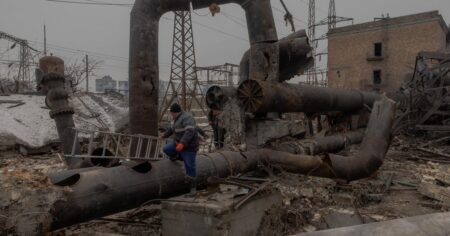
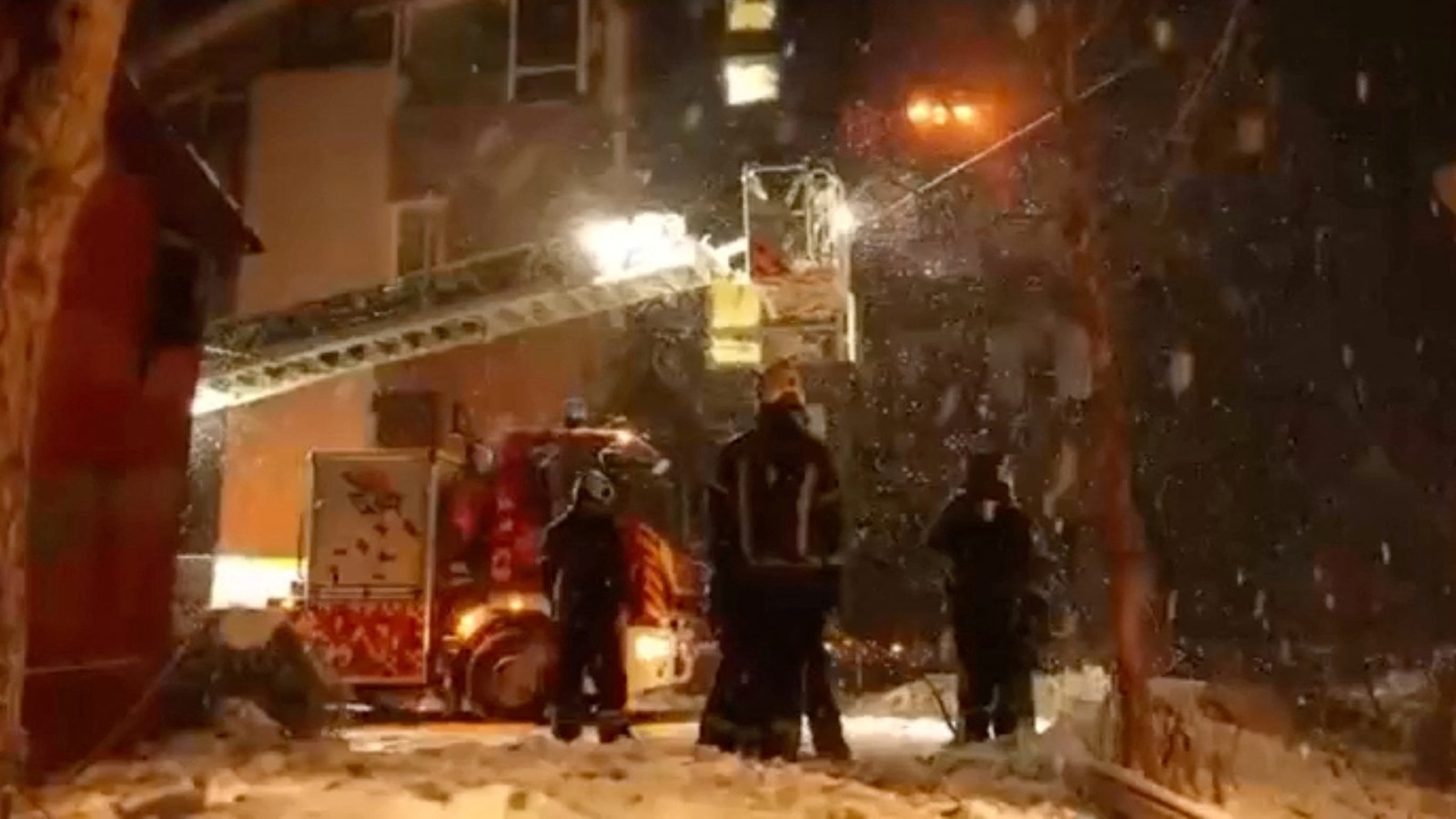
The sobering reality is that even as diplomats talk in Abu Dhabi, the war itself continues with deadly intensity. Overnight into Thursday morning, both Russia and Ukraine continued exchanging long-range missile and drone attacks, a grim reminder that peace remains elusive. Ukraine’s air force reported that Russia launched two missiles and 183 drones into Ukrainian territory overnight, with Ukrainian defenses shooting down or suppressing 156 of those drones. The attacks that got through impacted 16 different locations across the country, including several districts of Kyiv where at least two people were injured, according to city Mayor Vitali Klitschko. Ukraine’s State Emergency Service reported strikes in the northeastern border city of Sumy and the central Dnipropetrovsk region, demonstrating the geographic breadth of Russia’s continued offensive operations.
Ukraine, for its part, continued its own strikes against Russian and Russian-occupied territory. Russia’s Defense Ministry claimed its forces shot down 95 Ukrainian drones overnight, and at least one person was injured in Russia’s southeastern Rostov region. Ukraine’s General Staff reported that its forces successfully struck several military targets including a training site in occupied Zaporizhzhia, a logistics hub in occupied Donetsk, and an electronic warfare facility in Russia’s western Bryansk region. These continued military operations by both sides underscore the challenge facing negotiators: building trust and finding compromise while active combat operations continue. An interesting technological development emerged when both Ukrainian and Russian military bloggers reported disruptions to unauthorized Starlink satellite communications terminals being used by Russian forces, following public appeals by Kyiv to SpaceX and its owner Elon Musk. Ukrainian Defense Minister Mykhailo Fedorov indicated that Kyiv has been working with SpaceX to verify legitimate Ukrainian terminals while cutting off access to units improperly using the service. This situation highlights how modern conflicts increasingly involve not just traditional military hardware but also commercial technologies that can be weaponized or exploited by both sides.
The path forward from Abu Dhabi remains uncertain, but the mere fact that serious, high-level talks are taking place represents progress after years of conflict. The planned prisoner exchange offers hope to hundreds of families and demonstrates that even amid profound disagreements, humanitarian cooperation is possible. However, the fundamental issues dividing the parties – territorial control, security guarantees, and the future political relationship between Russia and Ukraine – remain as challenging as ever. Whether these talks represent the beginning of a genuine peace process or simply a temporary diplomatic interlude before renewed escalation will depend on the willingness of all parties to make difficult compromises and the ability of international partners to craft security arrangements that address legitimate concerns on all sides.