


Arson Attack on Jewish Ambulances: Three Suspects Remanded in Custody
Court Appearance Following Devastating Fire
In a deeply troubling incident that has shaken London’s Jewish community, three young individuals appeared before Westminster Magistrates Court on Saturday facing serious arson charges. The suspects—20-year-old Hamza Iqbal, 19-year-old Rehan Khan, and an unnamed 17-year-old boy of dual British-Pakistani nationality—stand accused of deliberately setting fire to four ambulances belonging to Hatzola Northwest, a vital Jewish volunteer emergency service. All three defendants, who hail from east London, were ordered to remain in custody following the 45-minute hearing. The court proceedings revealed the gravity of the situation, with the younger suspect being held in a youth detention center due to his age, while legal restrictions prevent the public identification of anyone under 18. None of the accused entered pleas during this preliminary hearing, and prosecutors indicated that a fourth suspect has also been arrested in connection with the devastating blaze. The three defendants are scheduled to appear at the Old Bailey, London’s Central Criminal Court, on April 24 for further proceedings.
The Attack and Its Immediate Impact
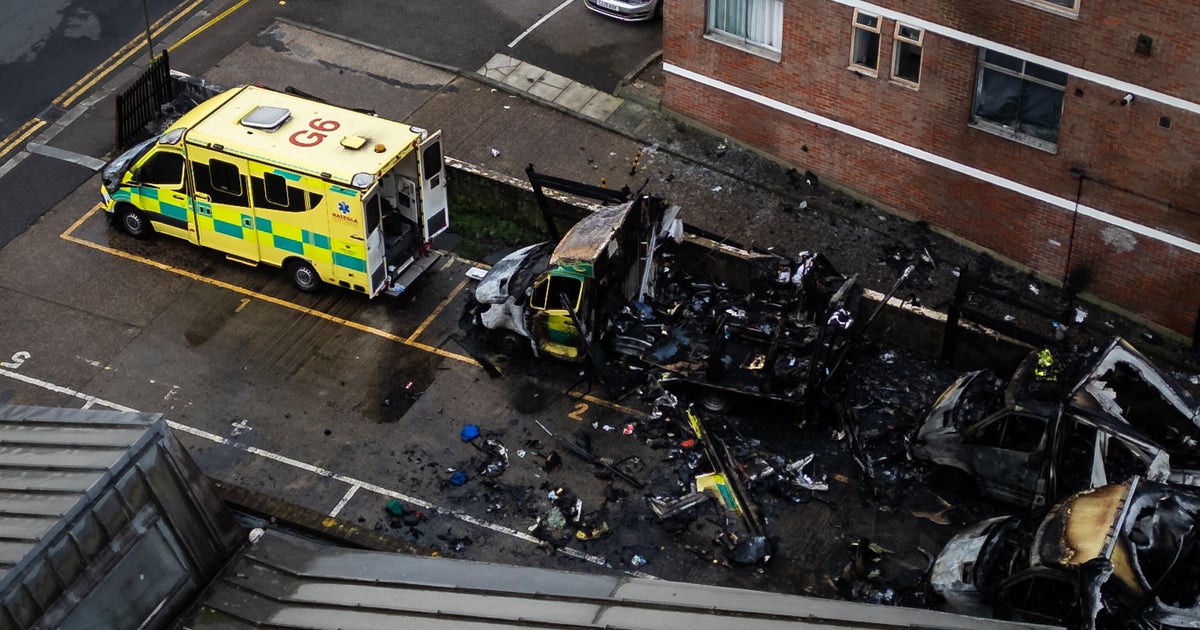
The incident occurred on March 23 in Golders Green, a neighborhood in north London known for its significant Jewish population and community institutions. The targeted ambulances belonged to Hatzola Northwest, a volunteer organization that provides crucial emergency medical services to the local community. The fire was particularly destructive and dangerous—oxygen cylinders stored inside the vehicles exploded during the blaze, causing windows in a nearby apartment building to shatter from the force. The explosive nature of the fire dramatically increased the risk to residents and emergency responders. Fortunately, firefighters managed to bring the flames under control before the situation could deteriorate further, and remarkably, no physical injuries were reported despite the severity of the incident. However, the psychological impact on the community and the practical consequences of losing four emergency vehicles have been profound. Hatzola services rely on volunteer responders and donated equipment, making the destruction of these ambulances a significant blow to their capacity to serve the community during medical emergencies.
Investigation as an Antisemitic Hate Crime
British counterterrorism police have taken charge of the investigation, treating the arson as an antisemitic hate crime—a designation that reflects the targeted nature of the attack against Jewish community infrastructure. During Saturday’s court hearing, prosecutor Emma Harraway made a particularly significant statement to the court, declaring that “there is significant evidence that this was a premeditated and targeted attack against the Jewish community.” This assessment suggests that investigators have uncovered planning and intent behind the arson, rather than it being a spontaneous act of vandalism. The investigation has taken on additional complexity with reports that a group potentially linked to Iran has claimed responsibility for the attack. However, authorities have stopped short of officially classifying the incident as terrorism at this stage. This cautious approach likely reflects the ongoing nature of the investigation and the need to establish concrete links between the suspects and any organized groups. The potential international dimension adds another layer of concern to what is already a serious hate crime, raising questions about whether the perpetrators were acting independently or as part of a broader network with hostile intentions toward the Jewish community.
Broader Context of Rising Antisemitism in Europe
This attack in London is unfortunately part of a disturbing pattern of antisemitic incidents that have escalated across the United Kingdom and Europe in recent months. The rise in such attacks represents a worrying trend that has alarmed Jewish communities and security officials throughout the continent. In Amsterdam, an explosion occurred outside a Jewish school, fortunately without causing injuries but sending a clear message of intimidation to the community. The Belgian city of Liege witnessed nighttime attacks targeting synagogues, as did the Dutch port city of Rotterdam earlier this month. These coordinated-seeming incidents suggest either copycat attacks or potentially organized campaigns against Jewish institutions. In early March, British authorities charged two men with conducting “hostile” surveillance of London’s Jewish community on behalf of Iran, indicating that state-sponsored activity may be contributing to the threat environment. Later that same month, French officials announced they had successfully disrupted a suspected terrorist plot that was aimed at Jewish targets within France. This wave of incidents has forced Jewish communities across Europe to heighten security measures around schools, synagogues, community centers, and other institutions, fundamentally affecting the daily lives of European Jews who increasingly feel vulnerable in their own neighborhoods.
Community Response and Ongoing Concerns
The attack on Hatzola Northwest’s ambulances has resonated particularly deeply because it targeted an organization dedicated to saving lives regardless of who needs help. Hatzola volunteer emergency medical services, which originated in Orthodox Jewish communities, operate on principles of rapid response and community care, with volunteers often reaching patients faster than traditional ambulance services. The destruction of these vehicles doesn’t just represent an attack on Jewish property—it compromises the organization’s ability to respond to medical emergencies affecting everyone in the area. The Jewish community in Golders Green and throughout London has expressed shock and concern, not only about this specific incident but about what it represents in terms of growing hostility. Community leaders have called for increased security measures and greater vigilance, while also emphasizing the importance of solidarity with other communities facing similar hatred. The fact that two other men arrested in connection with the arson were previously released on bail has raised questions about the investigative process and whether sufficient measures are being taken to protect the community while the legal proceedings continue.
Legal Proceedings and What Comes Next
The charges facing the three defendants—arson and being reckless as to whether life would be endangered—carry serious potential penalties under British law. The specific charge of being “reckless as to whether life would be endangered” reflects the fact that the fire occurred in a residential area and that the explosion of oxygen cylinders created significant danger to nearby residents. The prosecution will need to prove not only that the defendants set the fire deliberately but that they knew or should have known their actions could result in loss of life. The upcoming appearance at the Old Bailey on April 24 will be a crucial step in the legal process, potentially involving bail hearings, plea submissions, or preliminary trial scheduling. The involvement of a minor among the defendants adds complexity to the proceedings, as the justice system balances accountability with considerations specific to youth offenders. Meanwhile, the investigation continues, with the fourth arrested suspect still under investigation and the counterterrorism police pursuing leads about potential connections to organized groups or foreign actors. For the Jewish community in London and throughout the UK, these legal proceedings represent an important test of how seriously British society takes hate crimes targeting minority communities, and whether the justice system can provide both accountability for this attack and deterrence against future incidents. As antisemitic incidents continue to rise across Europe, the outcome of this case will be watched closely by communities concerned about their safety and by authorities grappling with how to address religious and ethnic hatred in an increasingly polarized society.