


US Military Buildup in the Middle East: A Show of Force Amid Nuclear Tensions
Carrier Strike Groups Converge on Strategic Waters
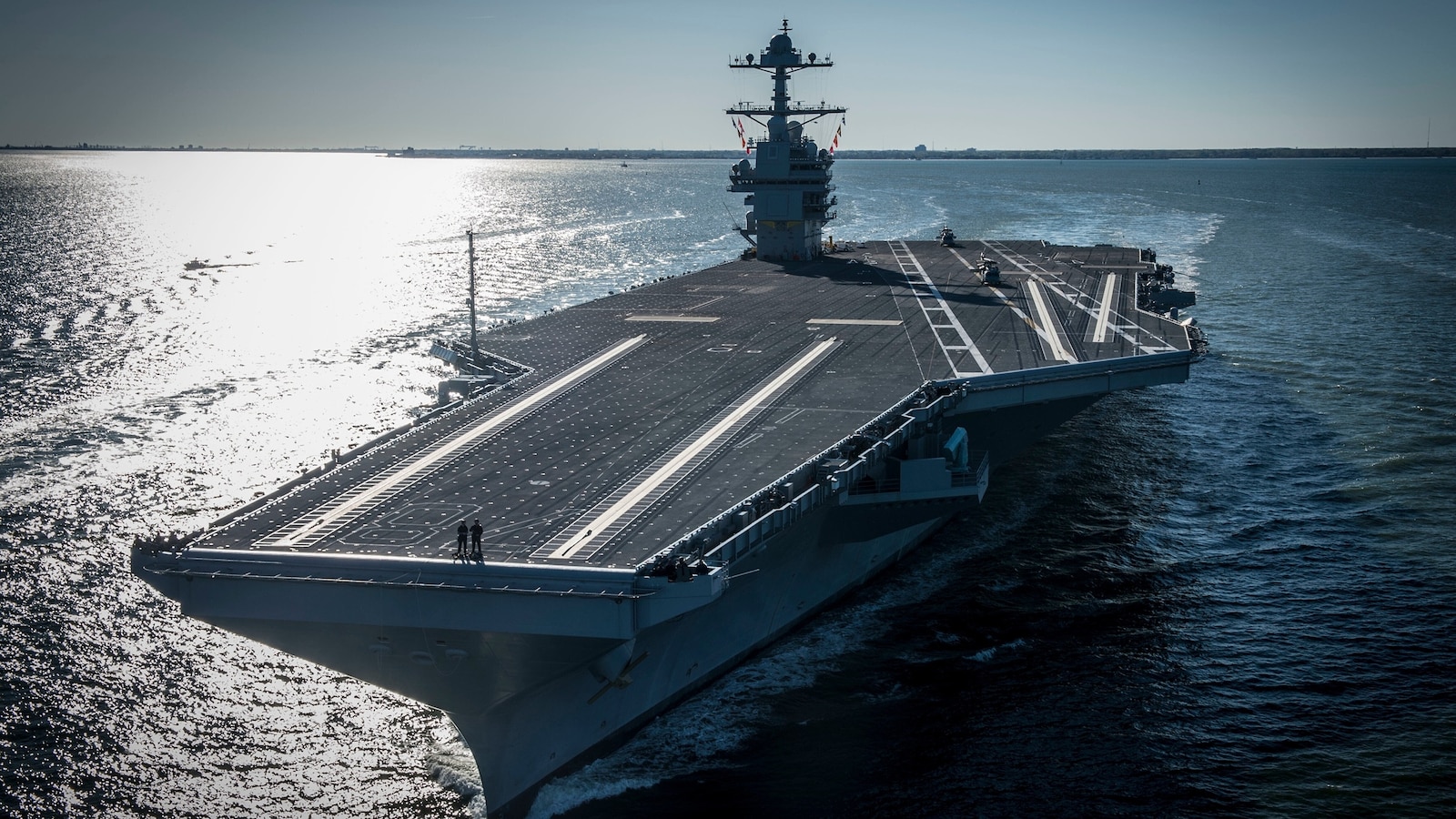
The United States is significantly ramping up its military presence in the Middle East, sending a powerful message during a critical juncture in negotiations with Iran. The USS Gerald R. Ford, America’s newest and most advanced aircraft carrier, is currently steaming toward the region to join the USS Abraham Lincoln, which arrived there just weeks ago. This deployment represents one of the most substantial shows of American naval power in recent years, signaling Washington’s determination to maintain military options while diplomatic channels remain open.
The Ford’s journey became briefly visible to the public when it transmitted its location off the Moroccan coast this week as it entered the Mediterranean Sea. For about two hours, ship tracking websites captured the massive vessel’s position, offering a rare glimpse into military movements that are typically kept under wraps. Additionally, flight tracking enthusiasts spotted two C-2A Greyhound aircraft—the carrier’s delivery planes that ferry supplies and personnel to the ship—flying off the Portuguese coast, roughly 230 miles from where the Ford was positioned. These digital breadcrumbs paint a picture of a formidable military force making its way eastward with clear purpose and urgency.
A Powerful Naval Escort with Long-Reach Capabilities
The Gerald R. Ford isn’t sailing alone on this mission. Four destroyers are accompanying the massive carrier, forming a strike group capable of both defending against threats and projecting power across vast distances. Three of these destroyers have been with the Ford since it first deployed last June, working as a cohesive unit. The fourth destroyer was pulled from a different mission entirely—it had been part of the previous administration’s military operations in the Caribbean region, demonstrating how resources are being redirected to address the Iranian situation.
Each destroyer in this flotilla brings serious firepower to the table. They’re equipped with sophisticated air defense systems designed to intercept and destroy incoming missiles and drones—a crucial capability given Iran’s known arsenal of such weapons. Beyond defensive systems, these warships carry Tomahawk cruise missiles, precision weapons that can strike targets up to 1,000 miles away. This combination of defensive shields and offensive punch means the carrier strike group can operate with relative security while maintaining the ability to reach deep into potential threat areas. It’s a floating fortress with long arms, capable of responding to various scenarios that might emerge as tensions with Tehran continue to simmer.
Stealth Fighters Redeployed from Caribbean Operations
The military buildup extends beyond naval assets. Among the forces heading toward the Middle East are F-35 stealth fighter jets, representing the cutting edge of American air power. Some of these advanced aircraft had been stationed in Puerto Rico as part of operations related to Venezuela, where the US had been preparing for potential action regarding President Nicolas Maduro. Now, those same jets are being redirected thousands of miles away to address a completely different geopolitical challenge.
The Vermont National Guard’s 158th Fighter Wing confirmed receiving new orders from U.S. Southern Command, though military officials remained tight-lipped about exactly where these aircraft were being sent. However, aviation enthusiasts tracking military flights provided the missing pieces of this puzzle. In late January, observers noted approximately a dozen F-35 fighters departing from Roosevelt Roads Naval Station in Puerto Rico and landing in the Azores islands in the mid-Atlantic—a typical refueling stop for aircraft heading toward Europe and the Middle East. This redeployment of advanced stealth fighters from one theater to another illustrates how fluid military planning can be, shifting resources to match evolving priorities and perceived threats around the globe.
The Ongoing Nuclear Dispute and Recent Conflict
The current tensions didn’t emerge from nowhere. Last June, Israeli and American forces conducted an intense 12-day military campaign targeting key elements of Iran’s nuclear infrastructure, including important facilities and personnel involved in Tehran’s nuclear program. Despite the intensity of those strikes, they didn’t resolve the fundamental disputes between the United States, Israel, and Iran. The core issues remain: Iran’s nuclear program and how close it might be to developing atomic weapons, its growing arsenal of increasingly sophisticated ballistic missiles, and its ongoing support for various militia groups and proxy forces throughout the Middle East.
These concerns have driven American policy toward Iran for years, transcending different administrations and political parties. The fear in Washington and Jerusalem is that Iran is steadily advancing toward nuclear weapons capability while simultaneously developing the missile technology to deliver such weapons across the region and potentially beyond. Meanwhile, Iranian-backed groups in Lebanon, Syria, Iraq, and Yemen give Tehran influence and the ability to destabilize its neighbors without directly involving Iranian forces. It’s this combination of nuclear ambitions, missile development, and regional meddling that keeps American policymakers awake at night and drives decisions to deploy significant military assets to the region.
High-Stakes Negotiations and Potential Compromises
Even as warships and fighter jets move into position, diplomacy hasn’t been abandoned. American and Iranian representatives met in Geneva, Switzerland, this week for talks focused on finding some middle ground regarding Tehran’s nuclear program, particularly its uranium enrichment activities. President Trump has staked out a maximalist position, demanding that Iran commit to “zero enrichment”—completely halting its uranium processing. Iranian officials have flatly rejected this demand as unrealistic and unacceptable, arguing that they have rights under international law to pursue peaceful nuclear energy.
According to officials familiar with the discussions, Iran has indicated some willingness to suspend its nuclear enrichment temporarily—possibly for anywhere between one and five years. In exchange, the United States is reportedly considering lifting some of the punishing economic sanctions that have hammered Iran’s economy, including restrictions on financial transactions, banking relationships, and perhaps most significantly, the embargo on Iranian oil sales. These oil sanctions have been particularly devastating to Iran’s economy, cutting off a major revenue source and creating significant economic hardship. Finding the right balance—enough Iranian concessions to satisfy American security concerns, paired with enough sanctions relief to make the deal politically acceptable in Tehran—represents an enormously difficult diplomatic puzzle. Following this week’s talks, Iran is expected to submit a detailed written proposal addressing the remaining gaps between the two sides’ positions, though the timing of this submission remains uncertain. White House officials indicated they expect these proposals within the next two weeks, setting up a crucial period where diplomatic progress might be made or the situation could deteriorate further, making those aircraft carriers and fighter jets in the region all the more relevant.