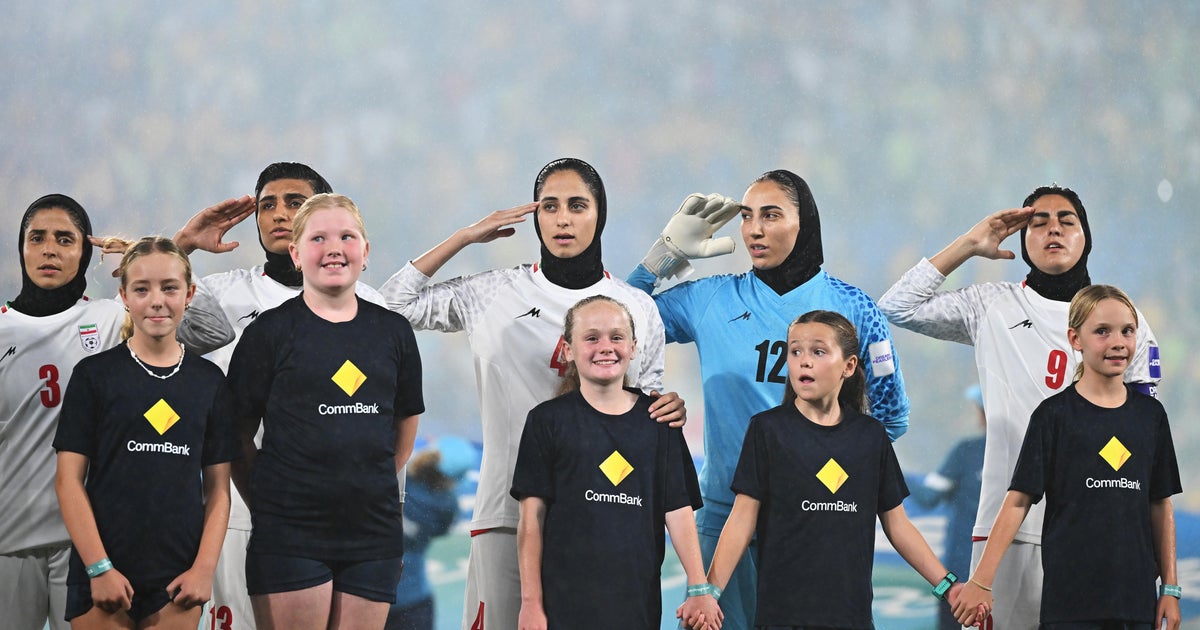

Iranian Women’s Soccer Team Seeks Asylum in Australia After Anthem Protest
Five Players Make Dramatic Escape From Team Hotel
In a development that has captured international attention and sparked diplomatic tensions, five members of Iran’s national women’s soccer team have reportedly fled their accommodation in Australia and are seeking asylum in the country. The dramatic escape occurred on Monday night on Australia’s Gold Coast, where the team had been staying during their participation in the AFC Women’s Asian Cup. According to Iranian opposition figure and exiled crown prince Reza Pahlavi, whose office announced the news on social media, the five athletes are now in a safe location and have declared their support for what Pahlavi’s group calls Iran’s “national Lion and Sun Revolution” – a reference to the flag and symbols used before the 1979 Islamic Revolution that overthrew the Shah’s regime.
The Sydney Morning Herald reported that sources within the Iranian-Australian community confirmed the women had successfully made their escape and were receiving support from local activists and authorities. Brisbane-based human rights activist Hadi Karimi told the newspaper that police had taken the players to a secure location, describing the development as “great” and “amazing.” The women’s decision to seek refuge comes amid growing international concern about what consequences they might face if forced to return to Iran, particularly given the current volatile political climate and the ongoing tensions between Iran and Western nations, including the United States and its allies. While Australia’s Department of Home Affairs has not yet confirmed whether formal asylum applications have been filed, the situation has quickly become a flashpoint for discussions about athletes’ rights, political protest, and the responsibilities of host nations toward visiting teams whose members may face persecution at home.
National Anthem Controversy Sparks Crisis
The crisis surrounding the Iranian women’s soccer team began before their first match of the tournament against South Korea, when the players made the bold decision not to sing their country’s national anthem or offer the customary salute. This silent protest did not go unnoticed back in Iran, where state-controlled television branded the women as “traitors” and accused them of committing “the pinnacle of dishonor.” Conservative voices within the Islamic Republic called for harsh punishment against the athletes, raising immediate concerns among human rights advocates about the players’ safety should they be forced to return home. The women’s refusal to participate in the anthem ceremony was seen by many observers as a continuation of the broader protest movements that have challenged the Iranian government’s authority, particularly following the death of Mahsa Amini in 2022 and the subsequent nationwide demonstrations.
The situation took an even more troubling turn in the team’s subsequent matches, when the players did sing the anthem and performed military-style salutes. According to Alireza Mohebbi, a correspondent for the opposition Iran International news network speaking to Australian broadcaster ABC, this change in behavior was clearly not voluntary. “It’s completely obvious that the Islamic Republic’s regime, and the security team which is with the players in Australia, forced them to sing the anthem,” Mohebbi explained. He emphasized that there was “no doubt” the regime had pressured the players not only to sing but to perform the military salute, suggesting that handlers accompanying the team had exerted significant control over the athletes’ actions. This apparent coercion has raised serious questions about the freedom and safety of the players, even while they were on Australian soil and supposedly protected by international sporting regulations that should guarantee athletes’ basic rights and freedoms.
Emotional Scenes as Supporters Rally for Players’ Freedom
After the team’s final match on Sunday, which sealed their elimination from the tournament, dramatic scenes unfolded outside the Gold Coast stadium as Iranian fans and expatriates surrounded the team’s bus. Approximately 200 protesters, many carrying the flag of Iran’s pre-Islamic Republic monarchy, blocked the vehicle for about fifteen minutes, chanting “let them go” and banging on its sides in a show of solidarity with the players. According to reports from The Guardian, the crowd only dispersed when local police intervened to clear a path for the bus to depart. The demonstrators held banners with messages of support and offers of help, including signs reading “Stay Safe in Australia. Talk to Police” and “If your home is not safe – mine is.” Inside the bus, reactions from the players were mixed: some smiled and waved at their supporters, others filmed the scene on their phones, while at least one player closed the curtains as the vehicle began its journey back to the hotel.
The emotional response from the Iranian-Australian community continued even after the bus departed, with some supporters remaining at the stadium in the rain, several of them in tears. The outpouring of concern reflects the deep anxiety within the diaspora community about the fate of women who dare to challenge the Islamic Republic’s authority. Former Australian men’s soccer team captain Craig Foster, who has become a prominent human rights advocate and helped Afghan women’s team members flee Taliban-controlled Afghanistan in 2021, has been vocal about the need for Australia to protect the Iranian players. “We all have very reasonable and serious concerns for their safety,” Foster told BBC News, emphasizing that any team participating in FIFA-regulated tournaments should have the right to safety and external support to express concerns about their security, both in the present and future.
International Pressure Mounts on Australian Government
A coalition of Iranian community organizations and civil society groups has formally contacted Australian Home Affairs Minister Tony Burke, expressing “grave concerns” for the players’ wellbeing. According to Craig Foster, who has been actively involved in the advocacy effort, the players had been “held hostage by the Iranian team management in their hotel” and denied opportunities to communicate with external community members, friends, family, or support networks such as lawyers. This isolation has prevented proper assessment of whether individual players wish to seek asylum or return to Iran, making it impossible to determine their true wishes free from intimidation or coercion. Foster stressed that while some players may ultimately choose to return home, others may have serious safety concerns but feel unable to accept asylum offers due to fears for family members remaining in Iran, particularly those who have children there.
The situation has attracted high-level political attention, with President Donald Trump weighing in via his Truth Social platform on Monday. Trump accused Australia of “making a terrible humanitarian mistake by allowing the Iran National Woman’s Soccer team to be forced back to Iran, where they will most likely be killed.” He called on Australian Prime Minister Anthony Albanese to grant the players asylum, and even offered that “The U.S. will take them if you won’t.” However, Australian Foreign Minister Penny Wong has been cautious in her public statements, saying on Monday that she didn’t want to “get into commentary” about the women’s fate, likely reflecting the diplomatic complexities involved. Any decision by Australia to grant asylum to the athletes would almost certainly provoke strong criticism from Iran and could complicate bilateral relations, yet refusing protection to women facing potential persecution would contradict Australia’s international human rights obligations and humanitarian values.
Broader Implications for Athletes’ Rights and International Sport
This crisis highlights fundamental questions about the intersection of international sport, human rights, and political asylum. When national teams travel for international competitions, the host countries have both legal and moral responsibilities to ensure the safety of all participants. However, situations like this one expose the limitations of those protections when team members face intimidation from their own handlers or fear reprisals against themselves or their families. The Iranian women’s soccer team case echoes similar situations involving athletes from authoritarian regimes who have sought asylum while competing abroad, from Soviet-era defectors to more recent cases involving athletes from countries like Afghanistan, Belarus, and China. Each instance forces host nations to balance diplomatic considerations against humanitarian obligations, often under intense time pressure and media scrutiny.
The outcome of this situation will likely have implications far beyond these five individual players. It could establish precedents for how sporting organizations and host nations respond when athletes face threats related to political expression or protest. FIFA and the Asian Football Confederation will face questions about what safeguards exist to protect players from retaliation and whether current regulations adequately address situations where team officials may be acting as agents of government control rather than advocates for their players’ interests. For the Iranian diaspora and opposition movements, the players’ actions – both their initial anthem protest and their reported asylum seeking – represent powerful symbolic challenges to the Islamic Republic’s authority. For the five women now reportedly in hiding, the decision to leave their teammates and seek protection represents an extraordinary act of courage with uncertain outcomes. Whether they ultimately remain in Australia, resettle elsewhere, or somehow return to Iran, their story has already become part of the larger narrative of women’s resistance to oppression and the complex politics surrounding international sport in an era of authoritarian governments and global human rights advocacy.