
Deadly Kyiv Supermarket Shooting: Six Killed as Armed Standoff Ends in Police Raid
Tragic Violence Strikes Ukraine’s Capital
In a devastating incident that shook the heart of Kyiv, Ukraine’s capital city witnessed an appalling act of violence on Saturday when a lone gunman went on a shooting rampage that ultimately claimed six innocent lives. The terrifying ordeal began on the streets of the Holosiivskyi district, where the attacker opened fire on unsuspecting bystanders before barricading himself inside a local supermarket with hostages. What followed was a tense standoff that lasted approximately 40 minutes as police negotiators desperately attempted to reach the gunman and convince him to surrender peacefully. When those negotiations broke down and it became clear that lives remained in immediate danger, Ukraine’s special tactical police units made the difficult decision to storm the building. The operation ended with the gunman being shot and killed by police while resisting arrest, bringing a horrific chapter of violence to a close but leaving a community grieving and searching for answers about what could drive someone to commit such a senseless act of violence.
The Sequence of Events Unfolds
According to Ihor Klymenko, the head of Ukraine’s Interior Ministry who provided detailed accounts to both media and the public through social media statements, the tragedy unfolded in stages that grew progressively more dangerous. The gunman, identified only as a man born in 1968, initially began his assault on the streets, where he callously shot and killed four people going about their daily lives. These victims were ordinary citizens who found themselves in the wrong place at the wrong time, their bodies later covered with emergency blankets by first responders as an Associated Press reporter witnessed at the scene. After this initial burst of violence, the shooter then entered the nearby supermarket, where he killed a fifth person before taking others hostage and fortifying his position. The situation became even more tragic when Mayor Vitali Klitschko announced that a sixth victim, a young woman who had been injured during the attack, succumbed to her wounds at the hospital despite medical efforts to save her life. The progression from street violence to a hostage situation demonstrated the unpredictable and escalating danger that law enforcement faced as they responded to the crisis.
Desperate Negotiations and the Final Decision
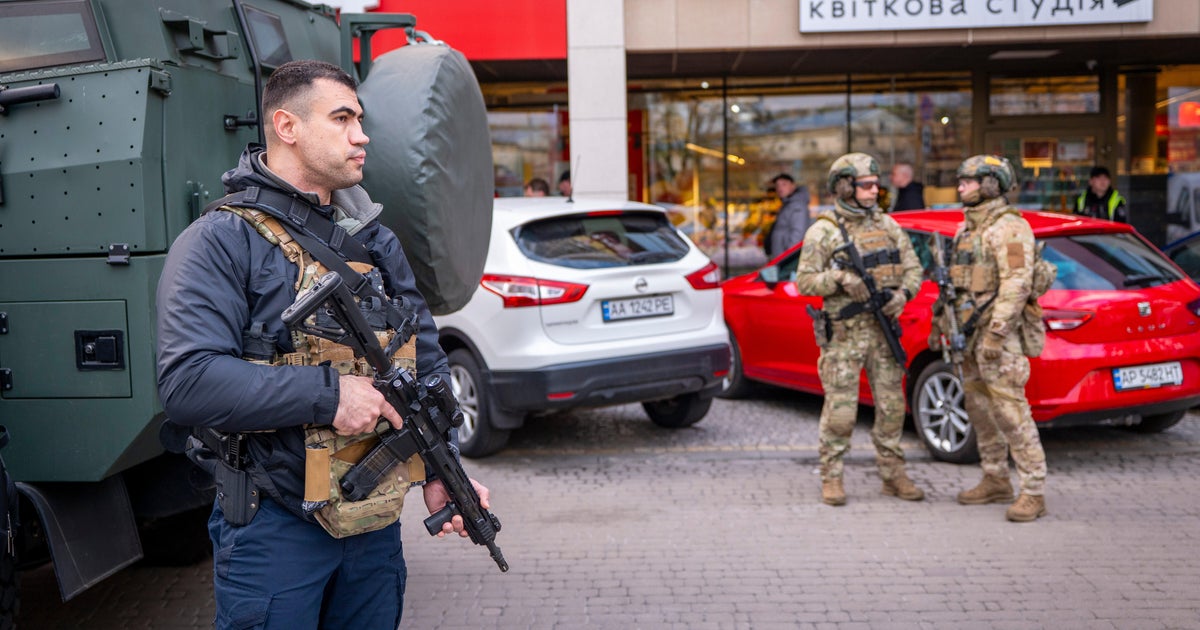
As the situation inside the supermarket remained volatile, Ukrainian police made every possible effort to resolve the standoff without further loss of life. A female police negotiator, equipped with body armor and positioned strategically behind an armored vehicle for protection, used a loudspeaker to attempt communication with the barricaded gunman. Her words were both firm and compassionate as she appealed to whatever humanity might remain in the shooter: “the people are not to blame for this. Please, let them go and we will talk with you.” For roughly 40 minutes, negotiators worked tirelessly to establish dialogue, even offering practical assistance such as tourniquets to help any wounded individuals inside the store, hoping that a humanitarian gesture might break through to the attacker. However, as Klymenko later explained to reporters gathered at the scene, the gunman simply did not respond to these overtures. Faced with the knowledge that wounded individuals might be inside suffering without medical attention, and with the gunman showing no signs of willingness to communicate or surrender, authorities made the difficult but necessary decision to send in tactical units. “Consequently, the order was given to neutralize him,” Klymenko stated, explaining the reasoning behind the final assault that ended the shooter’s life but also ended the immediate threat to any remaining hostages and the surrounding community.
Questions About Legal Gun Ownership
One of the most disturbing aspects of this tragedy that emerged in the aftermath was the revelation that the gunman had been carrying a legally registered carbine, a short-barrel assault rifle that he had obtained through proper channels. Klymenko, speaking to reporters while still wearing his body armor at the scene, confirmed that the weapon was registered and that the shooter had recently gone through the process of maintaining his legal right to possess it. Just last December, the assailant had approached licensing authorities to have the weapon test-fired, a standard procedure required as his permit was approaching expiration. He had provided all necessary documentation, including a medical certificate that presumably cleared him for gun ownership, and had even submitted an application to renew his permit for the weapon. This information raised immediate and troubling questions about how someone who would eventually commit such a horrific act of violence could pass the screening processes designed to keep weapons out of dangerous hands. Klymenko acknowledged these concerns, stating that “the investigation will determine which medical institution issued the certificate,” suggesting that authorities would be thoroughly examining whether proper protocols were followed and whether any warning signs were missed. The incident highlights the ongoing challenge that many countries face in balancing citizens’ rights to legal gun ownership with public safety concerns, and the difficulty in predicting which individuals might eventually use legally obtained weapons for mass violence.
Broader Context of Ongoing Conflict
This tragic shooting occurred against the backdrop of continued military conflict between Russia and Ukraine, with violence continuing to affect civilian populations across multiple regions. On the same day as the Kyiv supermarket shooting, the ongoing war demonstrated its relentless toll as a civilian was killed in Donetsk and dozens more were wounded in overnight attacks attributed to Russian forces. Local officials reported that at least 26 people had been hurt in attacks that swept across northern and eastern Ukraine, including a strike on critical port infrastructure in the strategically important city of Odesa. The violence was not one-sided, as Ukrainian forces conducted their own operations deep inside Russian territory. A Ukrainian drone strike targeted industrial areas in the Russian cities of Novokuibyshevsk and Syzran, located in Russia’s Samara region, according to Governor Vyacheslav Fedorishchev. While he did not provide extensive details, the General Staff of Ukraine’s Armed Forces released a statement claiming responsibility for hitting major oil refineries in both cities, representing significant strikes against Russian energy infrastructure. Additional Ukrainian attacks reportedly sparked fires at the Vystosk oil terminal in Russia’s northwestern Leningrad region and an oil refinery in the southern Krasnodar region, with Russian officials later confirming these blazes. Russia’s Ministry of Defense, for its part, claimed that its air defense forces destroyed 258 Ukrainian drones overnight across 16 Russian regions, as well as over the annexed Ukrainian peninsula of Crimea and the Black and Azov seas. This constant exchange of strikes, affecting both military and civilian targets, creates an environment of sustained tension and trauma for populations on both sides of the conflict.
A Community Left to Heal
As emergency services cleared the scene and investigators began the painstaking work of piecing together exactly what happened and why, the Holosiivskyi district of Kyiv was left to grapple with an act of violence that struck at the heart of everyday life. Televised footage captured the dramatic moments as police took cover in the shopping mall that housed the supermarket, with gunshots audible in the background, while officers worked to escort frightened bystanders away from the danger zone to safety. The images of bodies covered with emergency blankets on the street, the sound of negotiations over loudspeakers, and the ultimate tactical assault all combined to create a scene more commonly associated with war zones—yet this happened in a civilian shopping area where people had simply been going about their ordinary Saturday activities. For the families of the six victims, the grief is unimaginable and permanent, their loved ones taken in a senseless act that offers no easy explanations or comfort. The broader community must now process not only this specific tragedy but also confront difficult questions about public safety, gun regulations, mental health screening, and how to prevent such incidents in the future. As Ukraine continues to face external threats from ongoing military conflict, this internal act of violence serves as a painful reminder that danger can emerge from unexpected sources, and that the work of keeping communities safe requires constant vigilance, effective screening processes, and support systems that can identify and help individuals before they reach a point of violent crisis.