
The Battle Beyond the Grave: Zambia’s Presidential Burial Dispute
A Frozen Standoff in South Africa
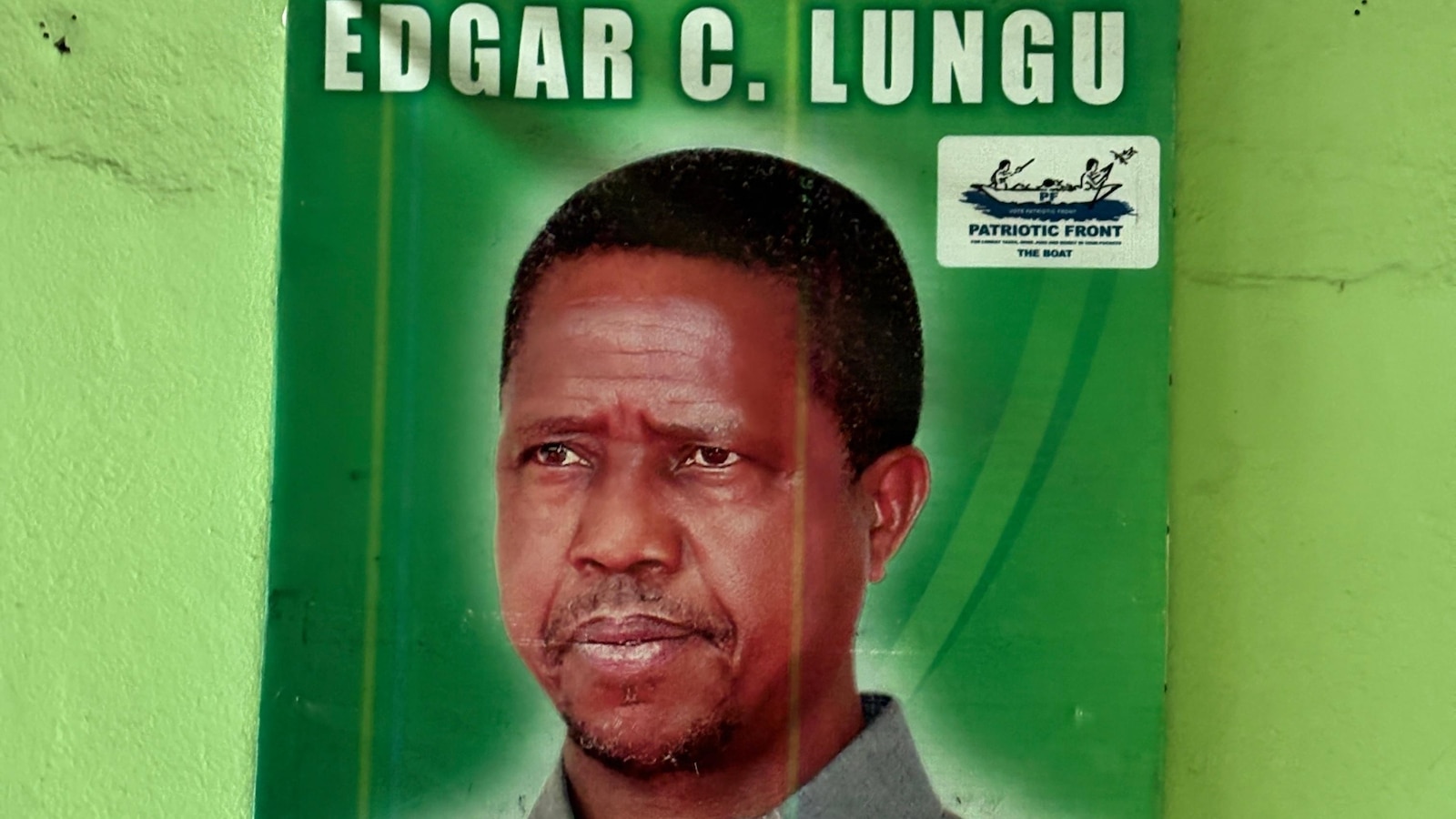
In what has become one of the most unusual political disputes in recent African history, the body of former Zambian President Edgar Lungu remains frozen in a South African funeral home more than eight months after his death. This isn’t simply a matter of delayed funeral arrangements—it’s the center of an extraordinary conflict between Lungu’s family and his longtime political rival, current President Hakainde Hichilema. The bizarre situation has captured the nation’s attention and sparked widespread debate about tradition, politics, and spiritual beliefs in modern Zambia. In a Lusaka cemetery, a coffin-sized hole sits empty, prepared by Hichilema’s government for a state funeral that Lungu’s family adamantly refuses to allow. Before his death, Lungu made his wishes crystal clear to his family: Hichilema should never come near his body, not even as a mourner. Despite repeated court rulings favoring Zambian authorities’ right to conduct a state funeral, Lungu’s family continues to fight, leaving the former president’s remains in limbo. For many Zambians, this situation is deeply disturbing, as it violates fundamental cultural beliefs about honoring the dead with prompt and dignified burial.
When Politics Becomes Spiritual Warfare
What makes this dispute particularly significant is how it reflects the intersection of politics, tradition, and spirituality in Zambian society. Religious leaders and scholars describe the situation as having transcended ordinary political rivalry to become a “spiritual battle.” Bishop Anthony Kaluba of the Life of Christ congregation in Lusaka explained that the conflict “has shifted from the physical, it has shifted from politics, and it is now a spiritual battle.” This perspective isn’t fringe thinking in Zambia—it represents widespread beliefs about the power of curses and blessings, particularly those issued by elders facing death. Hichilema’s supporters view Lungu’s last wishes as an attempt to cast a curse from beyond the grave, while they see the president’s insistence on a state funeral as an act of generosity and reconciliation. However, Lungu’s family and supporters see something more sinister, with his sister even publicly asserting that Hichilema wants the corpse for ritual purposes—an accusation the current president firmly denies.
Professor Chammah J. Kaunda, an expert in African Pentecostal theology, explains that across Africa, last words carry a “vital force” that can enhance or block life. In many traditional African belief systems, curses “can acquire a life of their own,” making Lungu’s deathbed directive more than just the wishes of a bitter political rival—it becomes a potentially active spiritual force. Herbert Sinyangwe of WayLife Ministries in Lusaka put it bluntly: “It is a weapon. We believe in our culture that curses work.” This belief system coexists with Zambia’s strong Christian identity, creating a complex spiritual landscape where many people navigate between traditional and modern religious practices. The fact that even political leaders are believed to take these spiritual concerns seriously speaks to how deeply rooted these beliefs remain in Zambian society, regardless of education level or social status.
A Democracy Haunted by Supernatural Fears
Zambia has long been celebrated as one of Africa’s most vibrant democracies, founded by the beloved Kenneth Kaunda, who gracefully accepted electoral defeat in 1991 despite his status as an independence hero. Unlike many African nations dominated by military strongmen, Zambia’s presidents have been civilians who rose through democratic processes. Yet beneath this democratic success story runs a current of supernatural anxiety that affects even the highest levels of government. The official presidential residence is now widely believed to be cursed, with all six former presidents now deceased. Current President Hichilema works at the residence during the day but reportedly sleeps elsewhere—a telling accommodation to public fears and possibly his own concerns.
The suspicion surrounding witchcraft and curses has touched recent presidencies directly. Michael Sata, who served from 2011 to 2014, openly worried that opposition figure Hichilema was using supernatural means against him, though Sata claimed his own regional charms were stronger. In a remarkable incident that demonstrates how seriously these concerns are taken, Zambian authorities last year convicted and jailed two men for allegedly plotting to kill President Hichilema through magic. These aren’t isolated incidents dismissed by the educated elite—they represent genuine anxieties that cut across social classes. The empty tomb prepared for Lungu carries its own ominous symbolism. Cemetery caretaker Allen Banda warned that a tomb without a corpse is like “digging your own grave,” suggesting that whoever prepared it might be calling death upon themselves—a culturally powerful taboo that adds another layer of supernatural concern to the entire affair.
The Personal Becomes Political
The bitter rivalry between Lungu and Hichilema has deep roots in Zambian political history. Lungu first came to power in 2015 after the death of President Michael Sata, winning a close election against Hichilema by fewer than 28,000 votes. Their relationship deteriorated dramatically after Lungu’s victory in the 2016 election, when Hichilema faced treason charges and spent four months in jail for allegedly failing to yield to the presidential motorcade—a charge widely seen as politically motivated persecution. The tables turned dramatically in 2021 when Hichilema won the presidency and Lungu announced his retirement from politics. However, when Lungu attempted a political comeback in 2023, Hichilema’s government withdrew his retirement benefits, escalating tensions further. In 2024, Lungu’s wife and daughter were arrested on fraud allegations related to property acquisition, moves that Lungu’s supporters saw as political harassment. When Lungu fell seriously ill, the government restricted his travel, forcing him to slip away to South Africa for medical treatment by purchasing a ticket at the airport counter at the last minute—an incident that resulted in an airport manager being fired for the alleged security lapse.
Zambian historian Sishuwa Sishuwa, a visiting scholar at Harvard, offers insight into the seemingly irrational intensity of the burial dispute: “On the one hand, nearly everything done by the Lungu family so far seems to have been designed to deny Hichilema access to Lungu’s body. On the other, Hichilema’s conduct so far suggests that he will do whatever it takes to secure access to Lungu’s corpse, perhaps because the president sees the issue as a matter of life and death.” This observation captures the extraordinary nature of the standoff—both sides are behaving as though access to Lungu’s remains carries existential significance. Lungu’s family attempted to hold a private funeral in South Africa, only to have Zambian authorities block it. When a South African court ruled in August that Zambian authorities could take Lungu’s body home, his sister Bertha was inconsolable in the courtroom, wailing and cursing at Zambia’s attorney general, crystallizing the raw emotions driving this dispute.
Cultural Taboos and National Scandal
For ordinary Zambians watching this drama unfold, the failure to bury Lungu promptly and with dignity represents a profound cultural violation. In Zambian tradition, as in many African cultures, the proper treatment of the dead is sacred, and last words—particularly curses or blessings from elders—carry tremendous weight. While it’s not uncommon for Zambians to bar enemies from their funerals, blaming them for misfortunes in life, such disputes are typically private family matters. What makes the Lungu situation extraordinary is its public nature and the involvement of sitting and former heads of state. The spectacle of a former president’s body frozen in a foreign country while his successor fights the family in court offends deep-seated beliefs about respect for the dead and family autonomy in burial decisions.
Emmanuel Mwamba, a Zambian diplomat who speaks for Lungu’s party, captured the ongoing political implications: “His issues remain. How he was treated in life and how he was treated in death.” From this perspective, Lungu continues to “influence our politics from the grave,” making the dispute about much more than funeral arrangements—it’s about justice, dignity, and the nature of political rivalry in Zambia. President Hichilema maintains that his Christian faith forbids belief in traditional religion and denies any malicious intent toward Lungu or desire for the body for ritual purposes. Yet his determination to secure a state funeral, even against the family’s fierce resistance and at considerable political cost as he faces reelection in August, has only deepened suspicions among those who believe supernatural considerations are at play.
Conclusion: Democracy Meets the Ancestral World
The standoff over Edgar Lungu’s remains reveals the complex reality of modern African democracy, where Western-style political institutions exist alongside traditional beliefs about spiritual power, curses, and the authority of the dead. Zambia’s democratic credentials remain strong—peaceful transfers of power, contested elections, and civilian leadership continue to distinguish it from more authoritarian neighbors. Yet this burial dispute demonstrates that rationalist, secular frameworks don’t fully capture how power and conflict operate in societies where traditional spirituality remains vibrant and influential. Whether one views Lungu’s deathbed directive as a dying man’s bitter spite, a legitimate exercise of personal autonomy, or a genuine curse with supernatural force depends largely on one’s worldview—but in Zambia, all three interpretations coexist and shape political reality.
As Lungu’s body remains frozen thousands of miles from home, the dispute raises profound questions about reconciliation, respect, and the limits of state authority over personal and family decisions. For President Hichilema, the willingness to risk public anger and fuel speculation about supernatural motives suggests he sees the state funeral as essential—whether for reasons of protocol, political symbolism, or perhaps concerns that cannot be spoken aloud in a modern democracy. For Lungu’s family and supporters, protecting his last wishes represents both family loyalty and resistance to a rival they believe persecuted him in life and now seeks to control him in death. Until this extraordinary standoff is resolved, Zambia endures a scandal that no legal ruling seems able to end, demonstrating that some disputes transcend courts and constitutions, touching something deeper in the human experience of death, power, and the unseen world.