
Iran’s Strait of Hormuz Toll: A New Chapter in Global Energy Security
Growing Concerns Over Iranian Control of Critical Shipping Lane
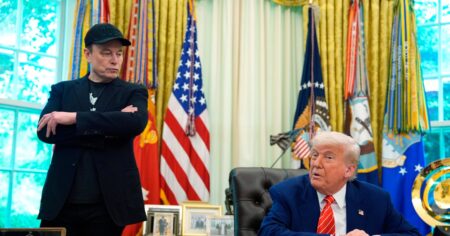
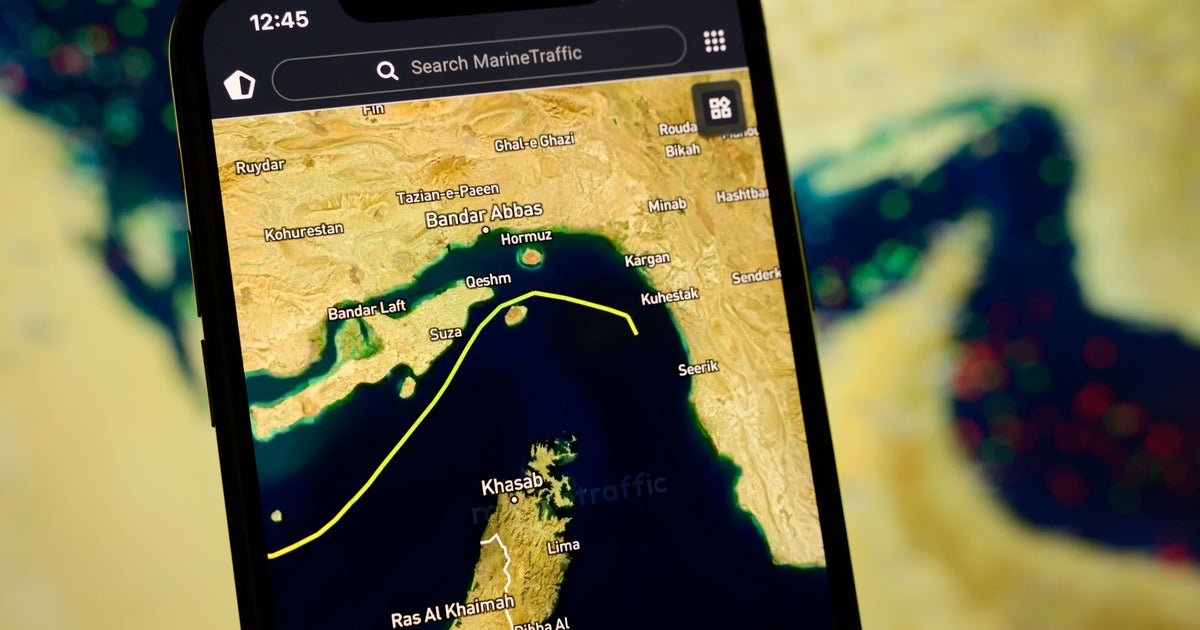
The world is watching with growing unease as reports emerge that Iran may be implementing an unprecedented toll system for ships passing through the Strait of Hormuz, one of the world’s most vital maritime chokepoints. This narrow waterway, which serves as a gateway between the Persian Gulf and international trade routes, has become the center of a potential economic showdown that could ripple through global energy markets. According to maritime intelligence analysts at Lloyd’s List Intelligence, Iran’s Islamic Revolutionary Guard Corps has essentially established what they describe as a “toll booth” regime in the strait. Ships are now required to submit comprehensive documentation, obtain special clearance codes, and accept escort by IRGC forces through a single, controlled corridor. This represents a dramatic shift in how this international waterway operates, and it’s raising red flags among shipping companies, energy analysts, and world governments. At least two vessels have already reportedly paid fees in Chinese yuan, suggesting that Iran is testing the waters with this new system. While Tehran hasn’t officially announced a permanent toll structure, Iranian officials indicated this week that any long-term peace agreement to fully reopen the strait would include fees for vessels seeking guaranteed safe passage. The situation has caught the attention of President Trump, who issued a stern warning on Truth Social, stating bluntly: “There are reports that Iran is charging fees to tankers going through the Hormuz Strait — They better not be and, if they are, they better stop now!”
Understanding the Strategic Importance of the Strait
To appreciate why this development matters so much, it’s essential to understand just how critical the Strait of Hormuz is to the global economy. This narrow passage, at its narrowest point just 21 miles wide, normally handles approximately 20% of the world’s oil and liquefied natural gas supply. It’s not an exaggeration to call it one of the world’s most important energy arteries. The economic significance becomes even clearer when you look at the numbers from before the current crisis. Under normal circumstances, more than 100 ships traverse the strait daily, carrying crude oil, refined petroleum products, and natural gas to markets around the world. However, the situation has changed dramatically in recent months. As tensions have escalated and Iran has tightened its control over the waterway, shipping traffic has plummeted. In March, an average of only six vessels per day made the journey through the strait, and in April, that number has inched up to just about ten daily crossings. This represents a massive disruption to normal shipping patterns, and tanker companies are understandably hesitant to risk their vessels and crews in such uncertain conditions. The impact on global oil markets has been swift and substantial. Just before the current crisis began on February 28, oil prices traded in a relatively comfortable range of $65 to $73 per barrel. By Friday, those prices had surged to just above $95 per barrel—a significant jump that consumers are already feeling at gas pumps and in heating costs worldwide.
The Economic Impact of Potential Tolls
So what would Iranian tolls actually mean for oil prices and the broader economy? According to reports from the Financial Times, Hamid Hosseini, a spokesperson for Iran’s energy exports union, mentioned that the country is considering imposing a tariff equivalent to approximately $1 per barrel. While that might not sound like much, it adds up quickly when you’re talking about the massive tankers that typically transit the strait. Shipping industry experts and economists estimate that such a toll could amount to as much as $2 million for each oil tanker making the passage. That’s real money that would ultimately need to be recovered somewhere along the supply chain. However, according to Neil Shearing, chief economist at Capital Economics, these additional costs alone wouldn’t dramatically impact overall global oil prices in a direct way. He points out that the marginal cost of oil production in many Persian Gulf states is roughly $20 per barrel, meaning that even with a $1-per-barrel toll, oil producers would still be making substantial profits. “It wouldn’t add much to the cost of production,” Shearing explained. “They would still be extracting huge profits on a barrel of oil.” But the story doesn’t end with simple arithmetic. Shearing and other analysts expect oil prices to remain elevated for months regardless of whether a formal toll is imposed, simply because Iran now exercises such tight control over this critical waterway. The real concern isn’t just about the immediate cost of a toll—it’s about the precedent it sets and the uncertainty it creates in global energy markets.
The Bigger Picture: Geopolitical Risk and Market Uncertainty
Perhaps the most troubling aspect of Iran’s control over the Strait of Hormuz isn’t any specific toll amount, but rather the potential for the situation to be used as economic leverage. As Shearing noted, there’s an open question about whether this becomes weaponized in future disputes. “There will be a permanent risk premium in the markets in terms of oil prices,” he said. “I think we are in a world where oil prices will be more elevated as a result of this.” What does a “risk premium” mean in practical terms? Essentially, it means that uncertainty itself has value—or rather, cost. When shipping companies, oil traders, and insurance providers don’t know what to expect, they build extra costs into their calculations to protect against worst-case scenarios. This uncertainty premium gets passed along through the supply chain, ultimately reaching consumers. Capital Economics analysts described the situation as giving Iran “de facto control over a critical artery for energy trade and introduce a new source of geopolitical risk to the world economy.” That’s the kind of language that makes economists and policymakers nervous, because it suggests a fundamental shift in the balance of power over a resource that affects nearly every aspect of modern life. Artem Abramov, senior partner and head of oil and gas at Rystad Energy, emphasized that shipping insurance costs would likely increase substantially under this new regime. “It will take a long time for ship owners and insurance companies to become comfortable with this unusual model, and freight rates and insurance premiums will remain elevated,” he explained. “They’re adding to the cost of oil, and all these costs are being transferred to consumers.” In other words, even if the direct toll is modest, the indirect costs—higher insurance, higher freight rates, and the general uncertainty premium—could add up to something much more significant.
Infrastructure Damage and Long-Term Implications
While much of the discussion has focused on potential tolls, some experts argue that the bigger issue for energy markets is the extent of damage to oil and natural gas facilities across the Gulf region. Sassan Ghahramani, CEO of SGH Macro Advisors, a policy research firm, put it bluntly: “The bigger issue for oil prices is the infrastructure damage rather than the tolls. That’s the game changer for energy markets.” This perspective reminds us that the current situation is about more than just fees for passage through a waterway. The broader conflict that has led to this point has affected the entire energy infrastructure of the region, from extraction facilities to processing plants to port terminals. Even if the Strait of Hormuz were to fully reopen tomorrow with no tolls or restrictions, it would take time for the region’s energy production and export capacity to return to pre-crisis levels. The damage to infrastructure also has implications that extend beyond immediate supply disruptions. Rebuilding these facilities will require substantial investment and time, and companies may be hesitant to make those investments until they have confidence in the long-term security situation. This creates a potential vicious cycle where uncertainty delays investment, which in turn prolongs supply constraints, which maintains high prices and continued uncertainty.
What Comes Next: Navigating Uncertain Waters
As the situation continues to develop, the world faces a complex set of challenges with no easy solutions. The Strait of Hormuz has long been recognized as a potential chokepoint in global energy supplies, but the current situation represents a more sustained and organized assertion of control than has been seen in the past. For consumers, the most immediate impact will likely continue to be elevated energy prices. Whether you’re filling up your car’s gas tank, paying heating bills, or buying products that were manufactured using petroleum-based materials or transported long distances, the ripple effects of higher oil prices touch nearly every aspect of daily life. For businesses, particularly those in energy-intensive industries or those dependent on international shipping, the uncertainty creates planning challenges. How do you budget for transportation costs when you don’t know what additional fees or insurance premiums might be imposed? How do you ensure supply chain reliability when a critical maritime route is operating at a fraction of its normal capacity? For policymakers, the situation presents difficult diplomatic and strategic questions. How does the international community respond to Iran’s assertions of control over what has traditionally been treated as an international waterway? What combination of diplomatic pressure, economic incentives, and potential enforcement mechanisms might be effective in resolving the situation? The coming weeks and months will be crucial in determining whether this situation represents a temporary disruption that will eventually be resolved through negotiation, or whether it marks a more fundamental shift in how this critical piece of global infrastructure is controlled and operated. One thing is clear: as long as uncertainty persists over access to the Strait of Hormuz, the global economy will be paying a premium—both literally and figuratively—for the energy that keeps modern civilization running. Whether through direct tolls, increased insurance costs, or simply the economic impact of sustained higher oil prices, the effects of Iran’s control over this vital waterway will be felt far beyond the Persian Gulf.