
Global Travel Crisis: Thousands Stranded as Middle East Conflict Grounds Flights
Unprecedented Disruption to International Air Travel
The escalating military conflict with Iran has triggered one of the most significant disruptions to international air travel in recent memory, leaving tens of thousands of travelers stranded across the Middle East and beyond. As the conflict entered its third day on Monday, the chaos showed no signs of abating, with major airports and airspace across the region remaining closed indefinitely. The situation has created a perfect storm of uncertainty for tourists, business travelers, and religious pilgrims who now find themselves stuck in unfamiliar places with dwindling resources and no clear timeline for when they might be able to return home. Hotels are overflowing, airport terminals have become makeshift shelters, and cruise ships remain anchored with passengers aboard, all waiting for news that never seems to come. The unprecedented nature of this crisis has caught both travelers and authorities off-guard, revealing the vulnerability of modern international travel networks when major transportation hubs are suddenly taken offline.
Massive Numbers of Stranded Travelers
The human scale of this crisis is staggering. Among the most affected are more than 58,000 Indonesian Muslims who traveled to Saudi Arabia to visit the holy cities of Mecca and Medina during the sacred month of Ramadan. What was supposed to be a spiritual journey of a lifetime has instead become an indefinite waiting game in a foreign country. Germany is also facing a major challenge, with approximately 30,000 of its citizens stranded on cruise ships, in hotels, or trapped at closed airports throughout the region. These numbers represent just a fraction of the total travelers affected, as hundreds of thousands more from countries around the world find themselves in similar predicaments. The stranded travelers come from all walks of life and were in the Middle East for various reasons—some were on vacation, others were conducting business, and many were on religious pilgrimages. What they all share now is uncertainty, anxiety, and a growing sense of frustration as they watch their carefully planned trips turn into open-ended ordeals with potentially serious consequences for their jobs, families, and finances back home.
Critical Airport Closures and Limited Reopenings
The conflict has forced the closure of some of the world’s most important aviation hubs, creating a bottleneck effect that has rippled through global air travel networks. Dubai International Airport, Abu Dhabi International Airport, and Doha’s Hamad International Airport—all absolutely crucial connecting points for flights between Europe, Africa, Asia, and the West—were directly hit by Iranian strikes and subsequently shut down. Dubai International Airport alone serves as the world’s busiest commercial aviation hub by passenger volume, having processed an astounding 95.2 million travelers in the previous year. On Monday, Dubai’s government announced that both of its major airports would reopen for “limited” flights later in the day, offering a glimmer of hope to desperate travelers. However, officials were quick to caution that the resumption would be restricted and urged passengers not to come to the airport unless their airline had specifically contacted them to confirm their departure time. Emirates, the flagship carrier based at Dubai International Airport, announced it would resume operating a “limited number of flights” on Monday evening but provided few details about which routes would be prioritized or how many flights would actually take off. The airline stated it would prioritize passengers with earlier bookings, leaving those with later reservations in continued limbo.
Regional Airspace Closures Compound the Crisis
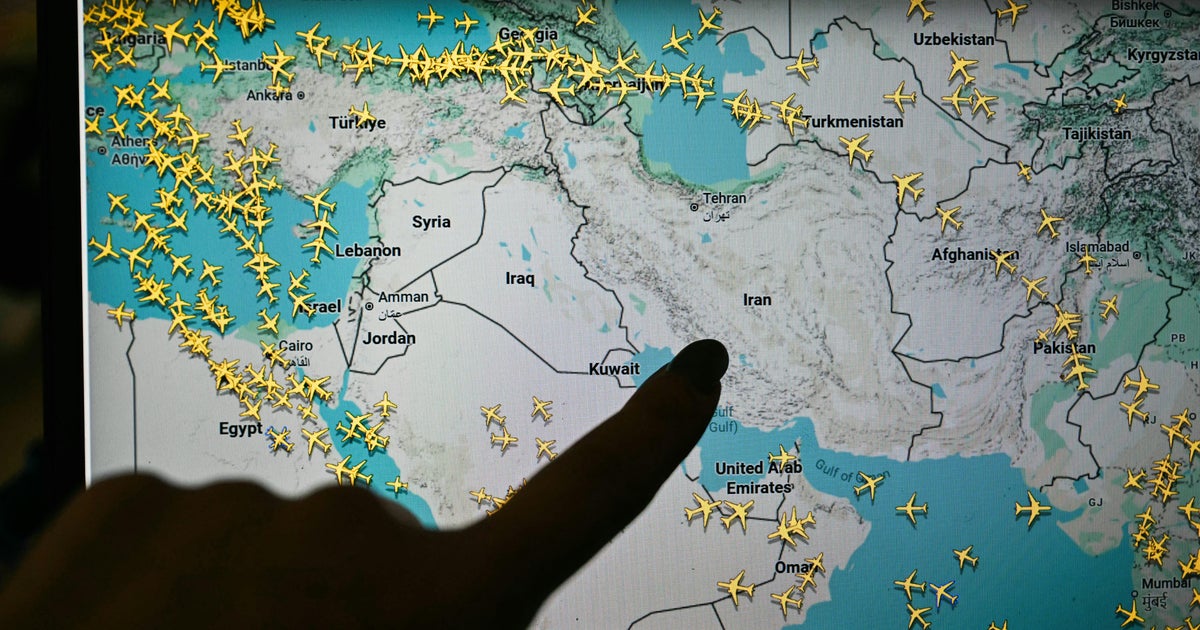
Beyond the airport closures, the situation has been further complicated by the shutdown of airspace across multiple countries in the region, effectively creating vast no-fly zones that airlines must navigate around. Jordan announced on Monday evening that its airspace would be closed “until further notice, in order to ensure the safety and security of civil aviation in Jordanian airspace,” according to the country’s official news agency. Iraq’s Civil Aviation Authority extended its complete airspace closure to civilian traffic for at least another 48 hours, citing “ongoing security concerns in region.” These closures mean that even flights not originating or terminating in the conflict zone must find alternative routes, adding hours to journey times and burning precious fuel reserves. Major international carriers have responded by canceling routes wholesale—Air France suspended all flights to and from Tel Aviv, Beirut, Dubai, and Riyadh, while airlines ranging from Air India to KLM issued similar suspensions and travel advisories. Qatar Airways, another major regional carrier based in Doha, announced that all its flights remained suspended, with the next update not expected until Tuesday morning. The cascading effect of these closures has created scheduling nightmares for airlines and left travel agents scrambling to find alternative routes for passengers who absolutely must travel during this crisis.
Government Evacuation Efforts and Challenges
As the situation has deteriorated, national governments have begun working on plans to evacuate their stranded citizens, though the closed airspace and ongoing military operations have severely limited their options. The United Kingdom, which has an estimated 300,000 citizens living in the Gulf region, is among the most affected nations. British Foreign Secretary Yvette Cooper announced that her government was establishing support systems to help British nationals flee the region, though she acknowledged the enormous challenges involved. “We are looking at a wide range of options, working, crucially with the travel industry and with government evacuation if necessary,” Cooper told Sky News, while emphasizing that “we have to recognize the scale of this as well, and also the fact that there are strikes still underway.” When pressed on whether the U.K. might stage military-style government evacuations, Cooper said they were “working on every possible option,” a statement that suggests all scenarios are on the table. Germany faces similar challenges with its 30,000 stranded tourists. Foreign Minister Johann Wadephul admitted late Sunday that a military evacuation wasn’t currently possible due to the airspace closures and that officials were exploring alternative options. The German Travel Association issued urgent guidance for tourists to “remain at their booked hotels as a matter of urgency” and warned against attempting to make their way independently to airports or neighboring countries, which could put them in greater danger. Other governments issued similar recommendations, urging their citizens to stay put and wait for official guidance rather than risk traveling through an active conflict zone.
Uncertain Timeline and Ongoing Military Operations
Perhaps the most anxiety-inducing aspect of this crisis is the complete uncertainty about when normal travel might resume. President Trump stated on Sunday that joint military operations would continue “until all of our objectives are achieved,” which he estimated could take up to four weeks. This timeline, if accurate, suggests that stranded travelers could face an entire month away from home, with all the personal and professional complications that would entail. The human cost of the conflict is already mounting, with at least four American service members killed according to U.S. military reports, and the toll continues to rise. The U.S. Embassy in Israel issued a security alert directing all American government employees and their families to shelter in place at or near their residences until further notice. The embassy announced it would be closed on Monday and made it clear that it was not in a position to evacuate or directly assist American citizens trying to leave Israel, leaving private Americans largely on their own to navigate the crisis. As military operations continue with no clear end in sight, airlines, governments, and most importantly, the tens of thousands of stranded travelers can do little but wait, hope, and make contingency plans for what may be a prolonged disruption to one of the world’s most critical transportation networks.