


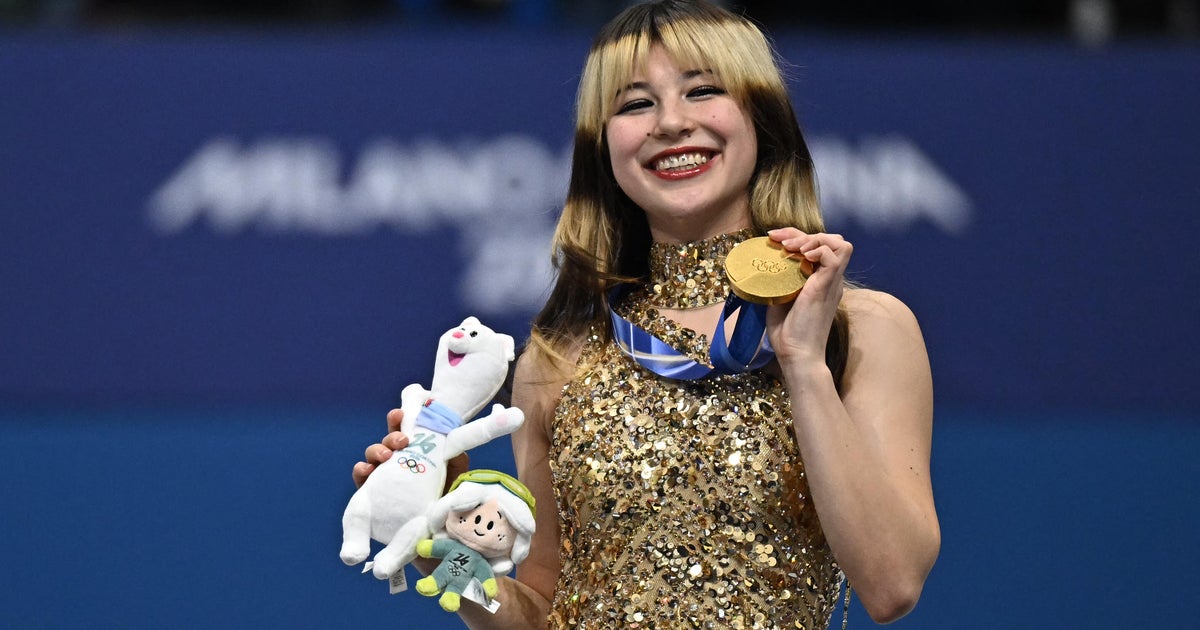

Alysa Liu Makes History with Olympic Gold in Figure Skating
A Golden Moment for Team USA
After an 18-year drought, the United States finally has a new Olympic champion in women’s figure skating. Twenty-year-old Alysa Liu captured the gold medal on Thursday at the Milan Cortina Winter Olympics, delivering a performance that will be remembered for years to come. Her victory marks a historic milestone – she’s the first American woman to stand atop the Olympic podium in this event since 2002. Japan’s Kaori Sakamoto claimed the silver medal, while her compatriot Ami Nakai rounded out the podium with bronze. The magnitude of the moment wasn’t lost on Liu herself, who was overheard in disbelief as she walked down the hallway after her winning performance, telling her coaches, “I just like, can’t process this. There’s no way.” This incredible achievement represents Liu’s second Olympic gold medal, cementing her place among America’s figure skating legends. The last time an American woman earned any individual skating medal was in 2006, when Sasha Cohen took home silver. Before Liu’s triumph, Sarah Hughes held the distinction of being the last American woman to win gold – a victory she secured in 2002, remarkably four years before Liu was even born. That same year also saw the iconic Michelle Kwan earn a bronze medal, highlighting just how long American fans have waited for another champion to emerge.
The Road to Gold: Liu’s Commanding Performance
Liu entered the free skate portion of the competition in third place, trailing both of the Japanese skaters who would eventually join her on the podium. Her short program on Tuesday had earned her a solid score of 76.59, setting the stage for what would need to be an exceptional performance to claim gold. As the third-to-last skater to take the ice, Liu appeared remarkably calm and confident during her warmup, even waving cheerfully to the spectators as she rehearsed her routine. When her moment arrived, she delivered exactly what the situation demanded. Her free skate was a masterclass in technical execution combined with artistic expression, featuring a flawless triple lutz and triple salchow that had the crowd on its feet. What struck observers most was Liu’s visible joy throughout her performance – she wore a broad smile that never wavered, and the audience responded in kind, erupting with enthusiasm every time she successfully landed a jump. Her choreographic step sequences showcased an athlete completely in her element, moving with a naturalness and ease that made the difficult look effortless. The routine concluded triumphantly, with Liu’s family members rising for a standing ovation that reflected the pride and emotion of the moment. Her free skate earned her a score of 150.20, which combined with her short program result for a total of 226.79 points – enough to secure the gold medal and make Olympic history.
Team USA’s Mixed Results: Triumph and Heartbreak
While Liu’s performance captured the gold, her American teammates experienced a range of outcomes that showcased both the competitive depth of U.S. figure skating and the razor-thin margins that separate triumph from disappointment at the Olympic level. Amber Glenn, 26, entered the free skate in a challenging 13th place after an error marred her short program on Tuesday, where she failed to complete a triple loop and scored just 67.39 points. However, Glenn refused to let that setback define her Olympic experience. Taking the ice as the first U.S. competitor in the free skate, she delivered a gutsy performance that included a successfully executed triple axel – one of the sport’s most difficult jumps. Though she needed to catch herself with her hand after nearly falling during her final loop, the overall quality of her skate was undeniable, earning her 147.52 points for a total of 214.91. Photos captured the raw emotion of the moment as Glenn embraced her coach afterward, her face beaming with a smile that spoke to the redemption she’d found. She jumped for joy, visibly thrilled by her comeback performance. Despite starting so far down the standings, Glenn found herself atop the leaderboard for much of the event before eventually being displaced. She finished in fifth place overall, narrowly missing the podium but demonstrating the kind of resilience that defines Olympic spirit.
Levito’s Challenging Day and the Competitive Landscape
Eighteen-year-old Isabeau Levito faced a more difficult day on the ice, entering the free skate in eighth place with a short program score of 70.84. Her routine began inauspiciously when she fell on the landing of her opening triple flip, a costly error that immediately deducted nine points from her potential score. To her credit, Levito recovered and skated through the remainder of her program, but the damage from that early mistake proved insurmountable in such a competitive field. The disappointment was written clearly on her face as she left the ice, even as teammate Amber Glenn cheered enthusiastically in support. Emotion overcame Levito as her free skate score of 131.96 was announced, understanding that her total of 202.80 points would not be enough to challenge for a medal. She finished the competition in 12th place overall, a result that undoubtedly stung but also provided valuable Olympic experience for the young skater’s future career. The contrast between the American competitors’ results highlighted just how unforgiving elite figure skating can be – a single mistake, a moment of hesitation, or a lost edge can mean the difference between standing on the podium and finishing well behind. Meanwhile, Japanese skater Mone Chiba displaced Glenn from the top spot during the competition and ultimately finished fourth, missing a medal by the smallest of margins, while Glenn’s remarkable comeback earned her fifth place.
The Podium: Grace, Skill, and Sportsmanship
The medal positions were determined by performances that each told their own story of athletic excellence under pressure. Kaori Sakamoto’s silver medal-winning routine, performed to a medley of Edith Piaf songs, captivated the audience despite a missed triple jump. Her artistic interpretation and overall technical quality were sufficient to secure second place, and in a beautiful display of sportsmanship, she embraced Liu warmly after the American came off the ice. Ami Nakai’s bronze medal performance demonstrated how the sport’s scoring system rewards difficulty and ambition. Although she struggled with some of her jumps and didn’t execute as cleanly as she might have hoped, the high difficulty score of her routine meant she still earned a spot on the podium. The camaraderie among the competitors was on full display when Liu and Nakai hugged after Nakai’s final score was announced, a reminder that even in the intensity of Olympic competition, these athletes share a deep respect for one another’s dedication and skill. Liu’s raw, unfiltered reaction to her own performance became one of the memorable moments of these Games. “That’s what the f*** I’m talking about!” she exclaimed to the camera immediately after finishing her skate, her joy and relief captured for the world to see. She bounded off the ice to embrace her coaches, audibly declaring, “That was so great!” as they handed her the skate guards. The genuine emotion continued as she and Glenn shared a hug, two American competitors celebrating each other’s achievements regardless of where they finished in the standings.
A New Chapter for American Figure Skating
Liu’s gold medal represents more than just an individual achievement – it signals a potential renaissance for American women’s figure skating after years of waiting for someone to reclaim the sport’s highest honor. Her victory at the Milan Cortina Games comes on the heels of another American success, as the United States had already captured gold in the team skating event earlier in these Olympics. At just 20 years old, Liu has now secured two Olympic gold medals, establishing herself as a generational talent who could dominate the sport for years to come. Her performance style – characterized by technical precision, artistic expression, and evident joy in the act of skating itself – offers a template for how the next generation of American skaters might approach competition. The genuine, unguarded way she celebrated her victory, from her disbelieving comments in the hallway to her emphatic declaration to the cameras, has endeared her to fans who appreciate authenticity in an age of carefully managed public personas. Liu even found time to praise Glenn’s performance, telling an NBC Olympics correspondent, “She did so good. I watched it on the bus on the way here, and aw, she killed it, and I’m really happy for her.” As these Winter Olympics continue, Liu’s achievement will stand as one of the defining moments – the night a young American woman ended an 18-year wait and reminded the world that U.S. figure skating remains a force to be reckoned with on the sport’s biggest stage.