


The New Face of Naval Warfare: What Iran’s Blockade Reveals About Modern Military Power
A Standoff in Strategic Waters
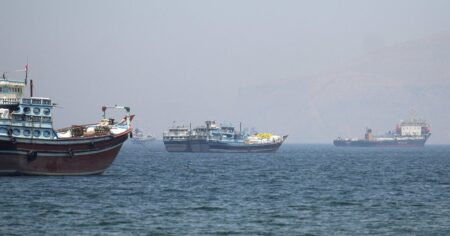
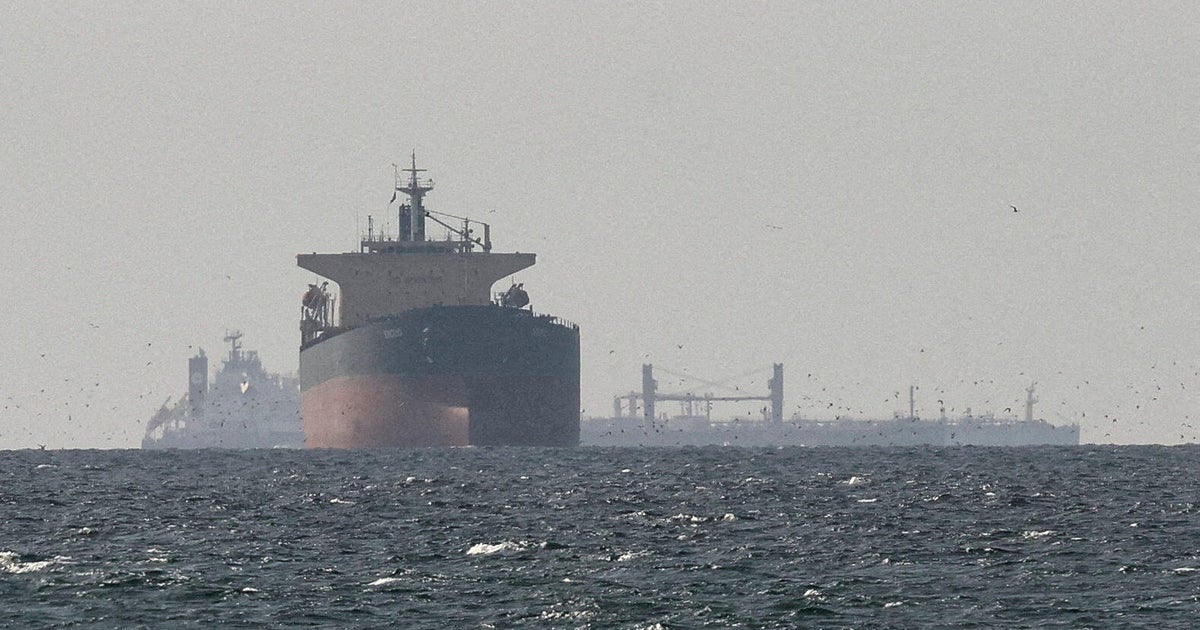
The Strait of Hormuz, a narrow waterway that serves as one of the world’s most critical shipping lanes, has become the latest flashpoint demonstrating how modern warfare has fundamentally changed. After President Trump stepped back from his aggressive threat to “obliterate” Iran’s energy infrastructure, the strait remains effectively under Iranian control, with only vessels receiving explicit permission from Tehran able to pass through. As thousands of additional American forces deploy to the region and the United States works with its allies to figure out how to reopen this vital passage for oil and other essential supplies, a troubling question has emerged: In an era of asymmetric warfare dominated by cheap drones and unconventional tactics, can even the world’s most powerful militaries force open a blocked waterway? The ongoing war in Ukraine, now in its fourth year, suggests the answer might be no. What’s unfolding in the Persian Gulf isn’t just a regional crisis—it’s a case study in how smaller powers can effectively challenge military superpowers using innovation, determination, and inexpensive technology that turns traditional military advantages on their head.
Ukraine’s Blueprint for the Underdog
The war in Ukraine has provided a stark lesson in modern naval combat that Iran appears to be studying carefully. When Russia launched its full-scale invasion in 2022, Ukraine’s naval capabilities were minuscule compared to Russia’s massive Black Sea Fleet, one of the most formidable naval forces in the world. Yet despite this overwhelming disadvantage, Ukraine managed to accomplish what seemed impossible—pushing back and neutralizing much of Russia’s naval power in the Black Sea. Using a combination of exploding sea drones, aerial drones, and land-based missiles, Ukrainian forces systematically damaged or destroyed numerous Russian vessels and forced others to retreat from strategically important areas. The symbolic turning point came in April 2022 when Ukraine successfully sank the Moskva, the flagship of Russia’s Black Sea Fleet and a powerful missile cruiser, using Ukrainian-manufactured missiles. Since then, Ukraine has continued launching devastating attacks on Russian ships, increasingly relying on much cheaper drone technology. As Yaroslav Trofimov, a Ukrainian-Italian author and chief foreign-affairs correspondent for the Wall Street Journal who has covered the conflict extensively, explained to CBS News: “Ukraine doesn’t really have a navy.” Despite this apparent weakness, he noted, Ukraine “has been able to prevent the Russian Black Sea Fleet from even entering the western half of the Black Sea.” This achievement represents a fundamental shift in naval warfare—a country with virtually no traditional naval forces successfully neutralizing one of the world’s premier fleets.
Economic Warfare Through Naval Disruption
Ukraine’s success wasn’t limited to sinking or damaging Russian warships; it extended to crippling Russia’s maritime economic activity. According to United Nations data, Russia’s grain exports—a crucial component of its economy—plummeted by more than half at one point as its Black Sea ports were effectively rendered unusable for months. Ukraine didn’t need to take control of the Black Sea in any traditional sense; it simply made significant portions of it too dangerous for Russia to operate in. This strategy of denial rather than control represents a new paradigm in naval conflict. President Trump has repeatedly claimed that Iran’s navy is “gone,” destroyed during recent hostilities, but Iran appears to be implementing the exact strategy that Ukraine used so effectively in the Black Sea. Even before the current conflict escalated, U.S. military officials had privately acknowledged what the fighting in the Persian Gulf has now made abundantly clear: in modern asymmetric warfare, large and expensive warships have become vulnerable targets for cheap, unmanned weapons systems. The economics are sobering—a multi-billion-dollar naval vessel can be damaged or destroyed by a drone costing a fraction of that amount. This reality has upended traditional calculations of naval power and force projection.
The Drone Revolution in Maritime Combat
Speaking from his home in Dubai, Trofimov emphasized that modern naval warfare is increasingly “dominated by unmanned systems,” a transformation that favors defenders and smaller powers. “Iran is learning lessons of the war in Ukraine very carefully,” he observed. These unmanned systems include small drones that can be extraordinarily difficult to intercept, either through electronic warfare or conventional weapons. While these drones might not carry massive explosive payloads, they don’t need to. “They don’t have a huge warhead,” Trofimov explained, “but it’s big enough to blind a ship”—meaning they can disable sensors, communications, and navigation systems, effectively neutralizing a vessel without sinking it. This reality makes traditional naval escort missions, like those the U.S. Navy successfully conducted during the “Tanker War” of 1987-88 when Iran laid sea mines to block shipping, potentially obsolete. Back then, American warships could physically accompany tankers through the Persian Gulf, providing protection through their presence and ability to clear mines. That approach “might not work today,” according to Trofimov. “Physically going along with tankers is not really that useful if you’re dealing with drones,” he told CBS News. “A drone … is just a flying mine”—except one that can maneuver, change targets, and attack from unexpected angles. Notably, the United States has not yet attempted to escort any ships through the Strait of Hormuz during the current conflict, perhaps acknowledging this new reality.
Iran’s Toll Booth Strategy
In the meantime, Iran has put forward demands that would effectively grant it complete control over the strait—creating what Trofimov describes as a private “toll booth” for the Islamic Republic regime. This would give Tehran the power to approve or deny passage based on its own interests and political considerations, something the United States and its Gulf allies are extremely unlikely to accept given the strait’s importance to global energy markets and international commerce. The Strait of Hormuz carries roughly a third of the world’s seaborne oil, making it one of the most strategically significant chokepoints on the planet. While the Black Sea and the Strait of Hormuz differ significantly in their geography, size, and strategic contexts, a familiar pattern is emerging in both locations: a vastly outgunned power using inexpensive tools and asymmetric tactics to frustrate and thwart a much better-equipped adversary. Crucially, these smaller powers don’t need to achieve outright military victory in any traditional sense. They simply need to raise the risk level of any movement through the contested waters high enough that the potential costs—in lives, ships, and political fallout—become unacceptable to their more powerful opponents. This strategy of making contested waters too dangerous to use, rather than attempting to control them outright, represents a fundamental shift in how maritime conflicts unfold.
Winning by Not Losing: The Economic and Strategic Implications
The United States and Israel claim to have struck more than 20,000 Iranian targets since the current conflict began, and in narrow military terms, Iran appears to be losing the conventional fight. Its military infrastructure has been degraded, its forces have suffered casualties, and its traditional military capabilities have been diminished. But in a broader strategic and economic sense, Iran appears to be winning. The closure of the Strait of Hormuz has kept global fuel prices elevated, which has had cascading effects throughout the world economy, pushing up the cost of consumer goods everywhere from grocery stores in Ohio to markets in Kenya. This economic leverage gives Iran significant bargaining power despite its military setbacks, demonstrating that modern conflicts aren’t won purely through superior firepower or territorial control. The situation facing military planners today is fundamentally different from what previous generations encountered. The traditional advantages of large, well-funded militaries—sophisticated warships, advanced aircraft, professional training—remain important but are no longer decisive in many scenarios. When a determined opponent can deploy swarms of cheap drones, when a country with virtually no navy can neutralize a major fleet, when closing a strait matters more than winning battles, the entire calculation of military power shifts. As the United States and its allies consider their options for reopening the Strait of Hormuz, they’re confronting this new reality: the question isn’t whether they have enough firepower to defeat Iran in a conventional sense, but whether any amount of military force can effectively counter the asymmetric tactics that have proven so effective in Ukraine and are now being applied in the Persian Gulf. The answer, increasingly, appears to be that traditional military solutions may be insufficient for these modern maritime challenges, requiring entirely new approaches to protecting international shipping lanes in an age of cheap, effective, and abundant unmanned systems.