
Tragedy Strikes Turkish High School: Former Student Opens Fire, Injuring 16 Before Taking His Own Life
A Shocking Attack in a Quiet Town
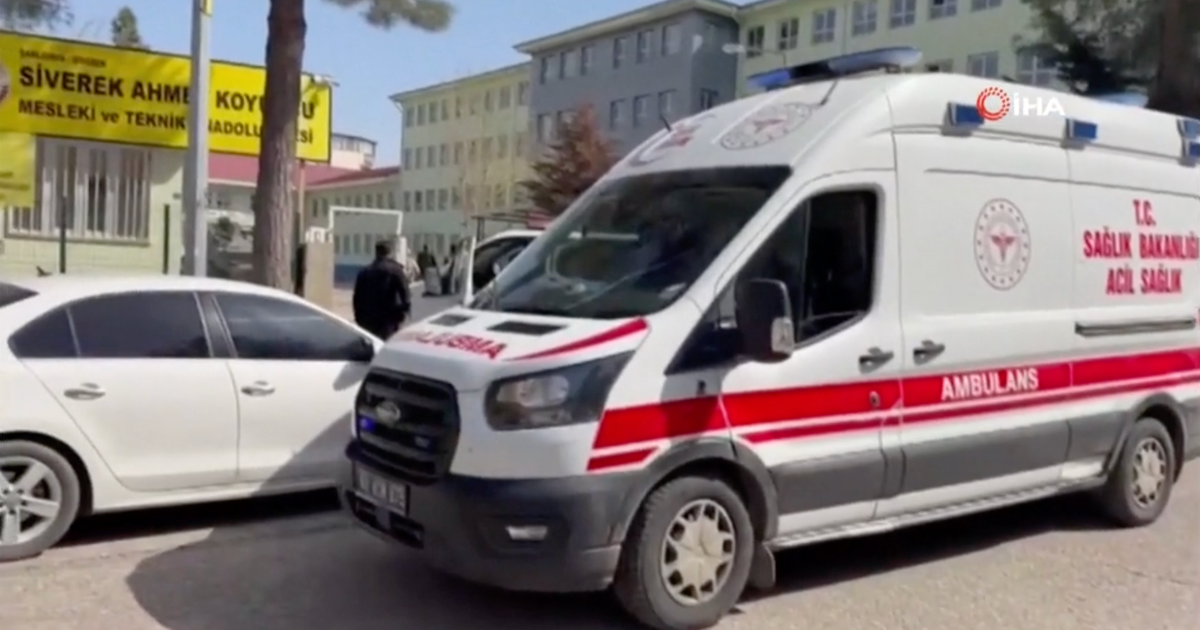
The peaceful community of Siverek in southeastern Turkey’s Sanliurfa province was shattered on Tuesday when an 18-year-old former student entered a vocational high school armed with a shotgun and opened fire indiscriminately. The horrific incident left at least 16 people wounded before the young attacker ultimately turned the weapon on himself after being cornered by responding police officers. Governor Hasan Sildak confirmed the devastating details of the attack, which has sent shockwaves through a nation where school shootings are extremely uncommon. The assailant, whose identity has not been publicly released, moved through the school building firing randomly at anyone in his path, creating scenes of terror and chaos as students and staff scrambled for safety. The violence ended only when law enforcement officers managed to corner the shooter inside the building, at which point he took his own life with the same shotgun he had used in the attack. This tragic event has left a community grieving and searching for answers about what could drive a young person to commit such a devastating act of violence.
The Victims and Their Conditions
The attack’s toll was heartbreakingly diverse, affecting people across the entire school community. Among the 16 wounded were 10 students who came to school that morning expecting nothing more than a normal day of learning, four teachers who were there to educate and guide young minds, one canteen employee simply doing their job, and a police officer who responded to the emergency. Governor Sildak provided updates on the victims’ conditions, explaining that while most of those injured were receiving treatment at medical facilities in Siverek itself, five individuals—both teachers and students—suffered more serious injuries that required transfer to a hospital in the provincial capital for more specialized care. The fact that the victims included people from every part of the school community underscores the random and indiscriminate nature of the attack. These weren’t targeted individuals; they were simply people who happened to be in the wrong place at the wrong time when a troubled young man decided to act on whatever dark impulses drove him to violence. Families throughout the community now face the agonizing wait for their loved ones to recover, both physically from their wounds and emotionally from the trauma of experiencing such terror.
The Terror Inside the Classrooms
The human reality of the attack becomes even more vivid through the firsthand accounts of those who survived the terrifying ordeal. Omer Furkan Sayar, a student who witnessed the shooting, provided a chilling description to the state-run Anadolu Agency of what it was like when the gunman burst into his classroom. “He suddenly entered the classroom and fired. He fired four or five times. Two people were hit. He then went into the next classroom,” Sayar recounted, his words painting a picture of the rapid and chaotic nature of the attack. The student described how instinct took over in those critical moments: “We first threw ourselves to the ground and then two of us jumped out of the window.” This desperate escape, leaping from a classroom window to flee an active shooter, is the stuff of nightmares that no student should ever have to experience. Perhaps most chilling was Sayar’s observation about the shooter’s demeanor: “He didn’t say anything, he entered and started to shoot directly.” This detail suggests a level of determination and disconnect that makes the attack even more disturbing—this wasn’t someone acting in a moment of heated emotion or making threats; this was someone who had made a decision to cause harm and executed it with cold efficiency. The video footage that later emerged showed dozens of students streaming out of the school building, running toward the gate and onto the street in scenes reminiscent of school shooting coverage from other countries, images that many thought would never be seen in Turkey.
The Response and the Shooter’s Background
As news of the shooting spread, law enforcement responded swiftly, deploying police special operations units to the scene. Initial reports indicated that the assailant had refused to surrender, leading to a tense standoff as authorities worked to contain the situation and ensure no further harm would come to students and staff. The confrontation ended when officers managed to corner the shooter inside the building, at which point he made the decision to end his own life. Governor Sildak emphasized that a “comprehensive” investigation into the shooting would be conducted to understand every aspect of what happened and why. What makes this case particularly puzzling is the apparent lack of warning signs in the shooter’s official record. According to Sildak, the 18-year-old attacker had no criminal history, nothing that would have flagged him as a potential threat to authorities. The school itself had been assessed and declared safe, with no permanent police officer assigned to protect it because there was no perceived need for such security measures. The governor characterized the shooting as an “isolated incident,” though that designation offers little comfort to the victims and their families. However, media reports, including coverage from NTV television and other outlets, suggested that the attacker may have threatened an attack on the school through social media posts prior to the shooting, raising difficult questions about whether the tragedy could have been prevented if those threats had been taken more seriously or reported to authorities in time.
Understanding a Rare Tragedy in Turkish Context
To fully grasp the impact of this event, it’s important to understand just how unusual school shootings are in Turkey. Unlike the United States, where school shootings have become a tragically regular occurrence, Turkey has been largely spared from this particular form of violence. The rarity of such incidents in the country means that communities, schools, and even law enforcement may not have the same level of preparedness or protocols in place that have become necessary in nations where school shootings are more common. This unfamiliarity may partially explain why a school could be declared safe without a permanent security presence, a decision that in hindsight seems questionable but at the time reflected the reality that such violence was simply not something Turkish schools regularly worried about. The isolated nature of this incident also makes it more difficult to understand in context—without a pattern of similar events to analyze, authorities and mental health professionals have fewer reference points for understanding what drives someone to commit such an act in Turkish society. The investigation that Governor Sildak promised will need to dig deep into the shooter’s background, his mental state, his social media activity, his relationships with the school and its students and staff, and any other factors that might have contributed to his decision to carry out this attack. Understanding the motive, which remains unclear at this time, will be crucial not just for bringing closure to the victims and their families, but also for helping prevent similar tragedies in the future.
Moving Forward: A Community and Nation in Mourning
In the aftermath of this tragedy, Siverek and the broader Turkish nation are left grappling with difficult questions and overwhelming grief. For the students who survived, returning to school will be a daunting prospect, as the building that was once a place of learning and growth has been transformed into a site of trauma. The teachers who were injured or who witnessed the attack will face their own challenges in processing what happened and finding the strength to return to their classrooms. The families of all the victims—both those who were physically injured and those who escaped physical harm but will carry emotional scars—face a long road of recovery ahead. For Turkish society as a whole, this incident serves as a sobering reminder that no community is immune to violence, even forms of violence that seem foreign or unlikely in their cultural context. The conversation that will inevitably follow will likely touch on issues of school security, mental health support for young people, the role of social media in identifying and responding to threats, and gun access in Turkey. While the attacker in this case used a shotgun, questions about how an 18-year-old obtained the weapon and whether current regulations are adequate will certainly be part of the broader discussion. As the investigation continues and more details emerge about the shooter’s background and possible motives, the hope is that lessons can be learned that might help prevent future tragedies. For now, though, the focus remains on supporting the victims, caring for the wounded, and helping a shocked community begin the difficult process of healing from an event that has forever changed their sense of safety and security.