


Remembering José van Dam: A Legendary Voice in Opera
The Passing of a Belgian Opera Icon
The world of opera has lost one of its most distinguished voices with the death of José van Dam, the celebrated Belgian bass-baritone who passed away on Tuesday in Croatia at the age of 85. The Queen Elisabeth Music Chapel in Belgium, where van Dam had served as a master in residence and founded the voice section in 2004, announced his passing on Thursday through spokesperson Natsumi Krischer. Van Dam’s death marks the end of an extraordinary career that spanned more than five decades and left an indelible mark on the operatic world. His voice, characterized by its warmth, elegance, and remarkable versatility, graced the stages of the world’s most prestigious opera houses and brought to life some of the most challenging roles in the classical repertoire. Born Joseph van Damme in Brussels on August 25, 1940, the artist who would become known as José van Dam trained at the Brussels Royal Conservatory before launching a career that would see him become one of the most respected bass-baritones of his generation.
From Brussels to the World’s Great Stages
Van Dam’s journey to international stardom began in 1960 when he made his professional opera debut at the Opéra Royal de Wallonie-Liège, taking on the role of Don Basilio in Rossini’s beloved comedy “Il Barbiere di Siviglia” (The Barber of Seville). It was for this debut that Joseph van Damme adopted the stage name José van Dam, a name that would soon become synonymous with excellence in operatic performance. Just two years later, in 1962, he made his first appearance at the Paris Opera, singing the roles of Priam and the Voice of Mercury in Berlioz’s epic “Les Troyens” (The Trojans). His career gained significant momentum during the late 1960s and early 1970s when he became associated with the Deutsche Oper Berlin, working under the baton of renowned chief conductor Lorin Maazel. A pivotal moment came in 1971 when van Dam performed at the prestigious Salzburg Easter Festival as Don Pizarro in Beethoven’s only opera, “Fidelio,” conducted by the legendary Herbert von Karajan. This performance helped establish him as a singer of the highest caliber, capable of handling the most demanding roles in the operatic canon.
Conquering the World’s Most Prestigious Opera Houses
The 1970s saw van Dam make his mark at the world’s most important opera venues, establishing himself as a true international star. He chose the role of Escamillo, the charismatic toreador in Bizet’s “Carmen,” for a series of career-defining debuts: at Milan’s legendary Teatro alla Scala in 1972, London’s Royal Opera House in 1973, and New York’s Metropolitan Opera in 1975. The following year, in 1976, he appeared at the Met once again, this time in the title role of Mozart’s “Le Nozze di Figaro” (The Marriage of Figaro) when the Paris Opera brought the production on tour. These performances demonstrated van Dam’s remarkable range and his ability to inhabit characters with depth and humanity. He became particularly renowned for his interpretations of several monumental roles that would define his career: the title characters in Verdi’s “Falstaff” and “Simon Boccanegra,” Mozart’s seductive anti-hero in “Don Giovanni,” Berg’s tormented soldier in “Wozzeck,” and Mussorgsky’s troubled Russian ruler in “Boris Godunov.” Additionally, he was acclaimed for his portrayals of King Philipp II in Verdi’s “Don Carlo,” the wise shoemaker Hans Sachs in Wagner’s “Die Meistersinger von Nürnberg,” and the wounded knight Amfortas in Wagner’s “Parsifal.”
A Thoughtful Artist and His Approach to Performance
What set van Dam apart from many of his contemporaries was his thoughtful, analytical approach to his craft. In a 2010 interview with Opera magazine, he revealed the careful consideration he gave to each new role, explaining, “Before taking on a new role that has interested me, I always looked carefully at the tessitura,” referring to the range in which most of a role’s notes lie. He described how his voice evolved over time: “At age 20, I was more of a bass; with the help of careful exercises, the voice stretched further at both ends, and especially at the top, I’ve never had any particular vocal difficulties with a role, but I’ve always been careful.” This meticulous approach to vocal health and role selection undoubtedly contributed to his long and successful career. Known for his elegant and refined interpretations, van Dam had an interesting relationship with the operatic stage. In a 1981 interview, he expressed a preference for concert performances over fully staged operas, explaining the distinction in a way that revealed his artistic philosophy: “When I’m on the stage and I’m acting, I’m singing Figaro or Giovanni or Amfortas. I’m not José van Dam!” This comment illuminates the complete immersion he brought to his operatic roles, losing himself entirely in the characters he portrayed.
Creating Saint Francis and Career Highlights
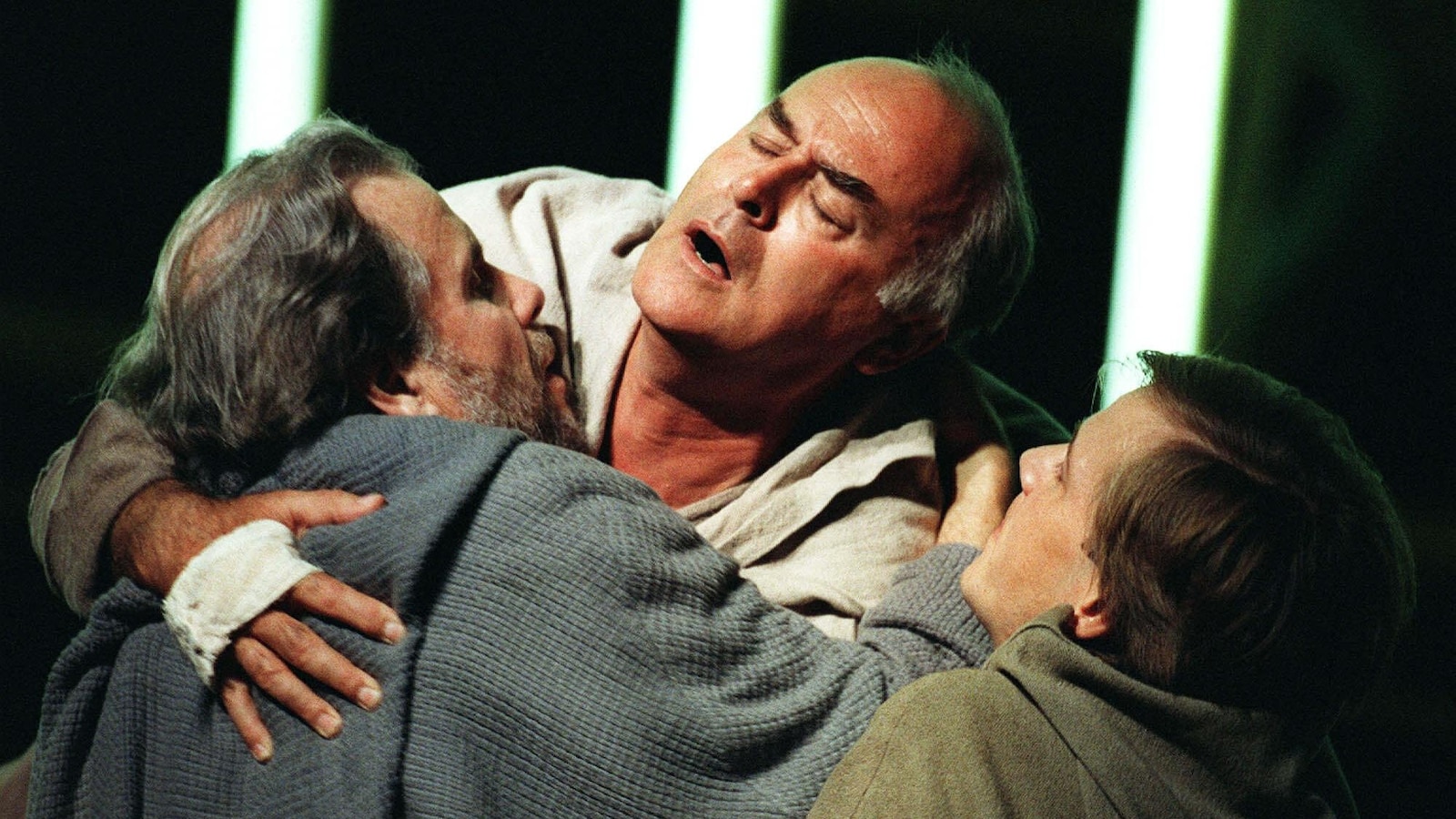
Among van Dam’s many achievements, one of the most significant was originating the title role in Olivier Messiaen’s monumental opera “Saint François d’Assise” (Saint Francis of Assisi) at its Paris premiere in 1983. This was a massive undertaking, as Messiaen’s opera is one of the longest and most demanding works in the repertoire, both musically and spiritually. Van Dam reprised this extraordinary role at the Salzburg Festival in 1988, earning high praise from critics. John Rockwell of The New York Times, writing about the premiere performances, noted that van Dam was “technically and interpretively impressive in his extremely long role,” highlighting the singer’s stamina and artistic insight. Van Dam’s illustrious career concluded with his final operatic role as the idealistic knight in Massenet’s “Don Quichotte” at Brussels’ La Monnaie opera house in 2010, a fitting farewell that brought him full circle to perform in his home city. Throughout his career, van Dam’s artistry was recognized with numerous accolades, including ten Grammy Award nominations. He won three Grammy Awards: one for Best Vocal Soloist Performance for his recording of Ravel songs with conductor Pierre Boulez in 1984, and two for Best Opera Recording—Strauss’ “Die Frau ohne Schatten” (The Woman Without a Shadow) in 1992 and Wagner’s “Meistersinger” in 1997, both conducted by the legendary Georg Solti.
Beyond the Opera Stage and Lasting Legacy
Van Dam’s talents extended beyond the opera house into the realm of film, where he brought operatic performance to wider audiences. In 1979, he appeared as Leporello, Don Giovanni’s servant, in director Joseph Losey’s film version of Mozart’s “Don Giovanni,” a production that brought cinematic artistry to one of opera’s greatest masterpieces. Nearly a decade later, in 1988, he took on the role of an opera star named Joachim Dallayrac in “The Music Teacher” (Le Maître de musique), a Belgian film that explored themes of artistic dedication and the relationship between teacher and student. The film received recognition at the highest level of cinema, earning a nomination for the Academy Award for Best Foreign Language Film. José van Dam’s contribution to the world of opera extends far beyond his performances. As founder of the voice section at the Queen Elisabeth Music Chapel in 2004, he dedicated himself to nurturing the next generation of singers, passing on the knowledge and artistry he had accumulated over his long career. His approach to singing—careful, thoughtful, and always respectful of the music and the voice—serves as a model for young artists. His legacy lives on not only in his numerous recordings, which continue to be treasured by opera lovers worldwide, but also in the singers he mentored and the audiences he moved with his profound interpretations. José van Dam will be remembered as an artist who combined technical mastery with deep humanity, bringing unforgettable life to some of opera’s greatest roles while maintaining the humility and dedication of a true craftsman.