
Discovery of Hidden Graves Reveals Mexico’s Ongoing Crisis of Missing Persons
A Grim Discovery in Western Mexico
In a deeply troubling discovery that has once again highlighted Mexico’s ongoing crisis of missing persons, authorities in western Mexico have uncovered skeletal remains belonging to at least 11 individuals in hidden graves. The graves were located in a rural property in Ixtlahuacan, a suburb on the outskirts of Guadalajara, the capital city of Jalisco state. Local prosecutors announced the findings on Thursday, marking yet another chapter in the region’s dark history of violence and disappearances. The discovery is particularly significant as it occurred in an area that has been plagued by cartel activity for years, and it serves as a stark reminder of the human cost of Mexico’s drug-related violence. What makes this discovery even more concerning is that it wasn’t an isolated incident—simultaneously, authorities found another 12 bags containing human remains at a construction site in the nearby municipality of Tlajomulco, indicating the widespread nature of this tragic phenomenon.
The Scale of Mexico’s Missing Persons Crisis
Deputy prosecutor for missing persons, Blanca Trujillo, addressed the media during a press conference, explaining that investigators are still working to determine the exact number of victims from both sites. She noted that the remains appear to have been there for a considerable period, though she stopped short of providing a specific timeframe. This discovery is just the latest in a series of similar cases that have plagued Jalisco, which has become the epicenter of Mexico’s missing persons crisis. The statistics paint a devastating picture: Mexico currently has more than 130,000 missing persons on record, with the vast majority of these disappearances occurring within the last twenty years, coinciding with the escalation of drug-related violence throughout the country. Jalisco alone accounts for more than 15,900 cases of missing persons—a staggering number that experts directly attribute to the activities of one of Mexico’s most violent and powerful criminal organizations, the Jalisco New Generation Cartel. These numbers represent not just statistics, but thousands of families left without answers, waiting and hoping for news about their loved ones who vanished without a trace.
The Jalisco New Generation Cartel’s Reign of Terror
The Jalisco New Generation Cartel has established itself as one of the most ruthless criminal organizations operating in Mexico today. Their methods are particularly sinister—the cartel has been accused of using deceptive tactics such as fake job advertisements to lure unsuspecting individuals who are then forced into service as new members. Those who resist or attempt to escape face brutal consequences, including torture and execution. The cartel’s activities have transformed entire regions of Jalisco into zones of fear, where people disappear regularly and hidden graves are discovered with disturbing frequency. The 2017 discovery of one of Mexico’s largest mass graves near Veracruz, where more than 250 skulls were found in what appeared to be a drug cartel burial ground, demonstrated the horrifying scale of these operations. More recently, in October 2025, authorities discovered as many as 48 bags containing human remains in a vacant lot in Zapopan, another municipality within the Guadalajara metropolitan area. These discoveries have become tragically routine, each one representing countless shattered families and communities living in constant fear.
World Cup Security Concerns and International Attention
The timing of these discoveries is particularly sensitive, as Guadalajara is one of three Mexican cities scheduled to host matches during the 2026 FIFA Men’s World Cup this summer, alongside Monterrey and Mexico City. The tournament is being co-hosted by Mexico, the United States, and Canada, bringing international scrutiny to Mexico’s security situation. In response to concerns about safety during the world’s most-watched sporting event, the Mexican federal government has announced an unprecedented security deployment, with nearly 100,000 troops being mobilized to guarantee the safety of the three host cities. This massive show of force is intended to reassure both international visitors and the global community that Mexico can successfully host such a major event despite the ongoing violence. However, the recent discovery of these graves, along with the persistent problem of disappearances and cartel violence, raises questions about whether these security measures will be sufficient and whether they address the root causes of the violence that has plagued the region for decades.
The Death of “El Mencho” and Its Aftermath
The security situation in Jalisco became even more volatile following a significant development in February when Mexican military forces killed Nemesio “El Mencho” Oseguera, the notorious leader of the Jalisco New Generation Cartel. Oseguera was one of the United States’ most-wanted drug lords, and his death represented a major victory for law enforcement on both sides of the border. However, rather than bringing peace to the region, his killing triggered an outbreak of violence as various factions within the cartel and rival organizations fought for control of his former territory and operations. The power vacuum created by his death has led to increased instability and violence, with criminal groups battling each other while also targeting civilians and government forces. Despite these security concerns and the spike in violence following Oseguera’s death, FIFA officials reaffirmed their confidence in Guadalajara as a host city for the World Cup. In March, Oseguera was buried in an ostentatious ceremony featuring a golden casket, enormous flower wreaths, and a surprisingly large military presence—a spectacle that highlighted the complex relationship between organized crime, local communities, and government authorities in Mexico.
The Human Cost and the Path Forward
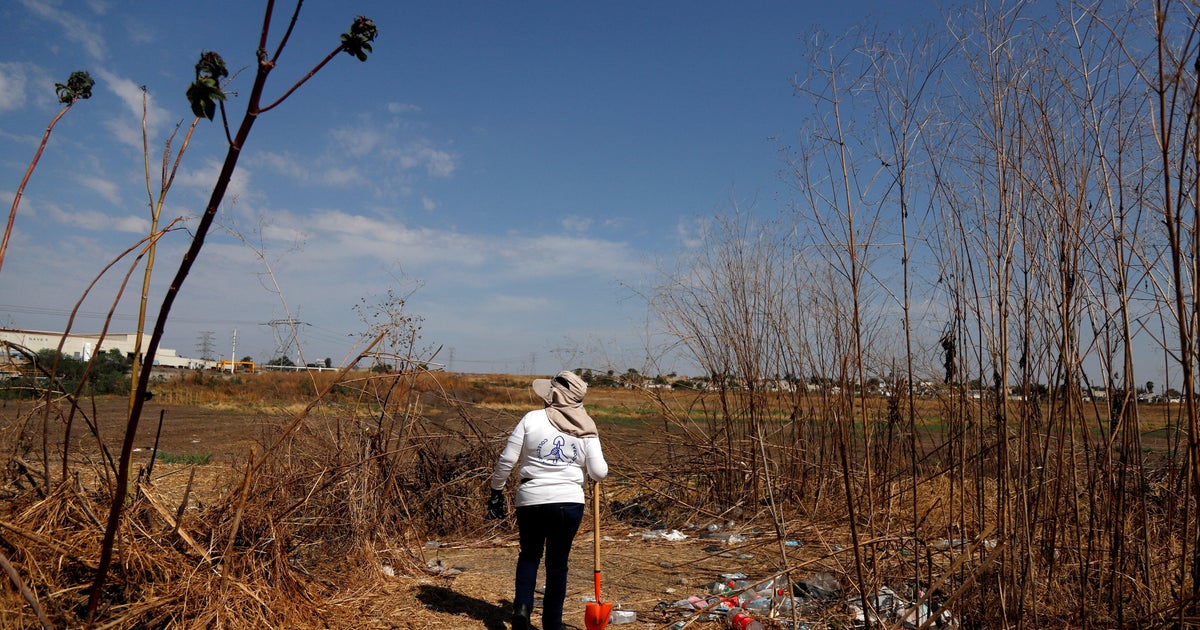
Behind every statistic and every discovered grave lies a human story—families torn apart, children growing up without parents, parents growing old without knowing what happened to their sons and daughters. The crisis of missing persons in Mexico represents one of the most significant humanitarian challenges facing the country today. Search and rescue groups, often led by family members of the disappeared, regularly conduct their own investigations, using makeshift tools to search for clandestine graves when they feel authorities aren’t doing enough. These groups have become experts at reading the landscape, looking for disturbed earth or other signs that might indicate a burial site. Their work is both heartbreaking and essential, as they seek closure and justice for their loved ones. The discovery of these latest graves in Jalisco serves as a reminder that Mexico’s violence and disappearance crisis continues unabated, despite government efforts and international attention. Moving forward, addressing this crisis will require not just military deployments and law enforcement operations, but comprehensive approaches that tackle the root causes of cartel violence, including poverty, corruption, lack of economic opportunities, and impunity. It will also require a sustained commitment to investigating disappearances, identifying remains, and bringing closure to families who have waited years, sometimes decades, for answers about what happened to their loved ones. Only through such comprehensive efforts can Mexico hope to break the cycle of violence and disappearances that has claimed so many lives and caused so much suffering.