
A Child’s Nightmare: The Harrowing Rescue of a Boy Locked in a Van for Over a Year
The Shocking Discovery That Stunned a French Village
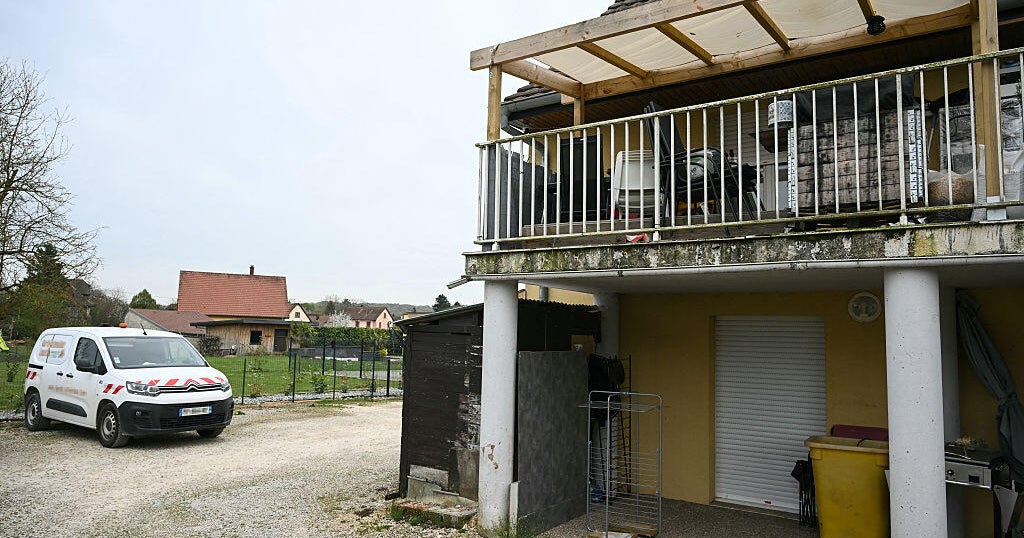
In a quiet village nestled in eastern France near the Swiss and German borders, neighbors were going about their ordinary Monday routines when an extraordinary and deeply disturbing situation came to light. A concerned resident in Hagenbach heard something unusual—the faint sounds of a child coming from a utility van parked in their neighborhood. What authorities discovered after forcing open that locked vehicle would shock the entire community and expose a case of unimaginable neglect and confinement. Inside the van, police found a 9-year-old boy lying curled up in a fetal position, completely naked except for a blanket draped over his emaciated body. He was surrounded by piles of garbage and waste, unable to stand or walk on his own because his muscles had deteriorated from being confined in a seated position for so long. According to local Prosecutor Nicolas Heitz, who released details of the case on Saturday, the child had been living in these horrific conditions since late 2024—meaning he had been trapped in this makeshift prison for well over a year. The boy was immediately hospitalized for malnutrition and the physical effects of his prolonged captivity, while his 43-year-old father was taken into custody for questioning about this incomprehensible act.
A Father’s Twisted Logic: “Protection” That Became Imprisonment
As investigators began piecing together how a young child could disappear for more than a year without triggering alarm bells, the father’s explanation revealed a deeply troubling family dynamic. According to his statement to police, the 43-year-old man claimed he locked his son in the utility van in November 2024 as a form of “protection.” The boy was just 7 years old at the time he was first confined. The father told authorities he took this drastic action because his 37-year-old partner wanted to send the child to a psychiatric hospital, and he believed locking him away was somehow a better alternative. This reasoning is particularly disturbing given that prosecutors found no medical records indicating the boy had any psychiatric problems whatsoever before his disappearance. In fact, school records showed he was performing well academically with good grades—hardly the profile of a child in need of psychiatric institutionalization. The prosecution’s investigation suggests that rather than protecting his son from unnecessary medical intervention, the father may have been responding to conflicts within the household involving his partner. The boy himself told investigators that he had experienced “big difficulties” with his father’s partner and believed his father felt he “had no choice” but to lock him up—a heartbreaking indication of how a vulnerable child tried to rationalize the unthinkable actions of the adult who should have protected him most.
Life Inside the Van: A Daily Existence of Deprivation and Degradation
The details of the boy’s daily life during his captivity paint a picture of profound deprivation and human indignity that no child should ever experience. According to statements the boy gave to police, as reported by Le Parisien newspaper and confirmed by investigators, his father would bring him food twice daily and leave water for him to drink. However, beyond these minimal provisions for survival, the child was left to exist in conditions that defy basic human decency. With no access to bathroom facilities, the boy was forced to urinate in plastic bottles and defecate in bin bags that accumulated around him in the confined space of the van. The last time he had been able to shower was in late 2024—meaning he went without proper hygiene for over a year. The physical toll of this confinement was severe. When rescuers found him, he could no longer walk because his legs had weakened from being kept in a seated position for such an extended period. His body was malnourished, his muscles had atrophied, and he was living literally on top of trash and human waste. The prosecutor’s statement described him as being found “on top of a mound of trash and near excrement,” a description that underscores the complete abandonment of basic care for this vulnerable child. That a father could visit his son twice daily to provide food while leaving him to exist in such conditions raises profound questions about his mental state and moral compass.
The Web of Lies and the Community That Didn’t Know
One of the most troubling aspects of this case is how a young boy could vanish from normal life for over a year without triggering a missing person investigation or welfare check. The answer lies in a carefully constructed web of deception that the adults in his life apparently maintained. Friends and family members who were questioned by investigators reported that they believed the boy had been placed in a psychiatric institution—a story that aligned with the father’s claims about his partner wanting to send the child away for treatment. The boy’s teachers at school were told he had transferred to a different school, providing a plausible explanation for his absence from the classroom where he had previously been earning good grades. No one apparently followed up to confirm these stories or questioned why a well-performing child would suddenly need psychiatric care or a school transfer. The father’s 37-year-old partner claimed she had no knowledge that the boy was being kept in the van, despite living in the same household. While she has been charged with failure to help a minor in danger and released under judicial supervision, her claims of ignorance raise difficult questions about what she might have known or suspected. Prosecutors are now investigating whether anyone else in the community was aware of the boy’s situation. According to BBC News reports, some neighbors mentioned occasionally hearing noises from inside the van but were told by the father that it was just a cat—an explanation that apparently satisfied their curiosity enough that they didn’t investigate further or contact authorities.
The Aftermath: Justice, Healing, and Unanswered Questions
Following the boy’s rescue on Monday, legal proceedings moved swiftly against those responsible. The father has been charged with kidnapping and other offenses and remains in custody as the investigation continues. His partner, while claiming ignorance of the situation, faces charges of failing to help a minor in danger, though she has been released under judicial supervision rather than held in detention. Beyond the immediate perpetrators, authorities have taken steps to protect other children who may have been at risk in the household. The rescued boy’s 12-year-old sister and the 10-year-old daughter of his father’s partner have both been placed in the care of social services while investigators assess their situations and ensure their safety. For the 9-year-old victim, the road ahead involves both physical and psychological recovery. Hospitalized immediately after his rescue, he faces the challenge of regaining his physical strength, relearning how to walk properly, and overcoming the nutritional deficiencies caused by over a year of inadequate food. Perhaps even more daunting is the psychological healing that will be necessary after such prolonged isolation, deprivation, and betrayal by the parent who should have protected him. Residents of the quiet village of Hagenbach, speaking to the Associated Press, expressed shock at what had occurred in their community. Many said they were completely unaware of the boy’s whereabouts and preferred not to discuss the details further, perhaps struggling to comprehend how such a situation could exist undetected in their neighborhood.
Broader Implications: When Systems Fail Our Most Vulnerable
This heartbreaking case raises profound questions about the systems designed to protect children and how they can fail even in developed countries with established child welfare infrastructure. How does a child vanish from school without proper verification of their new educational placement? How can a family claim a child is in psychiatric care without anyone checking on his welfare or treatment progress? Why didn’t anyone question the sudden disappearance of a well-adjusted, academically successful child? The case also highlights the vulnerability of children caught in complex family dynamics, particularly in blended families where stepparents and biological parents may have conflicts. The boy’s statement that he had “big difficulties” with his father’s partner suggests tensions that should have been addressed through family counseling or other interventions, not by removing the child from normal life entirely. Prosecutor Nicolas Heitz has declined to comment further as the investigation continues, suggesting there may be additional dimensions to this case that have not yet been publicly revealed. As authorities work to understand the full scope of what happened and who else might have known about the boy’s captivity, this case serves as a sobering reminder of the importance of vigilance in protecting children and the tragic consequences when adults fail in their most basic responsibility to ensure the safety and wellbeing of the young people in their care. The unnamed boy at the center of this case faces a long journey toward recovery and healing, but his rescue represents hope that even in the darkest circumstances, concerned citizens and responsive authorities can still intervene to save a child’s life and future.