
The Disappearance of Lynette Hooker: Maps Reveal Husband’s Account of Tragic Night in the Bahamas
Detailed Navigation Records Surface in Missing Person Case
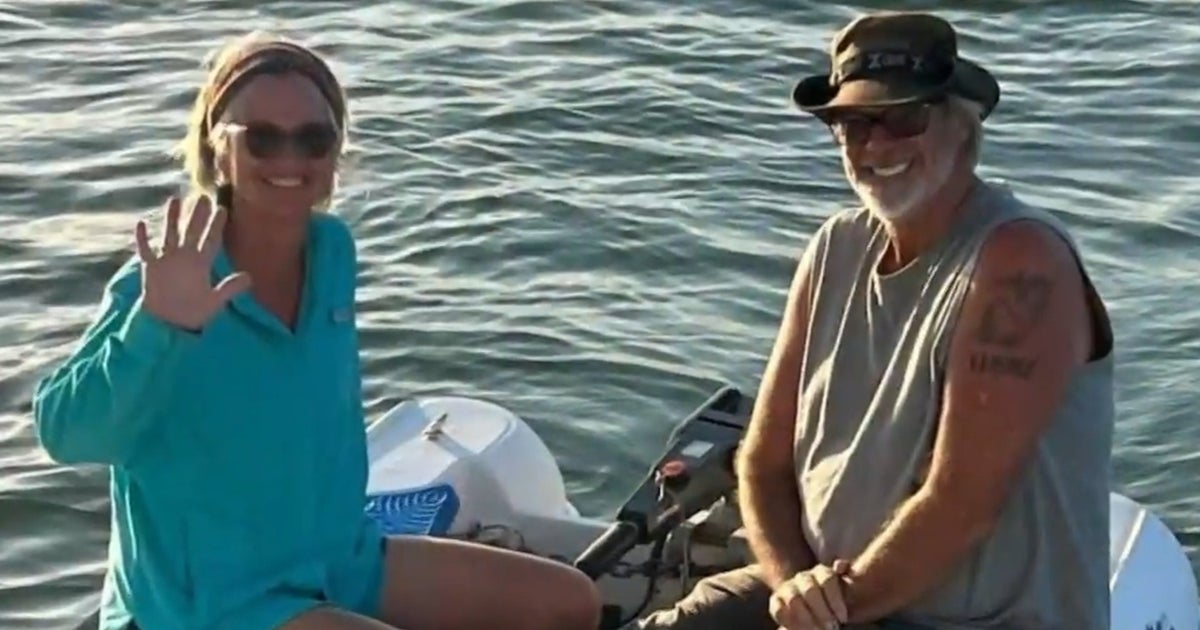
The mysterious disappearance of Lynette Hooker in the Bahamas has taken a significant turn as her husband, Brian Hooker, shared detailed navigational maps with friends and law enforcement that allegedly document the events of that fateful night. These images, which Brian distributed to his boating friends in the days following his wife’s disappearance, represent what may be the most comprehensive visual account of his version of what happened when Lynette vanished last Sunday. The Michigan woman’s case has attracted considerable attention as authorities continue their investigation, and Brian Hooker now finds himself in police custody for questioning, though he hasn’t been formally charged with any crime according to his attorney, Terrel Butler.
The maps Brian Hooker shared weren’t just simple sketches but rather screenshots taken from Navionics, a sophisticated GPS navigation application widely used by boaters to chart their courses and navigate waterways. Brian reportedly marked up these digital screenshots with annotations showing the alleged route his dinghy traveled that evening, including the specific location where he claims Lynette went overboard. He explained to his friends that he created these marked-up images specifically to assist the search and rescue teams in their efforts to locate his missing wife. These friends, concerned about the situation, subsequently provided the images to CBS News, offering the public its first detailed look at Brian Hooker’s account of the evening’s events. The decision to share these maps with both friends and law enforcement suggests Brian was attempting to be cooperative and transparent during the initial phases of the search operation.
The Timeline and Route That Raises Questions
The details revealed in these navigational screenshots paint a concerning picture of the events that allegedly unfolded. According to the information Brian Hooker provided, Lynette is believed to have gone overboard around 7:30 p.m. on Sunday evening. However, what happened next has become a focal point of scrutiny. The maps show that after his wife allegedly fell into the water, Brian traveled an astonishing 4 miles west from the point where Lynette supposedly went overboard. This significant distance raises immediate questions about search and rescue protocols and what actions were taken in the immediate aftermath of Lynette’s disappearance. For anyone familiar with maritime emergencies, the standard response to a person going overboard is to immediately mark the location, circle back, and begin search efforts while calling for help. The 4-mile westward journey documented in these maps represents a substantial deviation from that expected response.
Adding to the mystery is Brian Hooker’s account of his own ordeal that night. According to what he told investigators, he didn’t arrive at the Marsh Harbour Boat Yard, where he eventually washed up on shore, until 4 a.m. the following morning—more than eight hours after his wife allegedly went into the water. This lengthy timeframe between Lynette’s disappearance and Brian’s arrival on shore creates a significant gap that investigators are undoubtedly working to understand. What exactly transpired during those eight-plus hours? Why did Brian travel 4 miles in the opposite direction from where his wife went missing? These questions have yet to be fully answered, and the annotated GPS maps, while providing some information, have ultimately raised more questions than they’ve resolved about the sequence of events that night in Bahamian waters.
The Investigation Intensifies
The case took a dramatic turn on Wednesday night when Bahamian officials arrested Brian Hooker and took him into custody for questioning. This development signals that authorities have significant concerns about his account of events, though it’s important to note that being held for questioning doesn’t equate to being charged with a crime. Brian’s attorney, Terrel Butler, has confirmed that his client has not been formally charged with any criminal offense at this time. This distinction is legally important, as detention for questioning allows investigators to gather more information and clarify inconsistencies in witness accounts without necessarily indicating that charges are imminent. However, the decision to arrest someone in connection with a missing person case typically indicates that investigators have identified potential discrepancies or areas of concern that require immediate clarification.
Hope Town Fire and Rescue, one of the agencies involved in the search efforts, has declined to comment specifically about the images that Brian Hooker shared, citing the ongoing nature of the investigation. This is standard procedure in active cases where premature disclosure of information could potentially compromise investigative efforts or influence witness statements. Similarly, the Royal Bahamas Police Force, which has jurisdiction over the case, has not immediately responded to media requests for comment about the navigational maps or other aspects of the investigation. This silence from official channels is typical during the critical early stages of an investigation, particularly one that has attracted international attention due to the victim being an American citizen. The authorities are undoubtedly working to verify Brian Hooker’s account against physical evidence, witness statements, and the technical data from the boat’s GPS and other navigational equipment.
Maritime Safety and Search Protocols Under Scrutiny
This tragic case has brought renewed attention to maritime safety protocols and the proper response procedures when someone goes overboard. For experienced boaters and maritime safety experts, several aspects of Brian Hooker’s account are likely to raise red flags. When someone falls overboard, especially at night, immediate action is critical. The standard protocol involves immediately throwing flotation devices, marking the GPS location, maintaining visual contact if possible, circling back to the location, and calling for emergency assistance via marine radio. The fact that Brian’s dinghy traveled 4 miles west from the alleged point where Lynette went overboard suggests that these standard protocols may not have been followed, though the specific circumstances that led to this route remain unclear.
The use of a dinghy—a small auxiliary boat—rather than their main vessel also raises questions about the circumstances of their journey that evening. Dinghies are typically used for short trips from an anchored boat to shore or between nearby vessels, not for extended travel, especially at night. Understanding why the couple was out in a dinghy at that time of evening, where they were going, and what they were doing will be crucial elements of the investigation. Additionally, the navigation app data that Brian used to create his annotated maps may contain metadata and detailed tracking information that investigators can use to verify his account. Modern GPS navigation systems create detailed digital breadcrumbs that can show speed, direction changes, stops, and exact timestamps—all information that could either corroborate or contradict Brian’s version of events.
A Community and Family Left Searching for Answers
Behind the technical details of GPS coordinates and navigation routes is a heartbreaking human story. Lynette Hooker, described as being from Michigan, has been missing for days now, and with each passing hour, the likelihood of a positive outcome in the search diminishes. For her family members, friends, and the broader community, the wait for answers has been agonizing. The initial hope that accompanied the search and rescue efforts has gradually been tempered by the reality of the vast ocean and the passage of time. Family members are not only dealing with the trauma of Lynette’s disappearance but also the complicated feelings that arise when the person who was with her when she vanished becomes the subject of an investigation. This emotional complexity adds layers of pain to an already devastating situation.
The boating community that Brian reached out to with his annotated maps has found itself in a difficult position as well. These friends received what they believed were genuine attempts to aid in finding Lynette, yet they also recognized that these documents might be important evidence in an investigation. Their decision to share the maps with CBS News and presumably with authorities reflects the conflicting loyalties and moral obligations people face in such situations. As the investigation continues and more information comes to light, Lynette’s loved ones are left hoping for answers while preparing themselves for whatever truth eventually emerges. Whether this case ultimately reveals a tragic accident, a maritime emergency that went terribly wrong, or something more sinister, the loss of Lynette Hooker has left a void in the lives of those who knew her—a void that no amount of GPS data or investigative work can ever truly fill.