
The Search for Lynette Hooker: A Tragic Disappearance in the Bahamas
Specialized Search Teams Join the Investigation
The search for missing American woman Lynette Hooker has intensified as specialized cadaver dogs prepare to join the effort in the Bahamas. According to Assistant Commissioner Advardo Dames of the Royal Bahamas Police, a highly trained K-9 team from the U.S. Coast Guard arrived on the ground Wednesday morning in Hope Town to assist with the investigation. The 55-year-old woman from Michigan has been missing since the evening of April 4, when she reportedly went overboard from a small dinghy during what should have been a routine trip back to her yacht. The involvement of cadaver dogs represents a sobering development in the case, suggesting that authorities are preparing for all possible outcomes as the search continues. The collaboration between Bahamian authorities and U.S. Coast Guard resources demonstrates the seriousness with which officials are treating this case and their commitment to finding answers for Lynette’s family and friends.
The Night Everything Changed
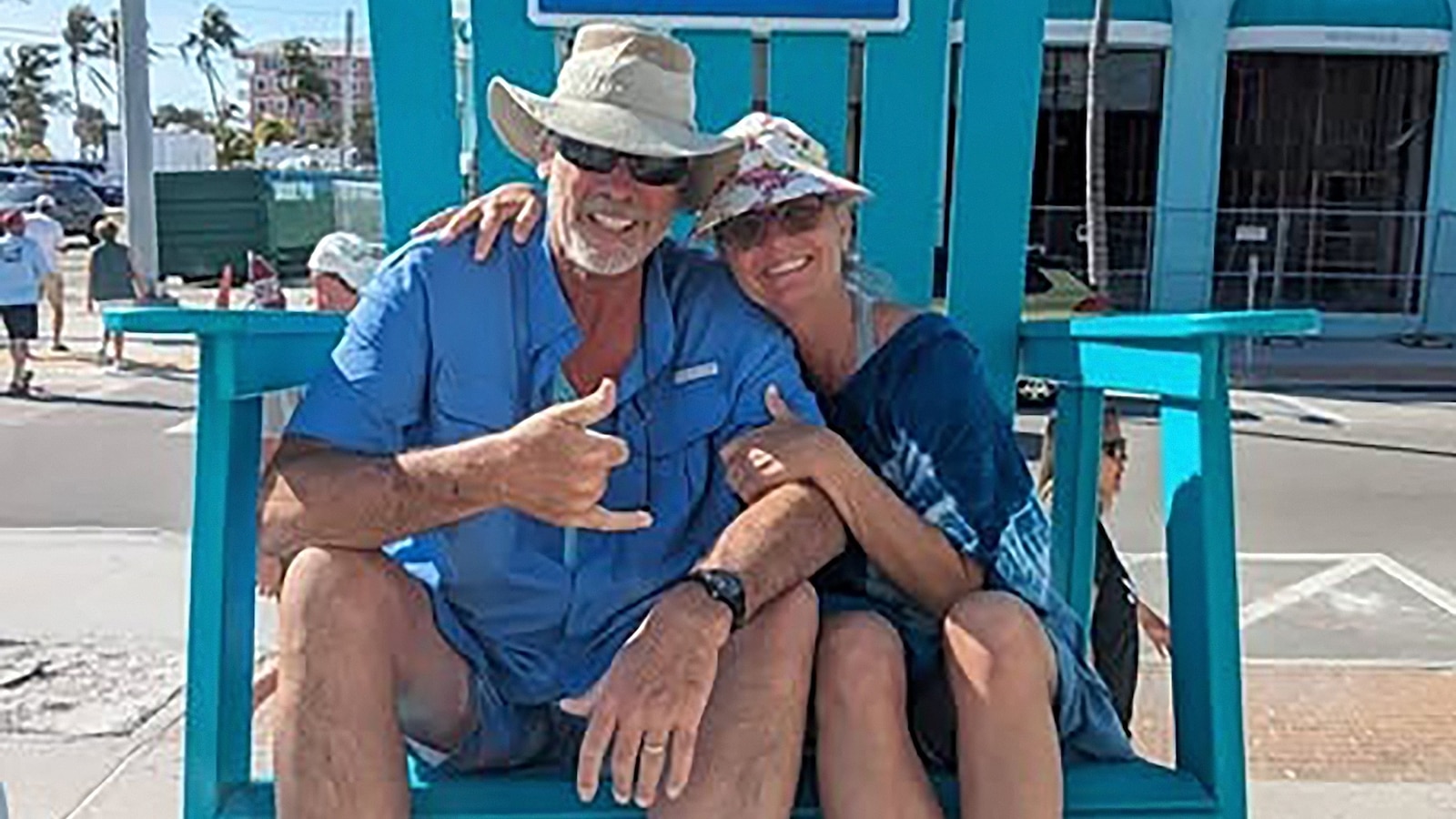
The circumstances surrounding Lynette Hooker’s disappearance paint a picture of how quickly a peaceful evening can turn tragic. On that fateful April evening, Lynette and her 58-year-old husband, Brian Hooker, were traveling by dinghy from Hope Town on the Abaco Islands to their yacht, appropriately named “Soulmate,” which was anchored at Elbow Cay. According to Brian’s account to authorities, severe weather conditions suddenly deteriorated during their journey, and in the chaos that ensued, Lynette fell from the small vessel into the waters below. The area’s unpredictable weather patterns and the challenges of navigating small boats in rough seas are well-known to experienced sailors, but even with precautions, accidents can happen in an instant. The couple, who had been documenting their sailing adventures on social media, could never have anticipated that their dream voyage would be interrupted by such a devastating event. The short distance between Hope Town and their yacht, normally a simple trip in calm conditions, became the scene of a tragedy that has left family, friends, and the sailing community searching for answers.
A Husband’s Ordeal and Release
The investigation took a dramatic turn when Brian Hooker was arrested on April 8, just four days after his wife’s disappearance, and taken into custody for questioning by Bahamian police. For three tense days, he remained in police custody while authorities investigated the circumstances surrounding Lynette’s disappearance. This is standard procedure in cases where someone goes missing and there is only one witness to the events, as investigators must carefully examine all aspects of what occurred. On Monday, Brian was released without any charges being filed against him, suggesting that after thorough investigation and questioning, authorities found his account of events credible or at least could not find evidence to contradict his version of what happened that night. The arrest and subsequent release highlight the delicate balance law enforcement must strike between thoroughly investigating all possibilities and respecting the rights of someone who may themselves be a victim of tragic circumstances. For Brian, those days in custody must have been agonizing, separated from the search efforts for his wife while simultaneously being treated as a potential suspect in her disappearance.
A Husband’s Determined Promise
Since his release, Brian Hooker has made clear that he has no intention of leaving the Bahamas until his wife is found. In an emotional interview with ABC News on Tuesday, Brian stated that his “sole focus” remains finding Lynette, “no matter how likely or unlikely that is.” His words reveal both his determination and his understanding of the grim reality that as days pass, the chances of finding his wife alive diminish significantly. Brian explained his immediate plans: “to go back to the boat, and then hire or beg people to help me go find some areas to search.” This statement reveals a man unwilling to simply wait passively for official search efforts to bear fruit, instead taking matters into his own hands to ensure that every possible location is searched. His attorney, however, has understandably advised him not to answer specific questions about the events of that night, as the investigation remains ongoing and any statements could potentially be used in ways that might complicate the search for truth. Despite these restrictions, Brian’s commitment to finding his wife is unmistakable and deeply moving.
A Heartbreaking Expression of Responsibility
Perhaps the most poignant moment of Brian’s interview came when he was asked if there was anything he wishes he had done differently that night. His response, delivered with visible emotion, speaks to the overwhelming guilt and responsibility he feels: “I will always think there was something I could have done differently. My one job, my one job was to look out for her, and that has not happened. And I’m gonna keep looking out for her now, the best I can.” These words reveal the profound burden Brian carries—not just the loss of his wife, but the feeling that he somehow failed in his duty to protect her. This kind of survivor’s guilt is common among those who witness tragic accidents involving loved ones, even when circumstances were completely beyond their control. His statement also reveals the depth of their relationship; his self-described “one job” was looking out for Lynette, suggesting a partnership built on mutual care and protection. Now, in the aftermath of that terrible night, he’s channeling that same protective instinct into an unwavering determination to find her, refusing to abandon his post even as hope grows dim. The raw emotion in his words has resonated with people following this story, humanizing what could otherwise be reduced to just another missing person statistic.
Community Response and the Path Forward
The disappearance of Lynette Hooker has sent shockwaves through both the local Bahamian community in Hope Town and the broader international sailing community that the Hookers were part of. The couple had been sharing their sailing adventures on social media under the handle “the_sailing_hookers,” building a following of people who lived vicariously through their adventures and who are now desperately hoping for good news. The involvement of multiple agencies, including the Royal Bahamas Police and the U.S. Coast Guard, demonstrates the international nature of maritime incidents and the cooperation required to address them. As the search continues, the arrival of specialized cadaver dogs represents both hope for closure and the acknowledgment of increasingly difficult odds. For the family and friends of Lynette Hooker, the waiting is unbearable—caught between hope and the need to prepare for the worst possible outcome. The sailing community, known for its tight-knit nature and willingness to help fellow sailors in distress, will undoubtedly continue to support both the search efforts and Brian Hooker as he faces the most difficult period of his life. Whatever the outcome, this tragedy serves as a sobering reminder of the ocean’s power and unpredictability, and the importance of safety precautions even during what seems like a routine journey between two nearby points.