
Canada Charts New Course: Prime Minister Carney Addresses Economic Independence from the United States
A Nation at a Crossroads
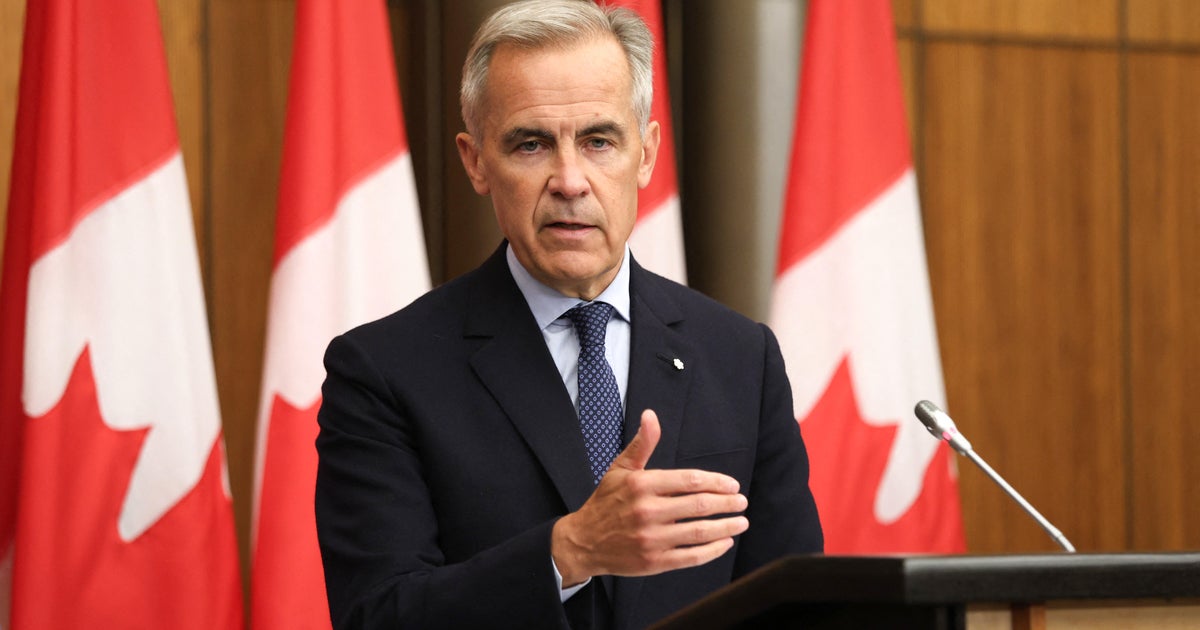
In a significant and sobering video address released on Sunday, Canadian Prime Minister Mark Carney delivered what many are calling a watershed moment in Canada-U.S. relations. Speaking directly to Canadians for nearly ten minutes, Carney outlined a fundamental shift in how Canada must view its relationship with its southern neighbor. The message was clear and unprecedented: the deep economic ties that have long been considered Canada’s greatest strength have now become a vulnerability that threatens the nation’s prosperity and security. This frank assessment marks a dramatic departure from decades of Canadian policy that prioritized and celebrated the close partnership between the two nations. Carney’s address wasn’t just about acknowledging challenges—it was about confronting a new reality where relying heavily on any single partner, particularly one undergoing such dramatic policy shifts, represents an unacceptable risk to Canada’s future.
The Economic Reality: Tariffs and Uncertainty
Prime Minister Carney didn’t mince words when describing the economic landscape facing Canada today. He pointed to the transformed approach to trade taken by President Trump’s administration, noting that U.S. tariffs have reached levels not seen since the Great Depression—one of the darkest economic periods in modern history. These aren’t abstract policy changes happening in distant boardrooms; they’re having real, tangible effects on Canadian workers and families. The automotive and steel industries, both critical employers in Canadian communities, have been hit particularly hard by these tariff policies. But perhaps even more concerning than the tariffs themselves is what Carney described as “the pall of uncertainty” hanging over the entire business community. Canadian businesses, unsure of what policies might come next or how trade relationships might further deteriorate, are holding back on investments that could create jobs and drive economic growth. This hesitation creates a vicious cycle: uncertainty leads to reduced investment, which leads to slower economic growth, which in turn creates more uncertainty. For ordinary Canadians, this means delayed job opportunities, stalled wage growth, and an economy operating below its potential—all while they watch the political relationship between their government and Washington deteriorate in ways previously unimaginable.
Beyond Economics: Dignity and Sovereignty
The economic challenges, serious as they are, represent only part of what has driven Carney’s reassessment of the Canada-U.S. relationship. Many Canadians have been deeply troubled—even angered—by President Trump’s repeated suggestions that Canada should become the 51st U.S. state. These comments, whether intended seriously or as provocations, strike at the heart of Canadian national identity and sovereignty. For a nation that has spent more than 150 years building its own distinct culture, institutions, and international reputation, such remarks aren’t simply offensive—they’re existentially challenging. They force Canadians to confront uncomfortable questions about how they’re perceived by their closest ally and whether that ally truly respects their independence. Carney’s response to this situation demonstrates his understanding that national security isn’t just about military capabilities or border protection—it’s also about economic resilience and the ability to stand independently on the world stage. His promise to provide regular updates to Canadians about diversification efforts away from U.S. dependence represents an acknowledgment that this isn’t a short-term problem requiring a quick fix, but rather a fundamental reorientation that will take time, effort, and consistent communication with the Canadian public.
A Track Record of Speaking Truth to Power
Mark Carney brings unique credibility to this moment, having served as governor of both the Bank of Canada and the Bank of England—a rare achievement that speaks to his expertise in international economics and finance. This isn’t the first time he’s addressed shifting global power dynamics or stood up against economic intimidation. During a speech at the World Economic Forum in Davos, Switzerland, in January, Carney received widespread international praise for his willingness to condemn economic coercion by powerful nations against smaller countries. His remarks resonated with many who saw parallels between his warnings and Canada’s own situation. However, his comments also drew a sharp rebuke from President Trump, who reminded Carney that “Canada lives because of the United States” and warned him to “remember that” the next time he makes such statements. This exchange perfectly encapsulates the tension at the heart of the current relationship: Canada’s need to assert its independence and protect its interests versus the reality of its geographic proximity to and economic integration with a much larger, more powerful neighbor who seems increasingly willing to use that power leverage politically. Rather than being cowed by Trump’s response, Carney has doubled down on his message, suggesting he believes Canadians are ready to hear difficult truths and make necessary sacrifices to secure their country’s future independence.
The Path Forward: Diversification and Self-Reliance
In his address, Carney outlined a comprehensive strategy for reducing Canada’s vulnerability and building economic resilience. The plan includes actively attracting new investments to Canada, thereby creating alternatives to U.S. capital and reducing dependency on American economic decisions. He announced ambitious goals to double Canada’s clean energy capacity—a move that positions Canada to capitalize on the global transition to renewable energy while creating jobs and export opportunities beyond the U.S. market. Recognizing that Canada’s internal trade barriers sometimes make it harder to do business across provincial lines than across international borders, Carney committed to reducing these obstacles and creating a more unified national economy. He emphasized increased defense spending, acknowledging that true sovereignty requires the ability to protect one’s own territory and interests. Tax reductions and efforts to improve housing affordability round out a domestic agenda aimed at strengthening Canada from within. Carney also signaled Canada’s intention to pursue trade agreements with countries beyond the United States, diversifying export markets and reducing the impact any single partner can have on Canadian prosperity. Importantly, he acknowledged that Canada cannot control the disruptions coming from its neighbors, nor can it base its future on hoping that those disruptions will suddenly stop. Instead, the focus must be on controlling what happens within Canadian borders and building resilience against external shocks—wherever they might originate.
Looking Ahead: Realism Over Nostalgia
Perhaps the most memorable lines from Carney’s address were his rejection of wishful thinking: “Hope isn’t a plan and nostalgia is not a strategy.” These words capture the fundamental choice facing Canada—continue operating as though the relationship with the United States will return to its previous state, or accept the new reality and adapt accordingly. Carney clearly advocates for the latter, arguing that simply waiting for the U.S. to “return to normal” isn’t feasible. This doesn’t mean abandoning the relationship or ignoring shared history; Carney acknowledged Canada’s role as “a great neighbor,” standing with the United States through two World Wars, Afghanistan, and countless other conflicts and challenges. That partnership, built over generations, still matters. However, Carney insists that the United States has fundamentally changed, and Canada must respond to that change rather than denying it. His call is about “taking back control” of Canada’s security, borders, and future—language that emphasizes agency and self-determination rather than dependence and reaction. The timing of this address is significant, coming just days after Carney secured a majority government in special elections and as opposition Conservatives pressure him to deliver a U.S. trade deal ahead of the scheduled July review of the current North American Free Trade Agreement. Rather than simply promising to negotiate favorable terms with an unpredictable partner, Carney is setting expectations that Canada needs to be prepared for any outcome and cannot stake its future on any single negotiation or relationship. It’s a message that may be difficult for some Canadians to hear, but one that Carney clearly believes is necessary for the country’s long-term prosperity and independence.